 Eduardo Sifuentes

preCharge News BUSINESS — Investors got a brief reprieve this week after President Donald Trump announced a delay in the rollout of steep 50% tariffs on European Union goods. But markets and analysts agree: the risk of a transatlantic trade war still hangs heavily over global equities and supply chains.
Trump’s announcement followed a call with European Commission President Ursula von der Leyen, pushing the start of the tariffs from June 1 to July 9. In a post on Truth Social, Trump accused the EU of being “very difficult to deal with” and said negotiations were “going nowhere.”
EU Stocks Rebound, But Analysts Caution: “This Ride’s Far From Over”
European markets recover from tariff threat shock
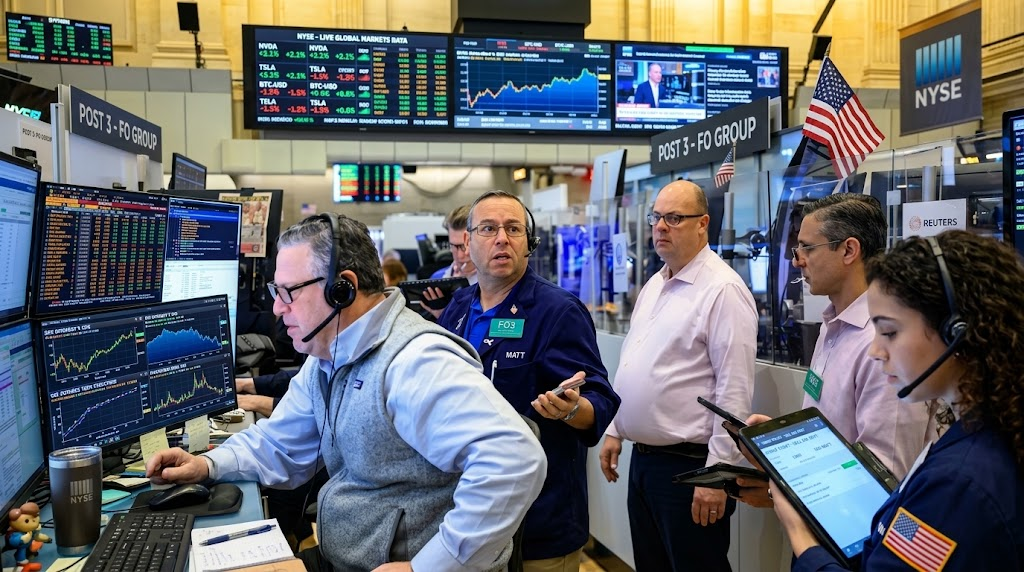
European stock indexes moved into positive territory Monday morning, recovering from Friday’s dip triggered by Trump’s initial tariff threat. Analysts attributed the rebound to relief over the delay — but they warned that the optimism may be short-lived.
Zaye Capital Markets CIO Naeem Aslam described the market response as a “tentative risk-on rally.” In a note to preCharge News, he said the EU-U.S. tariff standoff remains volatile, with July 9 emerging as a key flashpoint for global investors.
“Markets will hang on every tweet and trade talk whisper,” Aslam wrote. “Investors are betting on whether this delay is a genuine olive branch or Trump reloading for a bigger tariff showdown.”
Europe Holds Its Ground, Demands Clarity from Washington
Von der Leyen urges “swift and decisive” talks
Von der Leyen posted on X that the EU was “ready to advance talks swiftly and decisively,” adding that July 9 was necessary to reach a sustainable deal. “The EU and U.S. share the world’s most consequential and close trade relationship,” she wrote.
Good call with @POTUS.
— Ursula von der Leyen (@vonderleyen) May 25, 2025
The EU and US share the world’s most consequential and close trade relationship.
Europe is ready to advance talks swiftly and decisively.
To reach a good deal, we would need the time until July 9.
European Trade Commissioner Maros Sefcovic also weighed in Monday, revealing “good calls” with U.S. Commerce Secretary Howard Lutnick and stressing that dialogue would continue. But despite signs of communication, analysts say Washington’s endgame remains unclear.
Good calls with Secretary @howardlutnick and Ambassador @jamiesongreer. The @EU_Commission remains fully committed to constructive and focused efforts at pace towards an 🇪🇺🇺🇸 deal. We continue to stay in constant contact. pic.twitter.com/90E6Ngzaq8
— Maroš Šefčovič🇪🇺 (@MarosSefcovic) May 26, 2025
“We don’t know what Trump actually wants”
Guntram Wolff, senior fellow at Brussels-based think tank Bruegel, told preCharge News that the “massive uncertainty” surrounding U.S. demands is the greatest obstacle in the negotiation.
“It’s very unclear what exactly the U.S. President wants,” Wolff said. “The EU has made proposals, but it doesn’t really know what the president wants. This uncertainty is bad for business, bad for consumers, and frankly, unnecessary.”
Wolff said the EU is handling the negotiations smartly. “The UK gave in. China escalated. Europe is walking a careful middle path,” he explained. “But that may not be enough now.”
Shock Diplomacy or Negotiating Strategy?
Trump’s pressure tactics push EU to the edge
Berenberg Chief Economist Holger Schmieding told preCharge News that Trump’s tactics are consistent with a pattern of “shock-and-awe” diplomacy. He suggested that the six-week window might be enough to lay the foundation for a U.S.-EU trade agreement.
“If they have the political will, we should really be able to reach a deal,” Schmieding said, citing the recent U.S.-UK agreement as a model. “In the end, maybe we’ll see a 10% tariff from the U.S., minimal EU retaliation, and some sector-specific compromises.”
However, he warned that a blanket tariff of 20% to 30% would force the EU to impose “significant countermeasures.”
“The EU is not a region that can be scared into submission,” he added. “This has to be a negotiation between equals.”
Risk of Retaliation Looms as Key Industries Watch Closely
Pharma, services, and tech in the crosshairs
If talks fail, sectors like pharmaceuticals, financial services, tech, and automobiles could be caught in the crossfire. Wolff pointed out that the EU could retaliate in high-value industries that are strategically important to the U.S.
Still, so far, Brussels has opted for de-escalation — choosing diplomacy over threats. “But at the end of the day,” Wolff said, “that might not be enough.”
Aslam echoed that sentiment, noting that Trump’s “America First” tone leaves little room for compromise. “The EU is offering phased tariff cuts and ‘mutual respect’ talks,” he said. “But Trump could easily turn this into a slugfest, rattling supply chains and fanning inflation.”
Countdown to July 9: Deal or Disruption?
With just weeks until the new deadline, both sides are under pressure to deliver results. The EU wants predictability and fairness. The Trump administration wants leverage and impact. What remains is a high-stakes game of brinkmanship.
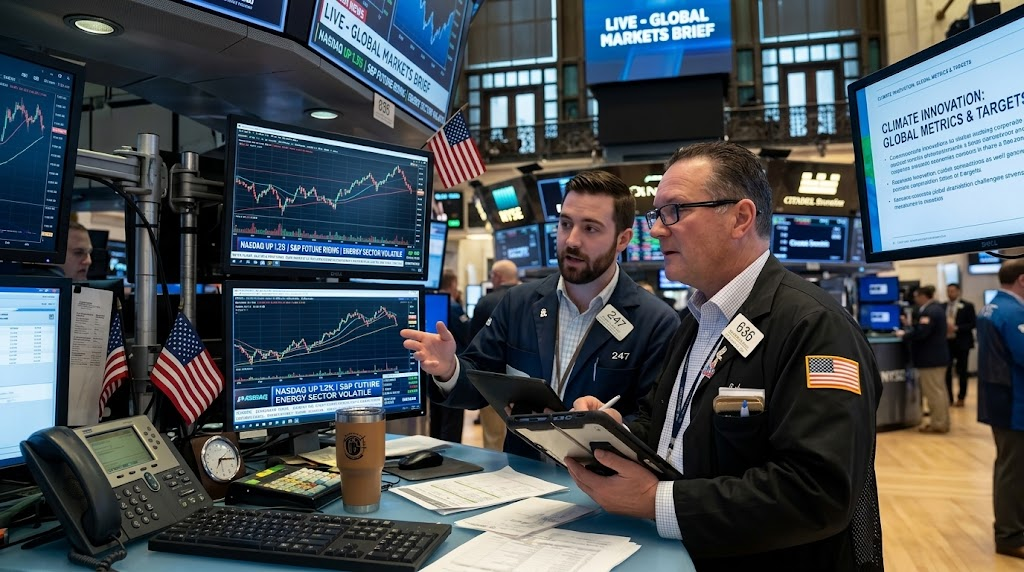
Analysts say investors should prepare for headline-driven volatility and remain cautious about sectors most exposed to tariffs. And while the delay has temporarily stabilized sentiment, it’s clear this standoff is far from resolved.
Want to earn some extra money on the side? Buy PCPi Coin or Subscribe to VIP and get dividens monthly.
____
Associated Press, CNBC News, Fox News, and preCharge News contributed to this report.