
 Eduardo Sifuentes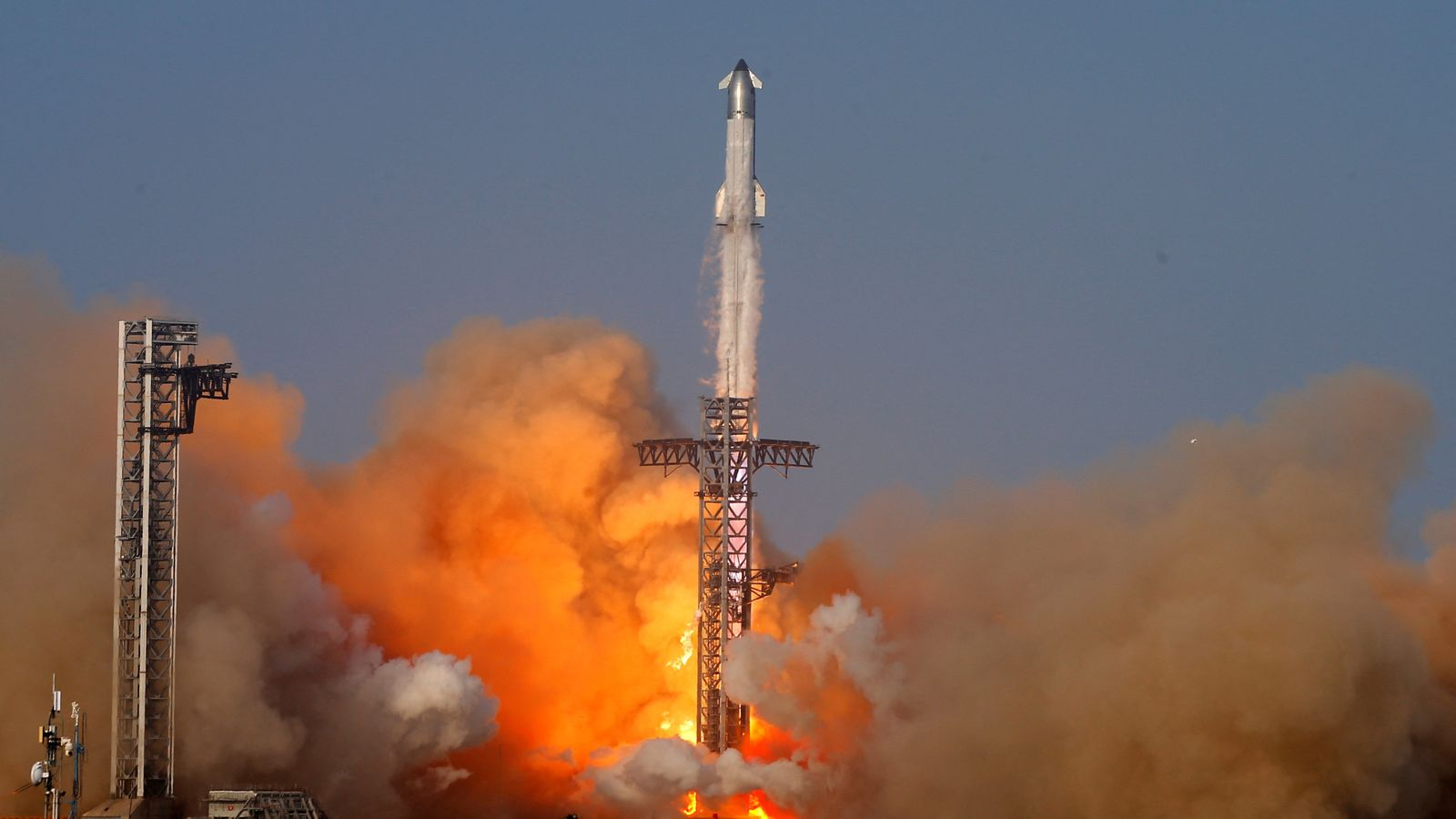

preCharge News BUSINESS — Elon Musk’s boldest space ambitions faced another high-altitude setback this week as SpaceX’s Starship rocket exploded for the third time in a row, underscoring persistent challenges in the company’s quest to dominate interplanetary travel.
On Tuesday, May 27, the ninth test flight of SpaceX’s full Starship system—comprised of the Super Heavy booster and the Starship upper-stage rocket, both towering nearly 400 feet when stacked—ended in spectacular failure during reentry. The uncrewed mission, launched from Starbase, Texas, initially appeared more promising than prior attempts. But the outcome was ultimately familiar: another disintegration captured live across the globe.
A Flawed Flight With Partial Progress
Booster explosion, fuel leak, and system failure mark the test
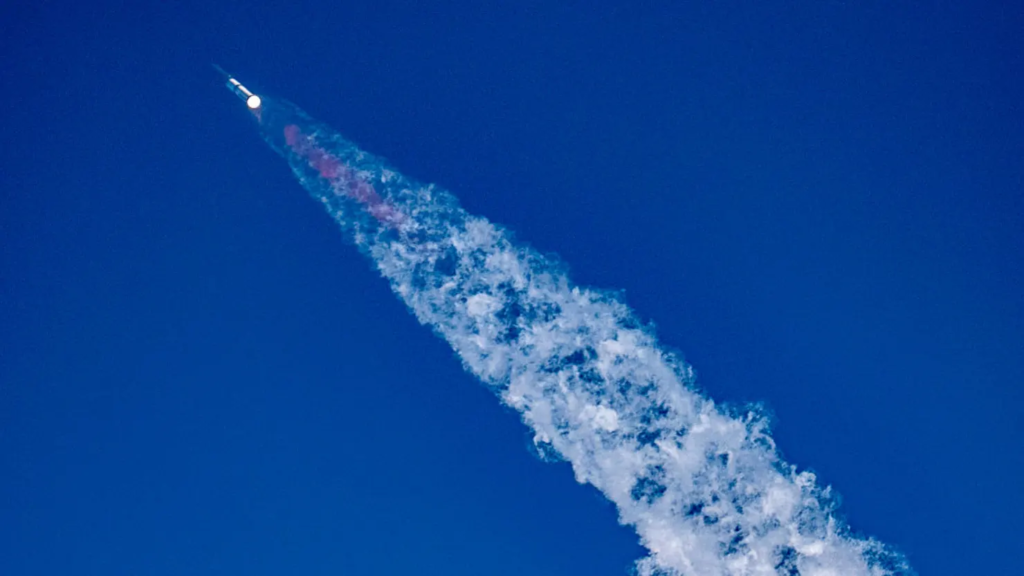
Livestreams on SpaceX’s site and social media channels documented the dramatic moments. The first-stage Super Heavy booster exploded shortly after separation, while the upper-stage Starship experienced a major fuel leak, lost tank pressure, then spun wildly out of control before detonating during reentry.
The Federal Aviation Administration (FAA) confirmed the incident, noting it was aware of the “anomaly” and is working with SpaceX on its investigation.
“There are no reports of public injury or damage to public property at this time,” the FAA said in a statement.
Musk claims “big improvement” despite fiery failure
Elon Musk, CEO of SpaceX and one of the most powerful private-sector players in aerospace, framed the mission as progress. On X (formerly Twitter), he posted:
“Starship made it to the scheduled ship engine cutoff, so big improvement over last flight! Also no significant loss of heat shield tiles during ascent.”
Starship made it to the scheduled ship engine cutoff, so big improvement over last flight! Also, no significant loss of heat shield tiles during ascent.
— Elon Musk (@elonmusk) May 28, 2025
Leaks caused loss of main tank pressure during the coast and re-entry phase. Lot of good data to review.
Launch cadence for…
He later confirmed that “leaks caused loss of main tank pressure during the coast and re-entry phase,” suggesting internal failures ultimately doomed the mission. Musk said launches will now occur every 3 to 4 weeks, as SpaceX ramps up testing frequency.
Starship’s Role in SpaceX’s Bigger Vision—and Bigger Risks
Colonizing Mars, dominating orbit, and leading missile defense
The Starship program is central to Musk’s dream of making humanity a “multiplanetary species.” The spacecraft is designed to transport people and cargo across Earth, the Moon, and eventually Mars. But the recent string of failures has added scrutiny to the venture’s risk, oversight, and cost.
In a company post on X, SpaceX wrote:
“With a test like this, success comes from what we learn. Today’s test will help us improve Starship’s reliability as SpaceX seeks to make life multiplanetary.”
As if the flight test was not exciting enough, Starship experienced a rapid unscheduled disassembly. Teams will continue to review data and work toward our next flight test.
— SpaceX (@SpaceX) May 28, 2025
With a test like this, success comes from what we learn, and today’s test will help us improve Starship’s…
FAA’s weakened oversight raises questions
Although the FAA continues to oversee SpaceX launches, Musk’s growing influence in government has raised concerns about accountability. As head of the Trump administration’s Department of Government Efficiency (DOGE), Musk has led efforts to dramatically slash budgets and personnel across key oversight agencies—including the FAA and EPA—which are responsible for regulating his own companies.
These internal cuts have significantly reduced regulatory friction for SpaceX while raising red flags among lawmakers and watchdog groups.
Taxpayer Funding, Explosions, and National Defense
$19 billion in public funds—and counting
Since 2008, SpaceX has received more than $19 billion in federal funding, according to research by FedScout. The company is expected to collect billions more annually in coming years through government contracts for civil, commercial, and military programs.
Most notably, SpaceX and two of its partners are considered frontrunners to secure major contracts for President Donald Trump’s “Golden Dome” missile defense shield, a massive defense initiative first reported by Reuters.
Despite the high failure rate of Starship’s test program, these defense contracts—and broader government support—remain largely intact.
Will Starship Fly or Flop?
Starship’s success depends on more than tech
The technical progress SpaceX claims—like better heat shield durability and longer flight duration—offers hope. But three back-to-back explosions have raised a simple, pressing question: Can Starship deliver safely and reliably under real-world conditions?
SpaceX now holds regulatory approval to increase Starship launch frequency after being previously limited to just five flights per year from Texas. The FAA granted a cadence expansion earlier this month, paving the way for Musk’s ambitious 3-to-4-week launch cycle.
Still, each “rapid unscheduled disassembly,” as SpaceX euphemistically describes its failures, invites more scrutiny over how much risk and taxpayer money the public is willing to accept in the name of interplanetary progres
🔚
SpaceX may continue testing and iterating with unmatched speed, but its path to Mars—or even to dependable Earth orbit—is proving to be a trial-by-fire. Musk remains undeterred, regulators remain compromised, and billions of dollars hang in the balance.
The explosion may not surprise seasoned followers of the Starship program, but the stakes—from national defense to scientific exploration—are only rising with every launch.
Want to earn some extra money on the side? Buy PCPi Coin or Subscribe to VIP and get dividens monthly.
____
Associated Press, CNBC News, Fox News, and preCharge News contributed to this report.