
 Eduardo Sifuentes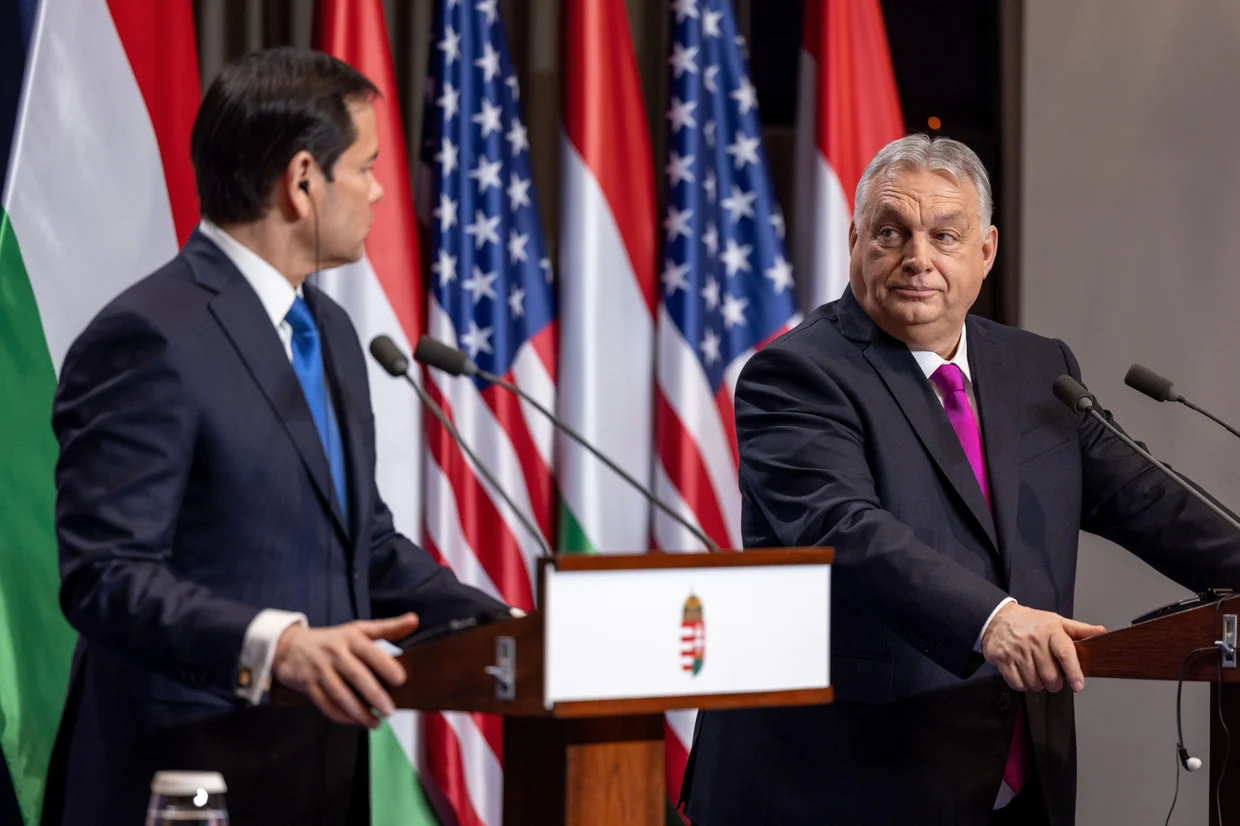

preCharge News POLITICS — The United States and Hungary signed a civilian nuclear cooperation agreement on Monday, deepening bilateral ties at a politically sensitive moment for Budapest and underscoring the Trump administration’s push to reshape energy alliances in Central Europe.
U.S. Secretary of State Marco Rubio traveled to Budapest for meetings with Hungarian Prime Minister Viktor Orbán, where the two leaders finalized the pact.
The agreement comes just two months before Hungary’s parliamentary elections, which could determine whether Orbán maintains his two-decade grip on power.
What the U.S.–Hungary Nuclear Deal Covers
Cooperation on SMRs, Fuel Supply, and Waste Management
The agreement builds on a Memorandum of Understanding on Nuclear Energy signed in November 2025, launching formal cooperation across the civilian nuclear sector.
Areas of collaboration include:
- Development of small modular reactors (SMRs)
- Nuclear fuel supply diversification
- Spent fuel storage and management
The U.S. State Department said the deal will “deliver decades of cooperation in nuclear energy” and support efforts to make Hungary a regional hub for SMR development, while encouraging Budapest to adopt U.S. nuclear technology.
Reducing Reliance on Russian Nuclear Technology
A Strategic Shift Away From Moscow
Hungary relies heavily on nuclear power and has long depended on Russian technology and fuel, even as much of Europe has sought to cut energy ties with Moscow following President Vladimir Putin’s war in Ukraine.
Under the new agreement:
- Hungary will purchase nuclear fuel from U.S. suppliers for the first time
- U.S.-based Holtec International will assist with managing spent nuclear fuel
For Budapest, the deal provides an alternative to Russia and signals a gradual diversification of its nuclear supply chain.
Political Stakes for Orbán Ahead of Elections
A Diplomatic Win Before the April Vote
Orbán, leader of the far-right Fidesz party and a longtime ally of President Donald Trump, has repeatedly praised his relationship with Washington.
After the agreement was signed, Rubio told Orbán he could say “with confidence” that President Trump is “deeply committed to your success.”
Orbán hailed the pact as evidence that “a new golden age has set upon us” in U.S.–Hungarian relations, framing the agreement as both an economic and diplomatic achievement ahead of the April 12 parliamentary elections.
Ukraine War and Regional Diplomacy
Budapest Positions Itself as a Potential Mediator
Orbán reiterated Hungary’s offer to host a peace summit between Ukraine and Russia as part of Trump’s broader effort to broker an end to the war.
While Orbán and Trump previously suggested a possible Trump–Putin meeting in Budapest, the White House later said no such meeting was planned.
U.S. Strategy: Energy Security and Influence
Countering Russia and China in Central Europe
For Washington, the civil nuclear agreement advances two central objectives:
- Reducing Russian and Chinese influence in Central Europe’s energy sector
- Expanding overseas markets for American nuclear technology
Hungary currently operates four Russian-built VVER-440 reactors at the Paks nuclear power plant, which generate nearly half of the country’s electricity.
In 2025, the Trump administration lifted sanctions on the Paks expansion project, enabling Budapest to proceed with upgrades while simultaneously opening the door to U.S. involvement in the sector.
A Long-Term Energy Realignment
Implications Beyond Hungary
While Hungary’s nuclear ties to Russia remain significant, the new agreement marks a notable shift in alignment, positioning the U.S. as a long-term partner in Hungary’s civilian nuclear future and strengthening Washington’s footprint in Europe’s evolving energy landscape.
Want to earn some extra money on the side? Buy PCPi Coin or Subscribe to VIP and get dividens monthly.
____
Associated Press, CNBC News, Fox News, and preCharge News contributed to this report.