 Eduardo Sifuentes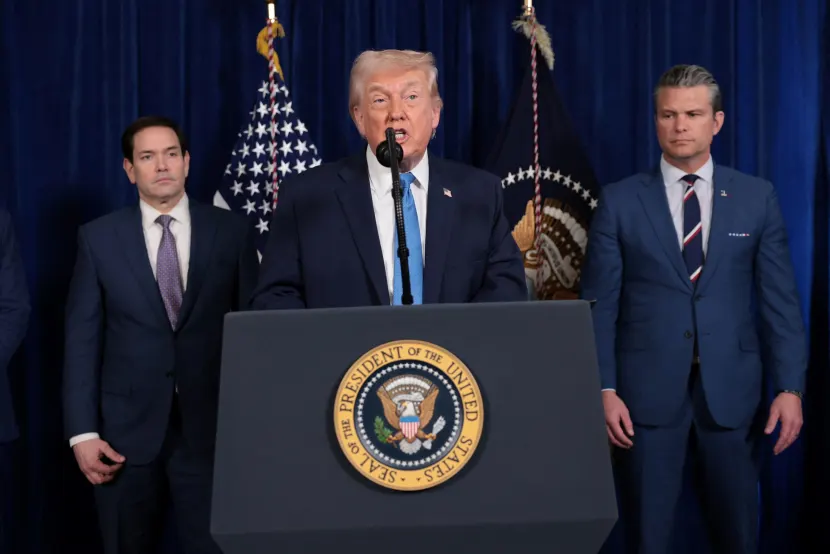

preCharge News POLITICS — President Donald Trump on Friday defended the continued absence of a peace and nuclear agreement with Iran, once again targeting the Obama administration’s landmark nuclear accord as negotiations with Tehran remain unresolved months into the ongoing conflict.
Speaking in an interview with NBC News, Trump argued that previous U.S. leadership allowed Iran to strengthen its position and claimed that the 2015 nuclear agreement failed to adequately prevent Tehran from pursuing nuclear capabilities.
The comments come as the Trump administration continues efforts to negotiate a broader agreement with Iran amid an extended regional conflict and growing concerns over nuclear proliferation.
Trump Blames Obama-Era Nuclear Deal for Current Challenges
Trump used the interview to criticize the Joint Comprehensive Plan of Action (JCPOA), the multinational nuclear agreement negotiated during the administration of Barack Obama.
Trump Says Previous Leadership Was Weak
“They’ve dealt with very weak and ineffective leadership on behalf of the United States,” Trump said, referring to Iran’s interactions with previous administrations.
When asked why negotiations remain stalled despite his claims that Iran is eager to reach an agreement, Trump suggested diplomatic efforts simply require time.
“It takes a little while. This should have been done long ago,” he said.
President Calls JCPOA a ‘Horrible Deal’
Trump renewed his longstanding criticism of the JCPOA, arguing that the agreement effectively enabled Iran’s nuclear ambitions rather than stopping them.
“That deal was tantamount to giving them a nuclear weapon,” Trump said.
The president withdrew the United States from the agreement in 2018 and has repeatedly argued that any future deal negotiated under his administration would be significantly stronger.
What Was the JCPOA and Why Was It Created?
The JCPOA was finalized in July 2015 following years of negotiations between Iran and the so-called P5+1 nations: the United States, United Kingdom, France, Germany, Russia and China.
Concerns About Iran’s Nuclear Program Date Back Decades
International concerns regarding Iran’s nuclear ambitions intensified throughout the 1990s and 2000s as Tehran expanded its uranium enrichment capabilities and developed advanced centrifuge technology.
The discovery of Iran’s Fordow enrichment facility in 2009 further increased pressure for a diplomatic solution.
In response, world powers pursued negotiations that ultimately led to the Joint Plan of Action in 2014 and later the JCPOA in 2015.
The Agreement Limited Iran’s Nuclear Activities
Under the deal, Iran agreed to strict limitations on uranium enrichment, centrifuge operations and nuclear infrastructure development.
Key provisions included:
- Restricting uranium enrichment to 3.67%.
- Capping Iran’s stockpile of enriched uranium.
- Reducing installed centrifuges.
- Preventing weapons-grade plutonium production.
- Expanding international inspections and monitoring.
In exchange, international sanctions targeting Iran’s nuclear program were lifted under specific conditions.
Supporters Say the Deal Successfully Restricted Iran’s Nuclear Program
Many nuclear experts and former U.S. officials continue to argue that the JCPOA achieved its primary objective: slowing Iran’s pathway to a nuclear weapon.
Verification Measures Were Considered Historic
Ernest Moniz, who helped negotiate the agreement, has described its inspection system as one of the strongest ever implemented.
According to Moniz, inspectors from the International Atomic Energy Agency received unprecedented authority to investigate suspected nuclear activities and access sites under strict timelines.
“The most important feature of the JCPOA were the extraordinary verification and transparency measures,” Moniz said.
Experts Argue the Deal Was Effective
Kelsey Davenport said the monitoring framework established under the JCPOA was unmatched.
“The JCPOA included the most intrusive monitoring and inspection regime ever negotiated,” Davenport said.
Supporters argue that the agreement significantly increased Iran’s nuclear breakout time and created transparency mechanisms that helped detect violations.
Critics Argued the Deal Did Not Go Far Enough
Opponents of the JCPOA have long maintained that the agreement focused too narrowly on nuclear issues while overlooking Iran’s broader regional activities.
Sunset Clauses Became a Major Point of Contention
Critics objected to provisions allowing some restrictions to expire after 10, 15 or 20 years.
They also argued the agreement failed to address:
- Iran’s ballistic missile program.
- Support for regional proxy groups.
- Terrorism concerns.
- Long-term nuclear ambitions.
Among the deal’s prominent critics was current Secretary of State Marco Rubio, who opposed the agreement while serving in the Senate.
Trump Said Withdrawal Was Necessary
In 2018, Trump withdrew the United States from the accord, arguing that maintaining the agreement would ultimately trigger a nuclear arms race across the Middle East.
The withdrawal marked a major turning point in U.S.-Iran relations and altered the trajectory of international nuclear diplomacy.
How Iran’s Nuclear Program Changed After the U.S. Exit
Since the U.S. withdrawal, Iran has gradually exceeded several JCPOA restrictions.
Uranium Stockpiles Expanded Significantly
According to recent assessments by the IAEA, Iran’s enriched uranium inventory has grown substantially beyond the limits originally established under the agreement.
Iran has also increased enrichment levels beyond the thresholds permitted by the deal and reduced some monitoring and transparency commitments.
Many analysts argue these developments have shortened Tehran’s theoretical nuclear breakout timeline compared with the period when the agreement was fully implemented.
Experts Say a New Agreement Faces Greater Challenges
Negotiators today face a much more complex environment than existed in 2015.
Davenport argues that any future agreement must address:
- Expanded Iranian nuclear capabilities.
- Reduced inspection access.
- Technological advances since 2018.
- Political pressures inside Iran.
- Damage caused by military operations and regional conflict.
Can Trump Deliver a Stronger Iran Agreement?
Trump continues to insist that a new agreement is possible and will surpass the Obama-era framework.
However, months of negotiations have yet to produce a final breakthrough.
Analysts Remain Divided
Supporters of Trump’s approach argue that maximum pressure and stronger negotiating positions could ultimately produce a more comprehensive agreement.
Critics contend that abandoning the JCPOA eliminated important safeguards and left the international community with fewer tools to monitor Iran’s activities.
Moniz summarized the challenge by noting that while Iran has long claimed it does not seek nuclear weapons, the purpose of the original agreement was verification rather than trust.
“Don’t trust and verify,” he said.
As negotiations continue without a finalized agreement, the debate over whether the JCPOA represented a diplomatic success or a strategic mistake remains central to discussions about the future of Iran’s nuclear program.
Want to earn some extra money on the side? Buy PCPi Coin or Subscribe to VIP and get dividens monthly.
____
Associated Press, CNBC News, Fox News, and preCharge News contributed to this report.