 Eduardo Sifuentes
Key Takeaways:
- The 1929 crash remains the benchmark for market disasters, wiping out roughly 89% of the Dow’s value
- Nearly every crash on this list was eventually followed by a full market recovery
- The 1987 and 2020 crashes happened far faster than 1929’s multi-year decline
The word “crash” gets thrown around a lot in financial headlines. These are the ones that actually earned it.
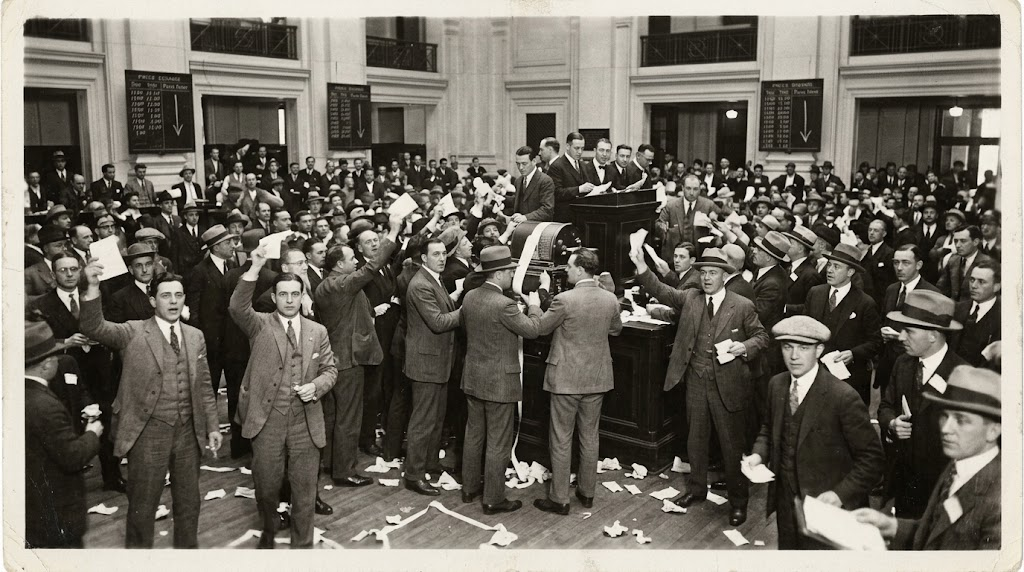
1. The Crash of 1929 — The Dow lost roughly 89% of its value from peak to the 1932 bottom, triggering the Great Depression. It remains the benchmark against which every other crash is measured.
2. Black Monday, 1987 — The Dow fell 22.6% in a single session, still the worst one-day percentage drop in its history.
3. The 2008 Financial Crisis — The S&P 500 fell roughly 57% peak-to-trough between late 2007 and March 2009, driven by the collapse of the mortgage-backed securities market.
4. The Dot-Com Crash, 2000–2002 — The Nasdaq lost close to 78% of its value as speculative internet-era valuations unwound.
5. The COVID Crash, 2020 — The S&P 500 fell about 34% in roughly a month — the fastest bear market in modern history — before staging an equally fast recovery.
6. The 1973–74 Bear Market — Driven by an oil embargo and stagflation, the S&P 500 lost nearly half its value over about two years.
7. The 2022 Bear Market — Rising inflation and aggressive Fed rate hikes drove the S&P 500 down roughly 25% from its highs.
8. The Panic of 1907 — A banking crisis and bank runs, resolved in part by J.P. Morgan personally organizing a rescue — a moment that later helped justify creating the Federal Reserve.
9. Long-Term Capital Management, 1998 — Not a broad crash, but a hedge fund collapse that nearly took the financial system with it, prompting a Fed-organized bailout.
10. The Flash Crash, 2010 — The Dow plunged almost 1,000 points in minutes before recovering the same day, exposing how automated trading can amplify volatility.
The Pattern Worth Noticing: Nearly every crash on this list was followed, eventually, by a full recovery and new highs — the exceptions being cases where investors panic-sold at the bottom rather than staying invested.
Source: Federal Reserve, News.
Frequently Asked Questions (FAQ)
The 1929 crash remains the benchmark, with the Dow losing roughly 89% of its value from peak to the 1932 bottom.
The S&P 500 fell about 34% in roughly a month, the fastest bear market in modern history.
Yes — the Dow had recovered to pre-crash levels by 1989.
Speculative valuations for internet companies with little to no profit collapsed once investors questioned their business models.
Black Monday in 1987, when the Dow fell 22.6% in a single session.
Not always — the 1987 crash did not directly trigger a recession, unlike 2008’s.
A crash is a sharp, fast decline, while a correction is a 10%+ decline that plays out over a longer period.
The crisis exposed the need for a lender of last resort, directly influencing Congress to create the Fed in 1913.
Automated “program trading” accelerated the 1987 crash, which led directly to the creation of circuit breakers.