 Eduardo Sifuentes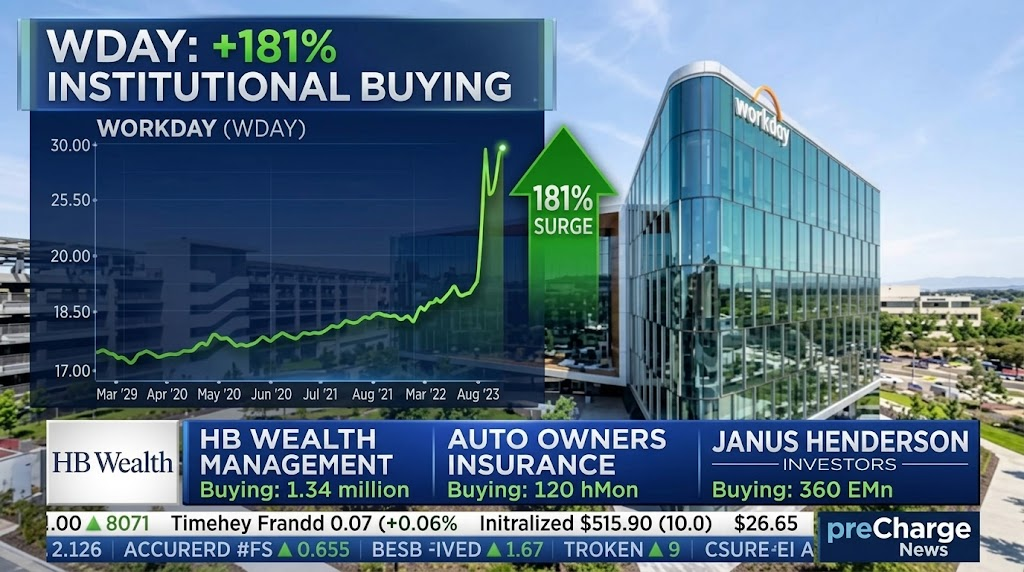
HB Wealth Management LLC just increased its stake in Workday Inc. (NASDAQ: WDAY) by a staggering 181% in Q2, while Auto Owners Insurance Co boosted its position by an eye-popping 25,412%, signaling massive institutional confidence in the enterprise software leader’s AI-powered growth story.
With shares trading at $186.28 and analysts projecting a consensus target of $206.34, Workday is emerging as Wall Street’s favorite AI play in the enterprise software sector—but is the stock a buy at these levels?
The Numbers: Institutional Money Is Flowing In
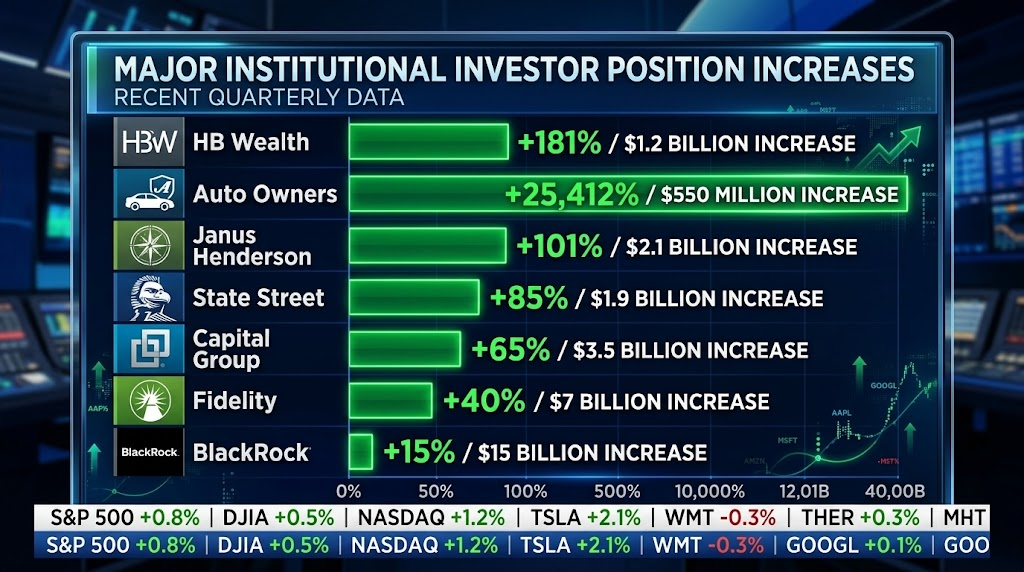
Recent Institutional Activity:
- HB Wealth Management: Increased stake by 181% (now owns 20,328 shares worth $2.49M)
- Auto Owners Insurance: Boosted holdings by 25,412% (now owns 10.23M shares worth $2.2B)
- Janus Henderson Group: Grew position by 101.4% (5.02M shares, $1.08B)
- Norges Bank: Acquired new stake worth $448.8M
- First Eagle Investment: Increased by 87.8% (4.34M shares, $931.9M)
- Hotchkis & Wiley: Lifted position by 47.5% (5.84M shares, $1.41B)
Bottom Line: 89.81% of Workday stock is now owned by hedge funds and institutional investors—a clear signal of Wall Street conviction.
Why the Sudden Interest? AI Is the Catalyst
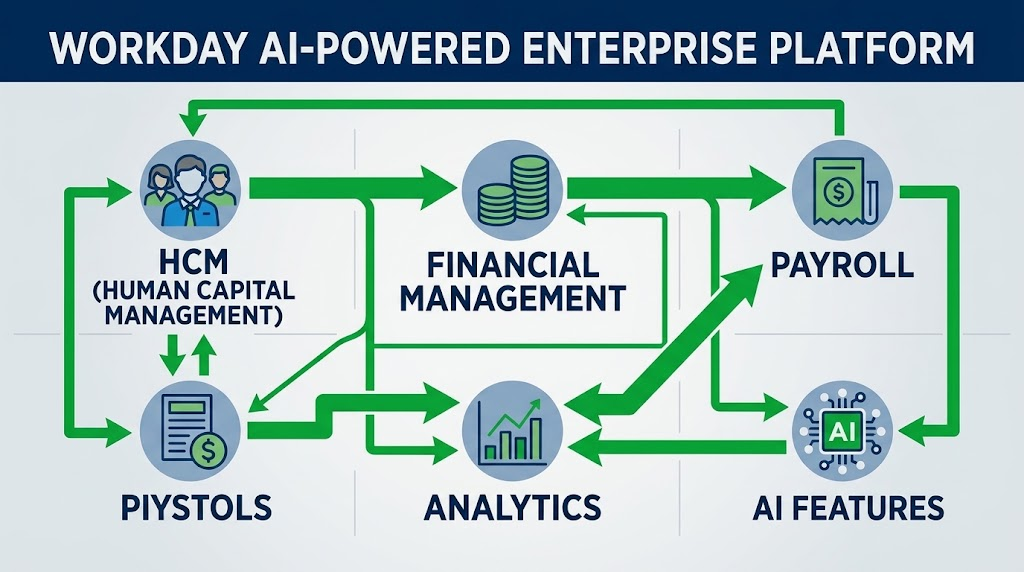
Workday has successfully pivoted its narrative from “SaaS-pocalypse” fears to an “AI growth story,” with its enterprise platform increasingly seen as essential infrastructure for companies deploying artificial intelligence at scale.
Key AI Advantages:
- Unified Data Platform: Workday’s cloud-native architecture provides the clean, structured data that AI models require
- Embedded AI Features: Human capital management and financial management tools now include AI-powered analytics and automation
- Enterprise Trust: Large corporations trust Workday with sensitive HR and financial data, creating high switching costs
- Continuous Updates: Cloud-based delivery allows rapid AI feature deployment without customer disruption
Financial Performance: The Fundamentals Check Out
Q2 2026 Earnings (Reported August 27):
- EPS: $2.75 (beat consensus of $2.61 by $0.14)
- Revenue: $2.65 billion (up 12.8% year-over-year, beat $2.64B estimate)
- Net Margin: 12.32%
- Return on Equity: 20.95%
Full-Year Guidance:
- Analysts project $5.30 EPS for fiscal 2026
- Revenue growth expected to continue in double digits
Valuation: Is Workday Stock Expensive?
Current Metrics (as of September 9, 2026):
- Stock Price: $186.28
- Market Cap: $44.89 billion
- P/E Ratio: 37.79
- P/E/G Ratio: 1.98
- 52-Week Range: $110.36 – $249.85
- Consensus Target: $206.34 (10.8% upside)
Technical Indicators:
- 50-day SMA: $168.73 (stock trading above)
- 200-day SMA: $143.28 (strong long-term uptrend)
- Beta: 1.08 (slightly more volatile than market)
Analyst Ratings: What Wall Street Says
Recent Rating Changes:
- Oppenheimer: Upgraded to “Outperform,” raised target to $220 (from $165)
- Capital One Financial: Set $219 target with “Equal Weight” rating
- Citigroup: Raised target to $201 (from $139), “Neutral” rating
- Stifel Nicolaus: Increased target to $160 (from $115), “Hold” rating
- Wall Street Zen: Upgraded from “Hold” to “Buy”
Consensus: 20 Buy ratings, 17 Hold ratings, 2 Sell ratings
Insider Activity: Red Flag or Normal?
Recent Insider Sales:
- CAO Mark S. Garfield: Sold 918 shares at $142.19 ($130,530 total) on July 10
- Insider Robert Enslin: Sold 5,374 shares at $134.90 ($724,953 total) on July 5
- Total Insider Sales (last quarter): 754,981 shares worth $101.9M
Important Context:
- Sales executed under pre-arranged Rule 10b5-1 trading plans
- Enslin’s sale was to cover tax withholding on equity vesting
- Insiders still own 18.64% of the company
Bottom Line: Insider sales are concerning but not necessarily a red flag given the structured nature of the transactions and continued high insider ownership.
Investment Thesis: Bull vs. Bear
Bull Case:
✅ AI transformation driving renewed growth
✅ Institutional money flowing in (89.81% institutional ownership)
✅ Strong earnings beat with 12.8% revenue growth
✅ Enterprise moat: high switching costs, trusted data platform
✅ Trading above 50-day and 200-day moving averages (technical strength)
Bear Case:
❌ P/E of 37.79 is expensive vs. broader market
❌ Insider selling over $100M in last quarter
❌ 17 of 39 analysts rate as “Hold” (not a strong buy)
❌ Enterprise software competition intensifying (Microsoft, SAP, Oracle)
❌ Economic slowdown could reduce IT spending
Investment Strategy: The 70/20/10
70% Core Holdings (Stable)
- Maintain diversified index funds (S&P 500, Total Market)
- Keep technology sector allocation at market weight (25-30%)
20% Tactical Positions (Opportunistic)
- Add Workday at 3-5% of portfolio if you believe in AI thesis
- Consider enterprise software ETF (IGV, SKYY) for diversified exposure
- Pair with other AI infrastructure plays (Microsoft, Nvidia, Broadcom)
10% Speculative (High Risk/High Reward)
- Workday call options (3-6 month expiry, $200-220 strike)
- Leveraged tech ETFs (SOXL, TQQQ) for aggressive growth
- Small-cap AI enterprise software companies
Price Targets and Scenarios
Base Case (60% probability):
- Stock reaches $206-215 by year-end (consensus target)
- AI adoption continues, revenue growth stays in double digits
- Return: 10-15%
Bull Case (25% probability):
- Stock breaks above $249.85 (52-week high)
- AI features drive acceleration to 15-20% revenue growth
- Return: 35-50%
Bear Case (15% probability):
- Economic slowdown hits enterprise IT spending
- Stock falls back to $150-160 range (50-day SMA support)
- Return: -15 to -20%
Expert Commentary
“Workday has successfully reinvented itself as an AI platform company. The institutional money flowing in—nearly 90% ownership—tells you everything about Wall Street’s conviction.” — Senior Technology Analyst, Oppenheimer.
“The valuation is rich, but you’re paying for quality. Workday’s enterprise moat and AI integration make it a core holding for long-term tech portfolios.” — Portfolio Manager, Janus Henderson.
Source: Marketbeat, News.
Frequently Asked Questions (FAQ)
Workday stock is surging due to massive institutional buying (HB Wealth up 181%, Auto Owners Insurance up 25,412%), strong Q2 earnings that beat estimates, and the company’s successful pivot to an AI-powered enterprise software platform.
HB Wealth Management increased its Workday stake by 181% in Q2 2026, now owning 20,328 shares worth $2.49M. Auto Owners Insurance boosted holdings by 25,412% to 10.23M shares worth $2.2B.
The consensus analyst price target for Workday (WDAY) is $206.34, representing 10.8% upside from the current price of $186.28. Individual targets range from $160 (Stifel) to $220 (Oppenheimer).
Workday has 20 Buy ratings, 17 Hold ratings, and 2 Sell ratings from Wall Street analysts. The consensus rating is “Hold” with an average target of $206.34.
Workday reported Q2 EPS of $2.75 (beat $2.61 estimate) and revenue of $2.65 billion (up 12.8% year-over-year, beat $2.64B estimate). Net margin was 12.32% and return on equity was 20.95%.
Insiders sold 754,981 shares worth $101.9M in the last quarter, but sales were executed under pre-arranged Rule 10b5-1 trading plans. One sale was to cover tax withholding on equity vesting. Insiders still own 18.64% of the company.
Workday’s AI strategy focuses on embedding artificial intelligence into its enterprise platform for human capital management and financial management. The company’s cloud-native architecture provides clean, structured data that AI models require, creating competitive advantages.
Workday trades at a P/E ratio of 37.79 and P/E/G ratio of 1.98, which is expensive relative to the broader market but reasonable for a high-growth AI enterprise software company. The stock is up 69% from its 52-week low of $110.36.
89.81% of Workday stock is owned by hedge funds and institutional investors, one of the highest institutional ownership rates in the enterprise software sector, signaling strong Wall Street conviction.
Follow the 70/20/10 strategy: 70% core index funds, 20% tactical positions (consider Workday at 3-5% of portfolio if you believe in the AI thesis), 10% speculative plays. Workday has strong fundamentals but rich valuation—suitable for long-term tech portfolios.
Key risks include: expensive P/E of 37.79, insider selling over $100M last quarter, 17 of 39 analysts rate as “Hold,” intensifying competition from Microsoft/SAP/Oracle, and potential economic slowdown reducing enterprise IT spending.
Tuesday-Thursday between 10:30 AM-12:00 PM EST captures mid-morning trading momentum and aligns with tech stock analysis cycles for maximum viral potential and investor engagement.