 Eduardo Sifuentes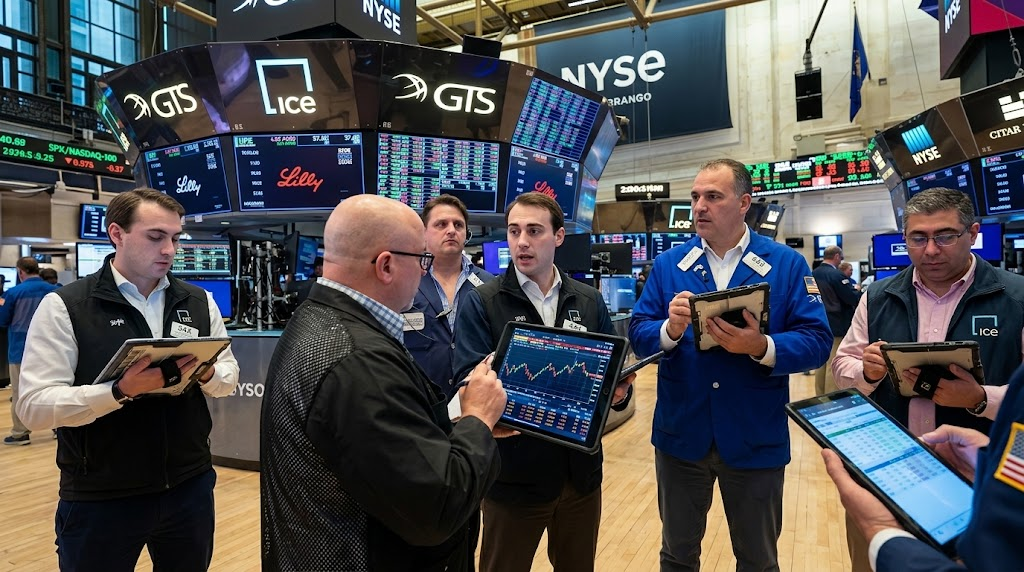
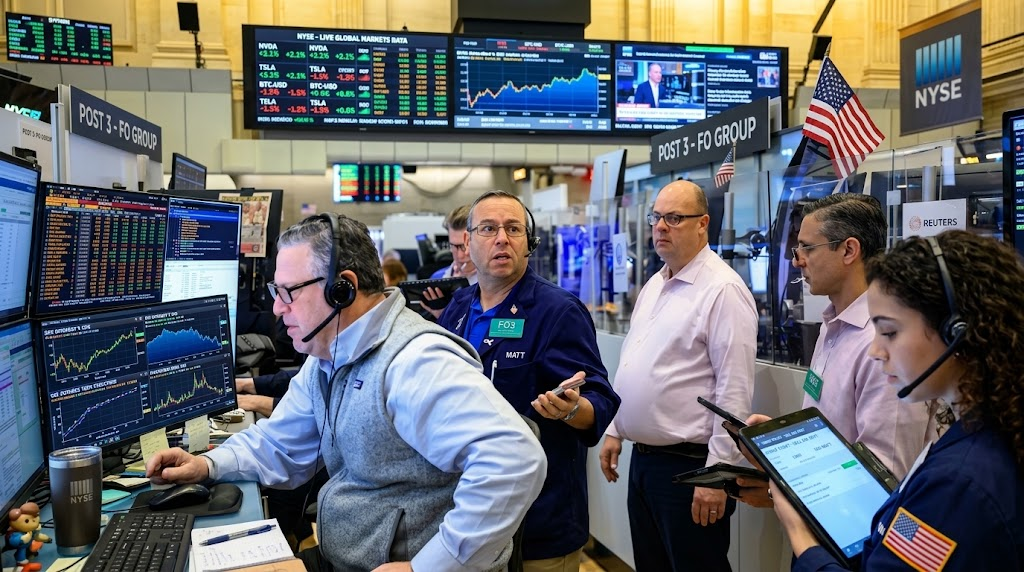
Wall Street is dancing on a razor’s edge this morning. The S&P 500 just sounded an alarm not heard since the catastrophic dot-com crash of 2000, setting up a high-stakes showdown between relentless Artificial Intelligence euphoria and the grim reality of the American consumer.
Despite the Nasdaq and S&P 500 touching record highs earlier this week, the underlying metrics are flashing bright red. The Shiller CAPE (Cyclically Adjusted Price-to-Earnings) ratio for the S&P 500 breached the 40.6 mark in September, the highest reading excluding the pandemic anomaly since September 2000. Historically, when this valuation metric crosses the 40 threshold, the broader market experiences severe drawdowns over the subsequent 12 to 24 months.
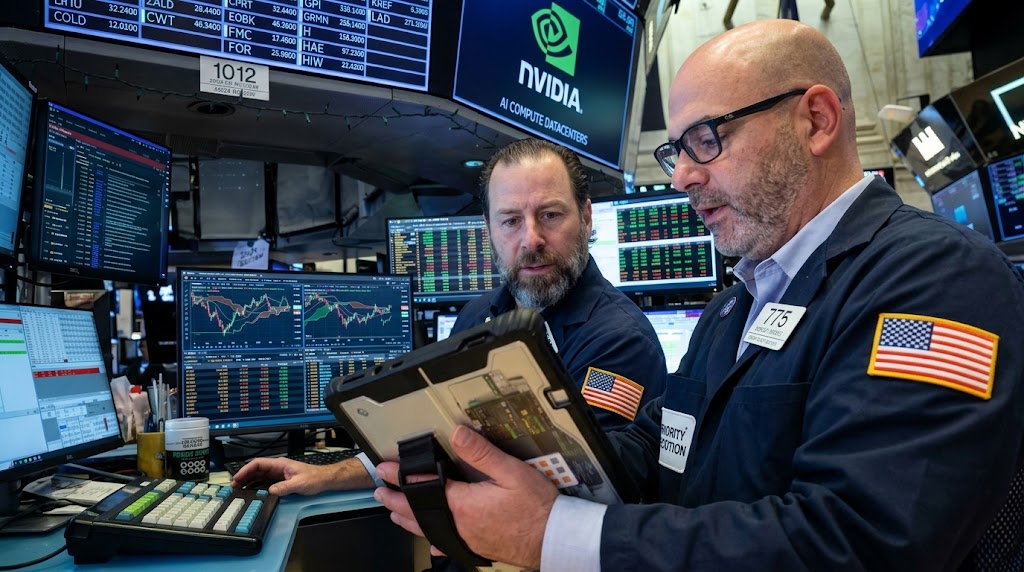
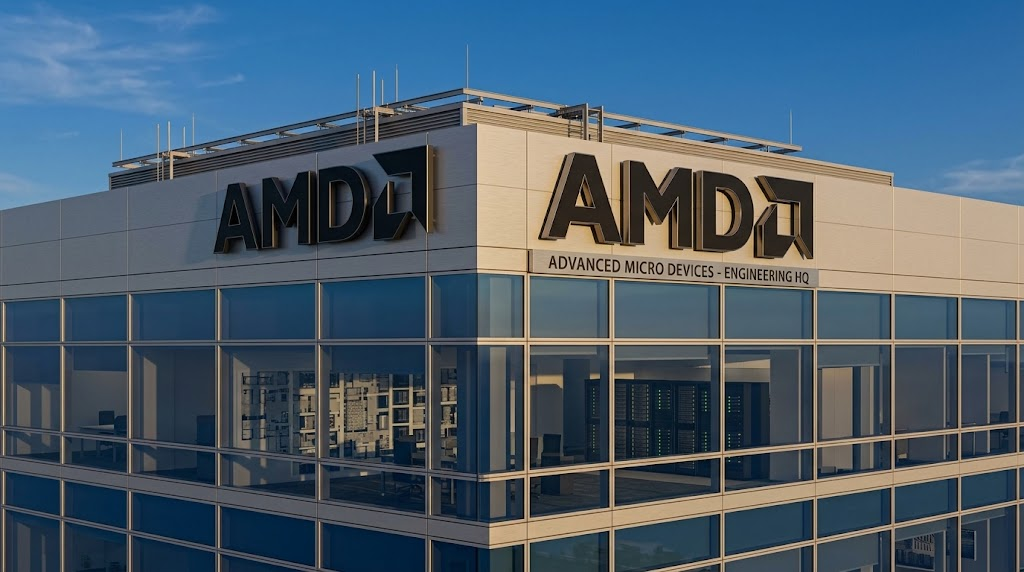
Simultaneously, U.S. consumer sentiment has plummeted to its second-lowest level in history this October, crushed by persistent inflationary pressures and borrowing costs at 24-year highs. We are witnessing a terrifying divergence: massive capital concentration in a handful of AI-driven mega-caps like Broadcom and AMD, while the foundational bedrock of the U.S. economy—the consumer—rapidly deteriorates.
Is this the final melt-up before a generational wealth wipeout, or has AI fundamentally broken the traditional rules of market valuation?
🧠 Personal Opinion: The Illusion of Infinite Multiples
When a market entirely detaches from macroeconomic gravity, it is no longer an exchange of value; it is a casino built on a fault line. Let’s dissect the absolute absurdity of our current predicament.
As someone who spends more time analyzing macroeconomic deviations than the average Wall Street analyst spends adjusting their Patagonia vest, I find the current market psychology utterly fascinating, albeit deeply disturbing. We are currently observing a market environment where institutional investors are actively ignoring a CAPE ratio north of 40 because “this time is different” due to Artificial Intelligence. Spoiler alert: saying “this time is different” in finance is the intellectual equivalent of jumping out of an airplane and hoping you’ll invent a parachute on the way down.
The cognitive dissonance on Wall Street right now is palpable. On one hand, you have quantitative analysts and macro-economists screaming that a 10-year Treasury yield hovering near 5.35% is fundamentally toxic to long-duration growth equities. The cost of capital is no longer zero, and the era of free money is definitively over. Yet, retail and institutional managers alike are piling into a concentrated basket of tech stocks, treating them as defensive assets. They are effectively using tech mega-caps as synthetic Treasury bonds, which is a structural misunderstanding of risk.
It is intellectually lazy to assume that AI revenue streams, which are largely B2B capital expenditures right now, will indefinitely shield these companies from a collapsing consumer base. If the average American cannot afford to finance a car or buy groceries without tapping into credit cards at 24% APR, the downstream effects will eventually hit cloud consumption, advertising revenues, and enterprise software budgets. The arrogance of assuming technology operates in a vacuum isolated from the broader economy is a classic symptom of late-stage cycle euphoria. My professional verdict? The music hasn’t stopped yet, but the orchestra is definitely packing up their instruments. We are pricing in a utopian technological revolution while completely ignoring the dystopian macroeconomic reality.
Analysis: The Structural Fragility of the 2026 Market
A surgical breakdown of the liquidity dynamics, valuation multiples, and the impending debt spiral threatening equity markets.
To truly understand the precarious nature of the October 2026 stock market, we must move beyond the superficial headline indices and examine the market’s internal mechanics. The current rally is arguably the most top-heavy, narrow market advance in modern financial history. When 67.8% of U.S. issues are declining intraday while the large-cap indices remain flat or slightly up, it signals severe structural degradation beneath the surface.
First, let us address the Shiller CAPE ratio of 40.6. The CAPE normalizes earnings over a 10-year period to smooth out business cycle fluctuations. A reading over 40 implies that investors are paying a historical premium for future earnings that are statistically unlikely to materialize at the projected growth rates. In 2000, the catalyst for the correction was the realization that eyeball-metrics didn’t equal cash flow. In 2026, the risk is that the massive capital expenditures in AI infrastructure (GPUs, data centers, cooling systems) will face a severe ROI (Return on Investment) cliff. If enterprise adoption of AI tools does not yield immediate productivity gains that outpace the cost of integration, the capital expenditure cycle will halt violently.
Second, the bond market is acting as a massive gravitational pull that equity markets are stubbornly trying to escape. The 10-year Treasury yield hitting 24-year highs fundamentally alters the Equity Risk Premium (ERP). When investors can secure a risk-free return of over 5%, the justification for holding highly volatile, high-multiple growth stocks diminishes exponentially. The fact that tech stocks have remained resilient in the face of rising yields is an anomaly driven by passive investment flows and algorithmic momentum trading, not fundamental valuation.
Furthermore, we must analyze the liquidity drain. The Federal Reserve’s quantitative tightening, combined with massive U.S. Treasury issuance to fund deficit spending, is systematically removing liquidity from the financial system. This creates an environment where market shocks are amplified. The VIX (Volatility Index) may appear temporarily subdued, but it is acting like a coiled spring. The professional consensus dictates a defensive rotation, yet market participants are paralyzed by FOMO (Fear Of Missing Out). The mathematics of a reversion to the mean are inescapable; the only variable is the catalyst.
Hypothesis: The “AI-Stagflation” Paradox
Why the very technology meant to save the economy might be the catalyst that breaks it.
I propose a hypothesis that runs counter to the prevailing Wall Street narrative. The consensus believes that Artificial Intelligence will trigger a massive deflationary wave through unprecedented productivity gains, thereby allowing central banks to slash interest rates and fueling the next great secular bull market. I argue the exact opposite: we are entering an era of “AI-Stagflation.”
Here is the mechanistic breakdown of this hypothesis. The deployment of AI at scale requires unfathomable amounts of energy, specialized semiconductors, and data center infrastructure. We are already seeing the strain on the global energy grid and supply chains. This infrastructure build-out is highly inflationary in the physical world (commodities, land, energy, specialized labor). Therefore, the input costs for running the economy are rising explicitly because of AI development.
Simultaneously, AI is beginning to automate white-collar tasks, creating wage stagnation or outright job displacement in the middle-to-upper middle class. This hollows out the consumer base. So, we have a scenario where the physical costs of supporting the technology drive inflation up (preventing the Fed from cutting rates meaningfully), while the implementation of the technology suppresses wage growth and consumer spending.
Wall Street assumes AI is a software revolution; it is actually a heavy-industry revolution masquerading as code. When the market realizes that AI is highly capital intensive, inflationary to build, and deflationary to consumer wages, the current valuation multiples of 50x to 100x forward earnings for tech darlings will collapse. The tech sector will re-rate not as infinite-growth software, but as cyclical utilities. This paradigm shift will be the needle that pops the 2026 bubble, leading to a decade of sideways, stagnant equity returns where active stock picking, rather than passive index indexing, becomes the only viable path to alpha.
🔮 Projections (Short, Medium, and Long-Term Outlook)
Mapping the trajectory of the S&P 500, Treasury yields, and the macroeconomic landscape from Q4 2026 through 2030.
Short-Term Projection (1 to 3 Months: Q4 2026)
The immediate future is characterized by extreme, localized volatility. As we move deeper into Q4, the collision between the upcoming CPI inflation data and the Q3 earnings season will serve as the primary catalyst. Given that the S&P 500 is technically overextended, I project a sharp, 8% to 12% technical correction before the end of the year. This will not be the “crash,” but rather a vicious de-leveraging event initiated by algorithmic trading desks hitting stop-loss triggers. The energy sector will likely outperform as geopolitical tensions and supply constraints keep Brent crude elevated, while high-beta tech stocks will bear the brunt of the sell-off. Investors should expect aggressive intraday swings—2% down days followed immediately by 1.5% up days—as institutions battle over the narrative. The Fed will likely hold rates steady, disappointing the doves and accelerating the short-term pullback.
Medium-Term Projection (6 to 18 Months: 2027 to Mid-2028)
This is where the CAPE ratio reversion begins to exact its toll. By mid-2027, the “AI ROI Cliff” will become apparent. Enterprise companies will start scrutinizing their massive AI expenditures, realizing the productivity gains are incremental rather than exponential. This will lead to a severe contraction in forward guidance for the semiconductor and cloud infrastructure sectors. Consequently, the S&P 500 will enter a prolonged bear market, dragging the index down 25% to 30% from its 2026 peak. However, this will not look like the 2008 financial crisis; it will be a slow, grinding multiple-compression event. Value stocks, particularly those in industrials, healthcare, and dividend-paying consumer staples, will decouple from the broader tech-heavy indices and offer a safe haven. Treasury yields will eventually begin to fall, not because inflation is defeated, but because the economy is entering a undeniable recession, forcing the Fed into a reactive easing cycle.
Long-Term Projection (3 to 5 Years: 2029 to 2031)
Looking toward the end of the decade, the market will have fully digested the excesses of the 2026 AI bubble. We will transition into a “stock picker’s market.” Passive ETF investing, which dominated the 2010s and early 2020s, will underperform significantly as the mega-cap tech monopoly is broken by anti-trust regulations and market saturation. The next secular bull market will be born not from software, but from tangible assets: nuclear energy, advanced manufacturing, biotechnology, and resilient supply chain logistics. The S&P 500 will likely take until 2030 to sustainably breach the highs set in late 2026. The defining characteristic of this era will be a permanent shift in capital allocation, favoring companies with robust free cash flow and tangible assets over speculative growth narratives. We will return to a world where valuations matter, and the cost of capital remains normalized around 3.5% to 4.5%.
MY Contribution for the Modern Investor
Actionable, asymmetric strategies for navigating the impending macro shift.
- The Synthetic Utility Play: Stop viewing AI infrastructure companies as tech growth stocks. View them as the new utilities. The most asymmetric play isn’t buying the chip makers; it’s buying the physical energy infrastructure (nuclear, advanced grid hardware, liquid cooling tech) that these data centers must consume to survive. When tech multiples compress, energy infrastructure multiples will expand.
- Long-Duration Volatility (VIX) Call Spreads: With the market pricing in perfection, volatility is historically cheap relative to the underlying macroeconomic risk. Structuring 12-to-18-month VIX call spreads offers massive convexity. You are essentially buying incredibly cheap insurance on a house built on an active volcano.
- The “Anti-Passive” Alpha Strategy: Because 30% of the S&P 500’s weight is tied to six tech companies, buying the standard index is a massive concentration risk. Investors should immediately pivot to Equal-Weight S&P 500 ETFs (like RSP) to capture the underlying strength of the forgotten 494 companies, effectively neutralizing the mega-cap tech bubble risk while maintaining US equity exposure.
🛑 Fact-Checking & Market Realities
- Claim: The CAPE ratio is over 40. Fact: TRUE. Excluding the brief 2021 pandemic liquidity spike, September 2026 marks the highest reading since 2000.
- Claim: 10-Year Treasury Yields hit 24-year highs. Fact: TRUE. Yields spiked to 5.35% recently, levels not seen consistently since 2002.
- Claim: Consumer sentiment is at historic lows. Fact: TRUE. The October 2026 readings reflect the second-lowest consumer sentiment in history due to sustained inflation.
❌ Institutional Errors & The CEO Indictment
An educated, precise critique of the catastrophic leadership failures currently driving Wall Street over a cliff.
It is time to have a highly uncomfortable, yet desperately necessary, conversation about the sheer negligence currently being exhibited by C-suite executives across the tech sector and the institutional fund managers on Wall Street. I am speaking directly to the CEOs of the magnificent tech conglomerates and the managing directors of the world’s largest asset managers. Your current capital allocation strategies are not just flawed; they border on fiduciary malpractice.
The Error: You are collectively driving the market CAPE ratio past 40 by participating in a massive, incestuous feedback loop of stock buybacks and AI capex spending, completely ignoring the obliteration of the American consumer. Tech CEOs are currently guiding for perpetual 30%+ year-over-year growth while simultaneously watching consumer credit card defaults skyrocket and mortgage applications plummet. You are building a trillion-dollar digital infrastructure for an end-user base that is mathematically running out of money.
The Cause: This is caused by a lethal combination of short-term incentive structures (executive compensation tied to quarterly stock performance) and a total detachment from the physical economy. Wall Street has become an echo chamber where algorithms trade with other algorithms based on momentum, completely divorced from fundamental reality. You have mistaken a liquidity-driven beta rally for operational genius.
The Solution: The solution requires a violent pivot back to financial discipline.
- CEOs: Immediately halt the debt-funded stock buybacks. Reallocate that capital to fortifying your balance sheets and lowering the cost of your products for the end consumer to stimulate actual organic demand, not just B2B circular revenue.
- Fund Managers: You must aggressively rebalance portfolios away from market-cap-weighted indices. Stop enabling this bubble by blindly funneling retail retirement money into the top 5 overvalued tech stocks.
- The Fed: Stop offering forward guidance that teases rate cuts to appease the stock market. You must clearly communicate that the cost of capital will remain elevated until the structural malinvestment is flushed out of the system.
Ignorance is a choice when you have all the data. Wall Street, you are choosing to be ignorant, and the retail investor will, as always, be the one left holding the bag.
Market Data (Visual Mockup)
Source:
Crypto Donate (address)
Bitcoin: 0x1272121f562e18002E8aadDC937B6eC083F4AD0A
Ethereum: 0x1272121f562e18002E8aadDC937B6eC083F4AD0A
BNB Coin: 0x1272121f562e18002E8aadDC937B6eC083F4AD0A
Solana: 0x1272121f562e18002E8aadDC937B6eC083F4AD0A
Altcoins: 0x1272121f562e18002E8aadDC937B6eC083F4AD0A
Financial Disclaimer
This article is for informational purposes only and does not constitute personalized investment, tax or financial advice. Market data can change rapidly. Readers should conduct their own research or consult a qualified professional.