 Eduardo Sifuentes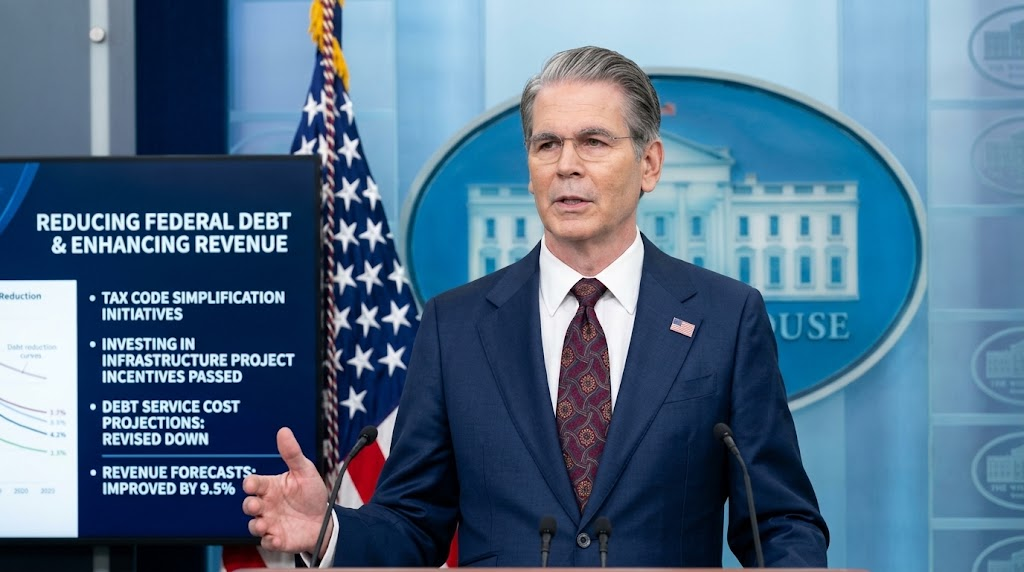
Volatility in the fixed-income market has forced the US government to play a drastic card. With bond yields touching dangerous limits, government intervention has moved from being a rumor to a multi-billion-dollar financial mechanic.
The Core Hub
El secretario del Tesoro, Scott Bessent, ha implementado recientemente una medida sin precedentes al duplicar el tamaño del programa de recompra de bonos a largo plazo, elevándolo de 2.000 millones de dólares a al menos 4.000 millones de dólares mensuales a partir de septiembre de 2026. En esencia, el Tesoro está emitiendo deuda a corto plazo para retirar del mercado los bonos del Tesoro a largo plazo.
Esta medida se produce en un contexto en el que los bonos han sufrido un año terrible, acumulando pérdidas promedio del 3%. El rendimiento del bono del Tesoro a 10 años, que sirve de referencia para las tasas hipotecarias y los préstamos corporativos a nivel mundial, comenzó el año en 4,18% y recientemente superó la amenazante barrera del 5,01%, impulsada por las expectativas de inflación y la postura restrictiva de la Reserva Federal. La inyección mensual de liquidez de 4.000 millones de dólares por parte del Tesoro actúa como un enorme amortiguador, enviando una señal claramente expansiva que ha infundido un optimismo duradero en los mercados de acciones, bonos y metales preciosos (con el oro disparándose recientemente más del 10%).
My Analysis as an Expert
Analyzing the current liquidity matrix, Secretary Bessent’s maneuver is a brilliant tactic in the short term, but a zero-sum game structurally. What we are observing is institutional arbitrage orchestrated by the State itself. By issuing debt on the short end of the curve (Treasury Bills) to buy debt on the long end (10-30 year Bonds), the Treasury is consciously assuming continuous rollover risk to artificially suppress the term premium.
From the perspective of modern monetary theory and the mechanics of financial plumbing, this directly contradicts the quantitative tightening (QT) efforts of Kevin Warsh’s Federal Reserve. While the central bank attempts to tighten financial conditions to stifle inflation, the fiscal arm is loosening them by putting an invisible cap on long-term yields. It is a low-intensity financial civil war: the Fed steps on the brakes, the Treasury steps on the gas. Four billion dollars a month may seem like a drop in the ocean of a $27 trillion debt market, but in illiquid markets dominated by systematic traders, the signaling effect is asymmetrically massive. It generates an implicit Treasury “put,” distorting natural price discovery.
Personal Hypothesis, Critiques, and Projections
Me dirijo a los artífices de esta política en Washington con el mayor respeto diplomático, pero con una profunda frustración técnica. Estimado Secretario Bessent, intentar paliar la caída de los rendimientos con bonos a corto plazo antes de las elecciones es el equivalente financiero a recetar analgésicos para una fractura compuesta. El error fundamental reside en el desajuste de plazos a nivel soberano. Al sobrecargar el tramo corto de la curva, Estados Unidos se expone a una devastadora crisis de tipos si la inflación repunta y la Reserva Federal se ve obligada a mantener los tipos a corto plazo por encima del 5,5% durante los próximos tres años.
Projections and Solutions:
- Short Term: This intervention will work. 10-year yields will oscillate around 4.70%, providing oxygen to tech stocks and keeping mortgage collapses at bay.
- Medium Term: My hypothesis is the “Refinancing Gridlock.” In 2027, the mountain of short-term bills that must be rolled over will clash with apathetic foreign demand, causing failed debt auctions that will skyrocket intraday VIX volatility to levels above 35.
- My Exceptional Idea/Solution: The Treasury should structure and issue 50-year “GDP-Linked Bonds.” Instead of manipulating the yield curve with short-term buybacks, issue ultra-long debt where the coupon flows in parallel with the country’s real economic growth, attracting massive international passive institutional capital and eliminating immediate rollover risk. This would stabilize the market without directly conflicting with the Federal Reserve’s policy.
My Personal Opinion
On a personal note, this dichotomy between monetary and fiscal policy is intellectually offensive to me. We live in a financial architecture where the “free market” is an illusion carefully curated by government spreadsheets. The decision to inject fiscal contributions to alter the sovereign bond yield curve seems, frankly, an act of technocratic arrogance that masks the true structural deficiencies of the economy.
I understand the panic. A 10-year bond crossing 5% destroys the value of collateral in the shadow banking system. But by intervening in this manner, we are depriving the system of the necessary economic forest fires that clear out the underbrush (overleveraged zombie companies). We are sacrificing the long-term health of the dollar and confidence in the neutrality of US capital markets on the altar of short-term political convenience. My advice to this elite audience is simple: watch gold. Gold is not up 10% by accident; it is sniffing out the silent currency devaluation that this bond manipulation implicitly demands. The market is screaming the truth at you, you just have to know how to listen through the regulatory noise.
Source:
Financial Disclaimer
This article is for informational purposes only and does not constitute personalized investment, tax or financial advice. Market data can change rapidly. Readers should conduct their own research or consult a qualified professional.