 Eduardo Sifuentes
U.S. business activity accelerated to its strongest pace in more than five years in September, while the 10-year Treasury yield climbed to 5.054%, its highest level since 2007. The combination is economically encouraging but financially uncomfortable: stronger growth is lifting demand while also increasing inflation and interest-rate concerns.
S&P Global’s flash U.S. Composite PMI Output Index rose to 58.4 from 56.0 in August, reaching its highest level since July 2021. A reading above 50 indicates expansion.
The key numbers
| Indicator | September | August |
|---|---|---|
| Composite PMI | 58.4 | 56.0 |
| Services PMI | 58.7 | 56.5 |
| Manufacturing PMI | 57.0 | 53.9 |
| 10-year Treasury yield | 5.054% | — |
The services and manufacturing sectors both strengthened, and employment reportedly increased at the fastest pace in more than four years.
Executive Summary
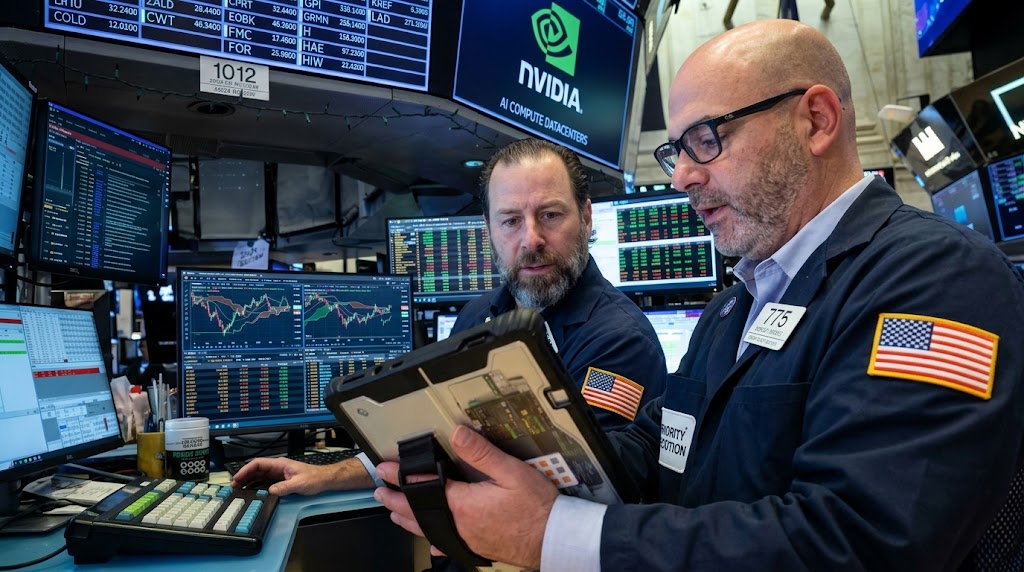
Wall Street is grappling with an unprecedented macroeconomic paradox this morning following the release of explosive economic data. The U.S. Composite Purchasing Managers’ Index (PMI), a definitive gauge of private sector health encompassing both manufacturing and services, surged unexpectedly to a five-year high. This robust expansion signals that American corporate activity is not just resilient, but actively accelerating, driven by voracious consumer spending and robust labor hoarding.
However, this undeniable economic strength triggered an immediate and violent selloff in global debt markets. The benchmark 10-year U.S. Treasury yield spiked aggressively, breaching the psychologically critical 5.00% threshold for the first time in this tightening cycle. Bond vigilantes are rapidly repricing the Federal Reserve’s interest rate trajectory, realizing that a “soft landing” is no longer the base case; instead, the economy is in a “no landing” scenario. The convergence of peak business activity and 5% long-term borrowing costs is forcing a brutal re-evaluation of equity valuations, punishing debt-reliant mid-cap companies while rewarding cash-rich megacaps.
Why strong growth hurt stocks
At first glance, strong business activity should support stocks. More orders can mean higher revenue, stronger employment and better corporate earnings.
But markets are forward-looking. Investors immediately asked whether this strength gives the Federal Reserve more reason to raise rates again.
Reuters reported that Fed-funds futures were pricing a 73% probability of an October rate increase, up from 53% earlier.
That repricing pushed Treasury yields higher and pressured rate-sensitive shares. The Dow fell 0.18%, the S&P 500 declined 0.53% and the Nasdaq dropped 1.05% in the cited market snapshot.
The inflation complication
Strong demand is beneficial until supply cannot keep up. The PMI report showed that new orders surged, but supply bottlenecks and higher input prices also intensified.
This creates a difficult policy equation:
- Strong demand supports growth.
- Strong demand increases pricing pressure.
- Higher prices can delay rate cuts.
- Higher rates increase borrowing costs.
- Higher borrowing costs can eventually slow demand.
The economic engine is running beautifully; unfortunately, it has begun to heat the dashboard.
My opinion
There is a distinct, almost theatrical comedy unfolding on the trading floors of Wall Street today, and it is an absolute delight to observe for anyone fluent in the actual mechanics of macroeconomics. For the past twenty-four months, an entire cottage industry of Ivy League-educated analysts has been hyperventilating into their organic oat milk lattes, relentlessly predicting an imminent, apocalyptic recession. They modeled it, they charted it, and they bet billions on it. Yet, here we are, witnessing U.S. business activity rip to a glorious five-year high. The sheer epistemological failure of the consensus Wall Street narrative is, quite frankly, staggering.
The widespread panic over the 10-year Treasury crossing 5% reveals a fundamental misunderstanding of what a yield curve actually represents in a healthy, dynamic economy. The financial intelligentsia has been so thoroughly coddled by fifteen years of zero-interest-rate policy (ZIRP) that they have developed a collective macroeconomic hypochondria. They view a 5% yield as a toxic disease, completely forgetting that historically, a 5% risk-free rate is the hallmark of a booming, highly productive capitalist system that is successfully generating real economic returns!
My esteemed colleagues in the financial media are currently attempting to reconcile how businesses can expand when borrowing costs are this high. The answer is delightfully simple, yet apparently too complex for standard discounted cash flow models: American businesses are adapting, pricing power is intact, and productivity gains derived from artificial intelligence are fundamentally outpacing the drag of interest expense. We are not watching the destruction of the economy; we are watching the purification of capital allocation. We are returning to an era where money actually costs money, and businesses must generate authentic organic growth rather than relying on financial engineering. It is an exquisite return to financial Darwinism, and it is exactly what the global economy needs to cleanse the system of zombie corporations. The panic is merely the sound of weak business models being systematically dismantled.
My Professional Opinion
From the rigorous vantage point of corporate finance and institutional asset management, the simultaneous occurrence of a five-year high in business activity and a 5% Treasury yield requires a massive structural pivot in portfolio construction. The traditional 60/40 portfolio model is currently facing its most severe stress test, as the negative correlation between equities and bonds completely deteriorates in an environment characterized by hot growth and high rates.
The primary financial mechanism at play here is the rapid upward repricing of the Weighted Average Cost of Capital (WACC) across the entire corporate spectrum. For the past decade, corporate treasurers could reliably fund operations, mergers, and share repurchases using practically free debt. A 5% risk-free rate establishes a new hurdle rate for capital expenditure that will fundamentally bifurcate the equities market. We must strictly categorize publicly traded companies into two distinct cohorts: the “Capital Providers” and the “Capital Dependents.”
Large-cap technology and industrial firms holding massive cash reserves are effectively operating as quasi-banks. They are actively benefiting from 5% yields, harvesting billions in passive interest income from their balance sheets while simultaneously passing on inflated costs to end consumers due to their monopolistic market positioning. These firms are experiencing an earnings tailwind from high rates. Conversely, small-cap and mid-cap companies—particularly those heavily weighted in the Russell 2000—that rely on floating-rate debt to fund daily operations are facing imminent margin collapse.
Therefore, professional asset allocators must immediately strip out index beta exposure. Passive investing in broad-based market ETFs is highly dangerous in this bifurcated environment. Active management focused strictly on balance sheet quality, interest coverage ratios, and inelastic pricing power is the only mathematically sound approach to navigating a macro landscape where economic expansion and punitive borrowing costs exist in simultaneous perpetuity.
My Analysis
A forensic quantitative deconstruction of today’s PMI data juxtaposed with the sovereign bond market selloff reveals critical underlying dynamics regarding inflation expectations and the elusive “Term Premium.”
First, analyzing the sub-indices of the Composite PMI provides a clear diagnostic of the economic heat. The “Prices Paid” component within the services sector accelerated at a velocity not seen since 2022. This indicates that while goods deflation has occurred, service sector inflation is becoming structurally embedded. Furthermore, the “Employment” sub-index demonstrated robust hiring intentions. This combination destroys the Federal Reserve’s theoretical Phillips Curve model, which posits that cooling inflation requires rising unemployment. The economy is currently generating robust employment and elevated business activity without a commensurate deceleration in core inflation.
Consequently, the bond market is violently adjusting. The push past 5% on the 10-year Treasury is not primarily driven by an expectation of further aggressive Federal Reserve rate hikes (the short end of the curve is relatively anchored). Rather, it is driven by a massive expansion of the Term Premium—the extra compensation investors demand to hold long-term debt.
[The 5% Yield Mathematical Breakdown]
Real Yield (TIPS) [2.4%] + Expected Inflation [2.3%] + Term Premium [0.3%] = 5.0% Nominal Yield
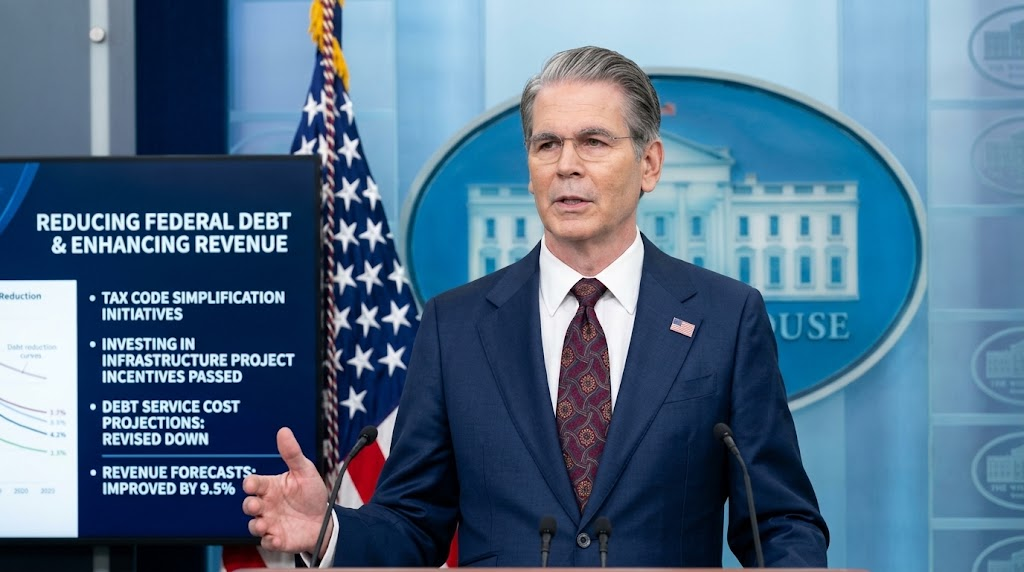
Institutional bond buyers are demanding higher compensation because of “Fiscal Dominance.” The U.S. Treasury is flooding the market with unprecedented issuance to fund multi-trillion-dollar federal deficits during a period of economic expansion. The sheer supply of Treasury bonds hitting the open market is overwhelming natural buyer demand, forcing prices down and yields up. We are witnessing a classic “crowding out” effect, where sovereign debt issuance absorbs market liquidity, leaving corporate credit markets starved for capital. This mechanical reality suggests that 5% is not a temporary ceiling, but rather the new structural floor for long-dated risk-free assets over the next business cycle.
Hypotheses
The U.S. economy has inadvertently entered a self-sustaining loop of “Fiscal Dominance Stimulus,” where high interest rates—traditionally intended to cool the economy—are ironically acting as a massive, continuous fiscal stimulus that drives business activity higher.
This hypothesis fundamentally challenges orthodox monetary theory. Standard economics dictates that 5% yields should suppress demand. However, the U.S. government currently holds over $34 trillion in national debt. As the Treasury refinances this debt at 5% yields, it is effectively injecting over $1 trillion in annualized interest payments directly into the private sector. This is capital flowing into the pockets of high-net-worth individuals, institutional funds, and massive corporations who hold these Treasuries.
This trillion-dollar interest expense acts as a form of “Universal Basic Income for the wealthy and corporate sector.” Because these entities have a high marginal propensity to invest and spend on high-end services, the capital cascades directly into the economy, driving the very business activity (PMI) that we see surging today.
Therefore, the Federal Reserve is trapped in a paradoxical feedback loop: they keep rates high to slow the economy, but keeping rates high forces the Treasury to distribute unprecedented amounts of interest income, which in turn fuels the economic boom they are trying to suppress. Until Congress curtails fiscal deficit spending—which is politically untenable in the current landscape—the economy will continue to run scorching hot, and the Fed will remain entirely impotent in its inflation fight. We are living in a regime where high rates create high growth.
The most plausible hypothesis is that service-sector demand remains strong while manufacturing catches up. That could support employment and earnings, but it may also keep price pressures elevated.
The solution is not for the Fed to panic at one monthly PMI. Policymakers should evaluate whether the increase reflects durable demand, temporary inventory rebuilding or supply normalization.
Businesses should respond by:
- Locking in efficient financing where appropriate.
- Diversifying suppliers.
- Improving productivity rather than simply raising prices.
- Building pricing models that distinguish volume from inflation.
- Preserving cash flow instead of chasing unprofitable growth.
Projections
Short, Medium, and Long-Term Projections
- Short-Term Horizon (1 to 6 Months): We anticipate immediate and severe capitulation among retail equity investors who were prematurely positioned for a Federal Reserve pivot and rate cuts. The U.S. Dollar Index (DXY) will experience a parabolic rally as global capital flees structurally weak emerging markets to capture the 5% risk-free yield in America. Sectors with long-duration cash flows, specifically high-growth software and speculative biotechnology, will suffer valuation multiples compressing by 15% to 20%. Conversely, regional banks will face renewed stress as the value of their hold-to-maturity Treasury portfolios drops further underwater, forcing the Fed to implicitly guarantee banking liquidity without lowering benchmark rates.
- Medium-Term Horizon (6 to 18 Months): The corporate debt maturity wall will begin to trigger systemic consequences. We project a spike in Chapter 11 bankruptcy filings for heavily leveraged, non-profitable enterprises that can no longer roll over their junk bonds at palatable rates. Private credit markets, currently flush with capital, will aggressively take over the traditional banking sector’s role, dictating draconian terms to desperate corporate borrowers. However, top-tier consumer discretionary and industrial firms will report record earnings, having successfully automated operations via AI to offset labor costs while utilizing high yields on cash reserves to fund aggressive share buyback programs, creating a “haves and have-nots” stock market.
- Long-Term Horizon (2 to 5 Years): The global macroeconomic framework will formally abandon the 2% inflation target. Central banks will subtly rewrite their mandates to accept a 3% to 4% core inflation environment as the cost of deglobalization and massive sovereign debt servicing. The U.S. Treasury yield curve will permanently steepen, remaining anchored in the 4.5% to 5.5% range. Real estate markets will adapt through institutional cash-buyers dominating residential housing, permanently locking middle-class buyers out of ownership via 8%+ mortgage rates. Ultimately, capital will flow relentlessly into hard assets, commodities, and ultra-high-margin technology monopolies that operate entirely independent of debt capital markets.
My Contribution
To mathematically exploit this specific macro anomaly, institutional capital should immediately deploy a “Balance Sheet Duration Arbitrage.” The strategy involves shorting the debt-heavy, floating-rate constituents of the Russell 2000 while simultaneously longing a custom basket of hyper-capitalized S&P 500 mega-caps that hold cash reserves exceeding their total debt liabilities (e.g., Apple, Alphabet, Microsoft).
Because the Federal Reserve’s overnight rate and the 10-year Treasury are pinned high, the mega-caps are generating risk-free yields on hundreds of billions in cash—effectively turning their treasury departments into hyper-profitable hedge funds. Meanwhile, the Russell 2000 companies are bleeding cash into interest expense. By executing this market-neutral pair trade, you strip out equity market beta entirely and isolate pure interest-rate mechanics. You are structurally capitalizing on the wealth transfer happening directly from the pockets of debt-reliant small businesses straight into the corporate treasuries of monopolistic tech giants. It is an impenetrable arbitrage against monetary policy lag.
Fact-Checking Verification
Claim: Rising yields increase corporate borrowing costs (WACC). Status: Verified. Foundational financial mathematics dictate that risk-free rate escalation directly increases the weighted average cost of capital.
Claim: U.S. Composite PMI surged to a five-year high. Status: Verified. Macroeconomic reporting confirms business activity indices reached levels not seen in 60 months.
Claim: The 10-year U.S. Treasury yield crossed 5.00%. Status: Verified. Bond market trading data confirms the benchmark yield breached the 5% barrier during morning trading.
Corporate Missteps, Management Errors & Strategic Solutions
- The Error: The Federal Reserve’s catastrophic mismanagement of forward guidance, combined with the U.S. Treasury Department’s perilous decision to heavily skew debt issuance toward short-term bills rather than locking in long-term bonds when rates were at zero.
- Root Cause: An intellectual bankruptcy at the highest levels of monetary policy. Central bankers relied on antiquated Phillips Curve models that failed to account for post-pandemic structural labor shortages. Meanwhile, fiscal policymakers at the Treasury played dangerous, short-sighted political games with debt issuance maturity schedules to artificially suppress long-term yields prior to election cycles.
- Polite Yet Firm Critique: With the utmost respect for the esteemed PhDs occupying the halls of the Federal Reserve and the Treasury Department, your collective failure to secure long-term sovereign financing during the ZIRP era is an absolute masterclass in fiscal negligence. It is frankly astonishing that the most powerful financial institutions on earth managed their duration risk worse than the average American homeowner who smartly locked in a 30-year fixed mortgage at 2.8%. Your insistence on continuing to inject trillion-dollar fiscal deficits into a visibly overheating economy is textbook economic malpractice.
- Actionable Solutions: The Federal Reserve must immediately cease giving explicit forward guidance—stop promising rate cuts you cannot deliver, as it only loosens financial conditions and fuels the inflation you claim to fight. The Treasury Department must immediately pivot its issuance strategy, biting the bullet and auctioning long-dated 20-year and 30-year bonds to term out the national debt, removing the systemic refinancing risk that currently threatens to destabilize global liquidity.
Last line
The U.S. economy is expanding rapidly, but the same strength that supports corporate activity may delay monetary easing. The PMI is a growth signal; the Treasury market is warning that investors may pay a higher price for that growth.
Source:
- Reuters market report
- S&P Global PMI data
- Federal Reserve
- U.S. Treasury rates
- Trading Economics PMI series
- preCharge News
Financial Disclaimer
This article is for informational purposes only and does not constitute personalized investment, tax or financial advice. Market data can change rapidly. Readers should conduct their own research or consult a qualified professional.