 Eduardo Sifuentes
Bitcoin climbed above $81,000 as a sharp rebound in digital assets attracted renewed attention from U.S. traders. The move was supported by short liquidations, fresh spot demand and approximately $159 million of inflows into U.S. spot Bitcoin ETFs on September 17.
Bitcoin closed near $80,875 on September 18, up almost 5.93% from the previous close, while other digital assets also rallied.
What is driving the move
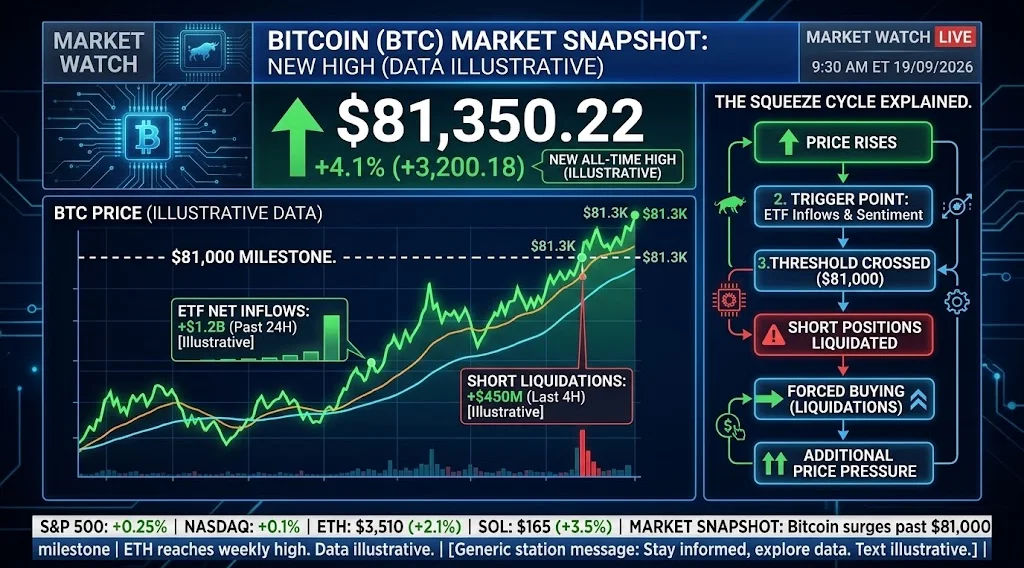
The rally appears to combine three forces:
- Short sellers were forced to buy as prices rose.
- Spot Bitcoin ETF demand returned.
- Lower oil prices and easing macro pressure improved risk appetite.
Cumulative liquidations added volatility. One report said nearly $300 million in leveraged crypto positions were liquidated over four hours.
Liquidations can accelerate both declines and rallies. When traders holding short positions are forced to close by buying Bitcoin, their purchases can push prices higher, triggering additional liquidations.
Why ETF flows matter
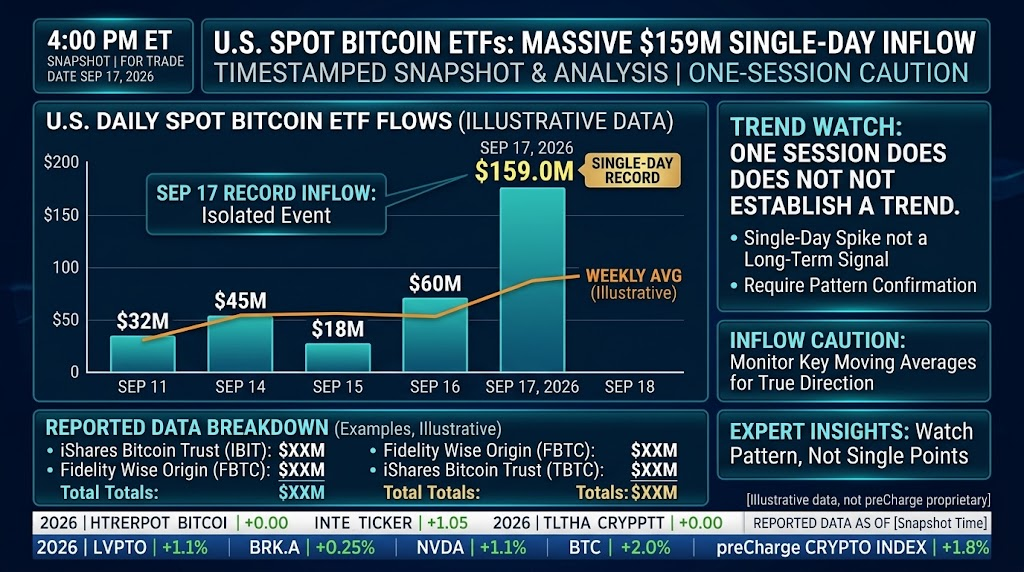
Spot Bitcoin ETFs give institutional and traditional-market investors a regulated way to obtain exposure without holding coins directly.
The reported $159 million inflow on September 17 provided evidence of renewed demand, but one day of inflows does not prove a lasting trend. ETF flows should be evaluated over multiple sessions alongside trading volume, futures positioning and price structure.
The regulatory backdrop
The rally followed a difficult period for crypto policy. A setback for U.S. crypto legislation had previously weighed on sentiment.
At the same time, reports cited an SEC exemption involving certain platforms and tokenized-stock trading as a possible positive catalyst.
These developments should be described carefully. An exemption or regulatory action does not mean that all crypto businesses have received approval or that legal uncertainty has disappeared.
My professional opinion
My view is that Bitcoin’s rally is real but mechanically amplified.
The underlying demand may be genuine, particularly through spot ETFs. But the speed of the move suggests that derivatives and short positioning played a major role. Traders should be cautious when a rally looks strongest precisely because previously bearish traders are being forced to buy.
In plain English: a short squeeze can make the market look smarter than it is. It is the financial equivalent of a crowd running toward a door after someone yells “free pizza.” The crowd is real; the reason for the stampede may be temporary.
Personal hypotheses
Short term
Bitcoin may test the $81,000–$82,000 area while traders decide whether ETF inflows can continue. A failure to hold above $80,000 could trigger profit-taking.
Medium term
If ETF inflows remain positive and macro conditions stabilize, Bitcoin could develop a stronger base. If yields and the dollar rise again, risk assets may face renewed pressure.
Long term
The long-term thesis depends on institutional adoption, regulation, network usage and the ability of the market to absorb supply without excessive leverage.
Fact-check and common errors
Error 1: “Bitcoin rose only because of ETF inflows.”
The move also involved liquidations and derivatives positioning.finance.
Error 2: “A short squeeze proves a new bull market.”
It proves that short positions were forced to close. It does not prove a durable trend.
Error 3: “The SEC exemption legalized all tokenized assets.”
A specific regulatory action does not automatically apply to every platform or token.
Error 4: “Bitcoin above $81,000 guarantees a new high.”
Price levels are not guarantees. Volatility remains high.
What could improve market quality
A healthier rally would show:
- Sustained spot ETF inflows.
- Lower leverage.
- Broader participation.
- Stable futures funding.
- Stronger liquidity.
- Fewer forced liquidations.
- Clearer U.S. regulatory rules.
A rally based mainly on leverage can reverse quickly. A rally supported by spot demand and improving market structure is more durable.
Bottom line
Bitcoin’s move above $81,000 reflects renewed demand, short liquidations and improving risk sentiment.finance.
The next test is whether spot demand continues after the forced buying ends.
Source:
- Bitcoin rally report
- CoinDesk market coverage
- U.S. Securities and Exchange Commission
- Commodity Futures Trading Commission
- Bitcoin ETF data source
- preCharge News
Financial Disclaimer
This article is for informational purposes only and does not constitute personalized investment, tax or financial advice. Market data can change rapidly. Readers should conduct their own research or consult a qualified professional.
Frequently Asked Questions (FAQ)
Short liquidations, renewed spot demand and approximately $159 million of U.S. spot ETF inflows helped support the rally.
Bitcoin closed near $80,875 on September 18, up almost 5.93% from the prior close.
It occurs when rising prices force bearish traders to buy back positions, adding further upward pressure.
One report estimated nearly $300 million in leveraged positions were liquidated over four hours.
They are exchange-traded products designed to track Bitcoin exposure through spot holdings rather than only futures contracts.
They can indicate demand from investors using traditional brokerage accounts.
No. Longer-term flow and price data are needed.
Yes. Forced buying can end, allowing profit-taking or renewed selling.
Rules affecting exchanges, tokenized assets, ETFs and custody could change costs and market access.
No. Bitcoin can experience substantial volatility and losses.
ETF flows, funding rates, open interest, liquidity and whether Bitcoin holds above key price levels.
No. This is general market information.