 Eduardo Sifuentes
What is driving Thursday’s stock-market rebound?
U.S. futures are rising as oil prices fall and Treasury yields ease after the Federal Reserve’s first rate hike since 2023.
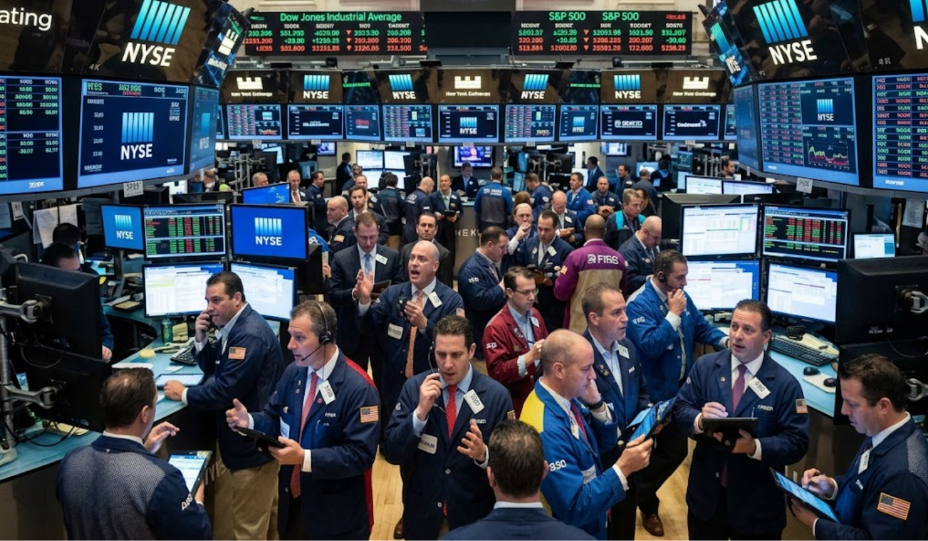
U.S. stock futures rose sharply Thursday as investors looked beyond the Federal Reserve’s first interest-rate increase since 2023 and focused on easing oil prices and lower Treasury yields. At 4:45 a.m. ET, Dow futures were up 0.66%, S&P 500 futures had gained 0.74% and Nasdaq-100 futures had advanced 0.96%.
The rebound followed a difficult Wednesday session in which markets initially struggled with the Fed’s hawkish message. The central bank raised its benchmark rate by 25 basis points to a target range of 3.75%–4.00% and signaled that additional tightening could be needed.
Why stocks are rebounding
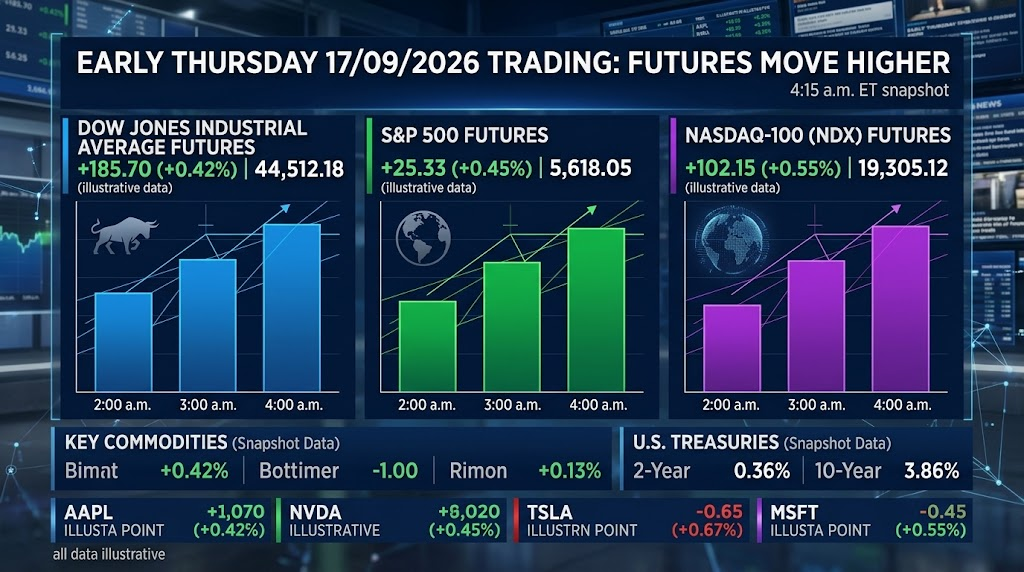
The market appears to be responding to three developments:
- The Fed’s decision is now behind investors.
- Oil prices declined for a second consecutive day.
- The 10-year Treasury yield slipped below the psychologically important 5% level.
Brent crude fell more than 1% to approximately $104.43 per barrel, while West Texas Intermediate declined about 1% to $101.35.
Lower oil prices can ease immediate concerns about inflation, transportation expenses and corporate margins.
Why the Fed hike did not trigger another selloff
The rate increase itself was widely anticipated. When an outcome is already priced into markets, the reaction often depends on whether the accompanying message is more or less aggressive than expected.
On Wednesday, the Fed’s language initially pressured stocks. By Thursday morning, investors appeared more comfortable with the idea that the central bank was acting decisively to control inflation.
Reuters reported that the decision helped remove a long-standing source of uncertainty, even though the Fed still signaled that volatility could continue.
Technology stocks regain momentum
Technology shares were among the strongest premarket performers. Alphabet and Meta each gained more than 1%, while several AI-infrastructure companies also rose.
The move suggests that investors are willing to return to growth stocks when long-term yields decline. However, the sector remains sensitive to:
- The cost of capital.
- AI infrastructure spending.
- Earnings expectations.
- Regulation.
- The pace of future Fed tightening.
A single rebound does not prove that the technology selloff is over.
Oil prices provide relief
Oil prices had been a major source of inflation anxiety. Their decline is therefore important for both markets and households.
Lower crude can support:
- Airlines.
- Transportation companies.
- Consumer businesses.
- Chemical manufacturers.
- Energy-intensive industries.
Energy producers may face pressure if lower oil prices reduce expected revenue, although company performance depends on production costs and hedging strategies.
What investors should monitor next
The next market test will come from economic data and the Fed’s follow-through.
Investors should monitor:
- The 10-year Treasury yield.
- Oil prices and shipping disruptions.
- October rate-hike expectations.
- Technology-sector breadth.
- Corporate earnings guidance.
- The U.S. dollar.
- Credit-market stress.
CME-based market pricing indicated approximately a 51% chance of another Fed increase in October, up from about 44% the previous day.reuters
Bottom line
Wall Street futures are rebounding because the Fed decision is no longer an immediate uncertainty, oil prices are falling and the 10-year Treasury yield has moved below 5%.reuters+1
The rebound may continue if inflation pressures ease, but another rate increase remains possible and market volatility is unlikely to disappear immediately.
Source:
- Reuters futures report
- Reuters market commentary
- Federal Reserve
- CME FedWatch
- U.S. Energy Information Administration
- preCharge News
Financial Disclaimer
This article is for informational purposes only and does not constitute personalized investment, tax or financial advice. Market data can change rapidly. Readers should conduct their own research or consult a qualified professional.
Frequently Asked Questions (FAQ)
Investors are focusing on lower oil prices, lower long-term yields and the fact that the Fed’s decision is now behind them.
It raised the benchmark rate by 25 basis points to 3.75%–4.00%.
The increase was the first since 2023.
Dow futures were up approximately 0.66% in the cited early snapshot.
S&P 500 futures gained approximately 0.74%.
Nasdaq-100 futures gained approximately 0.96%.
Brent fell more than 1% to around $104.43 per barrel.
Lower yields can reduce the discount applied to future earnings and make growth stocks relatively more attractive.
No. Future inflation, oil prices, economic data and Fed guidance can change market direction.
Market pricing indicated roughly a 51% chance of another increase in October.
Transportation, airlines, consumer businesses and energy-intensive manufacturers may benefit, depending on their costs.
No. This is general market commentary.