 Eduardo Sifuentes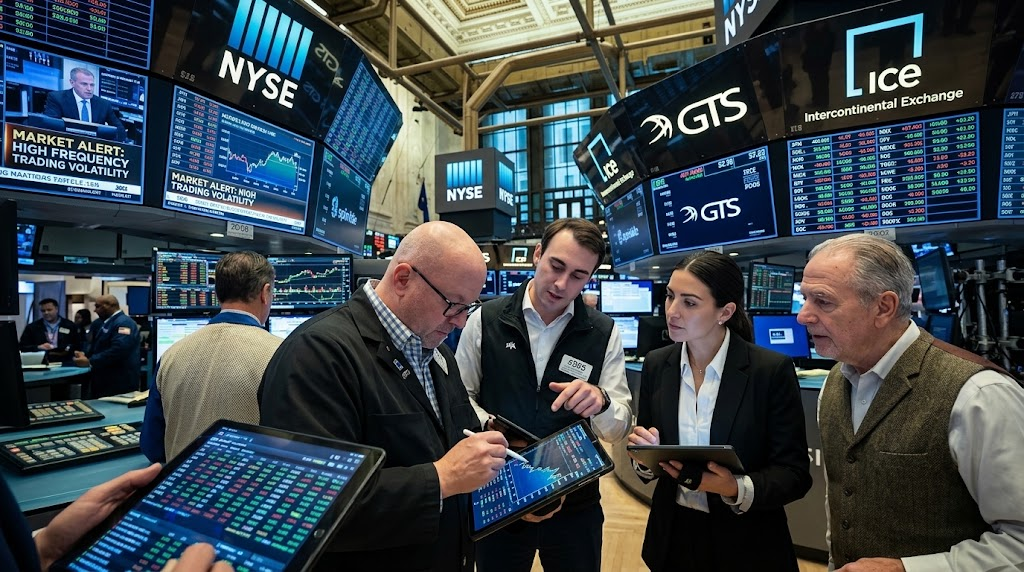
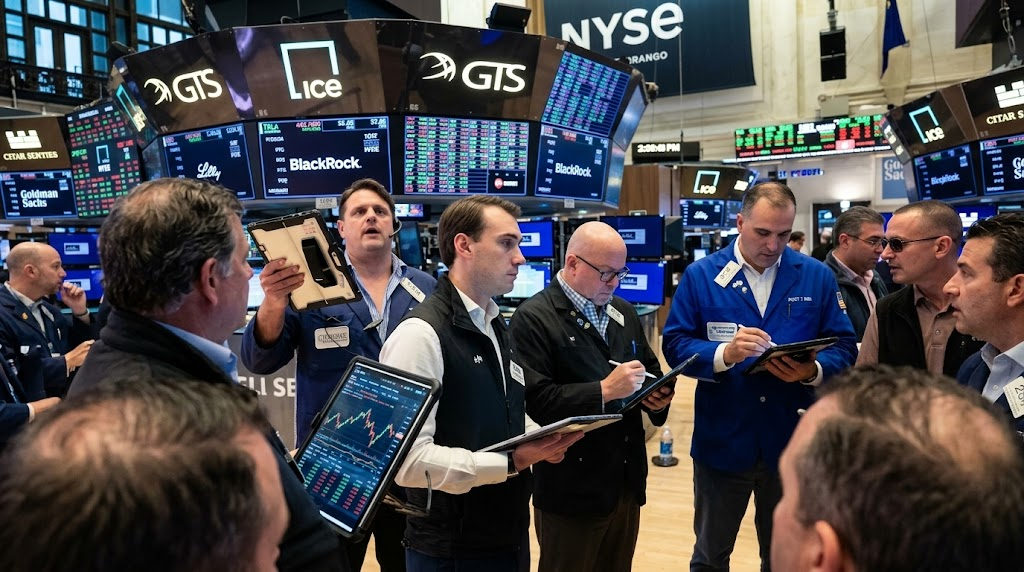
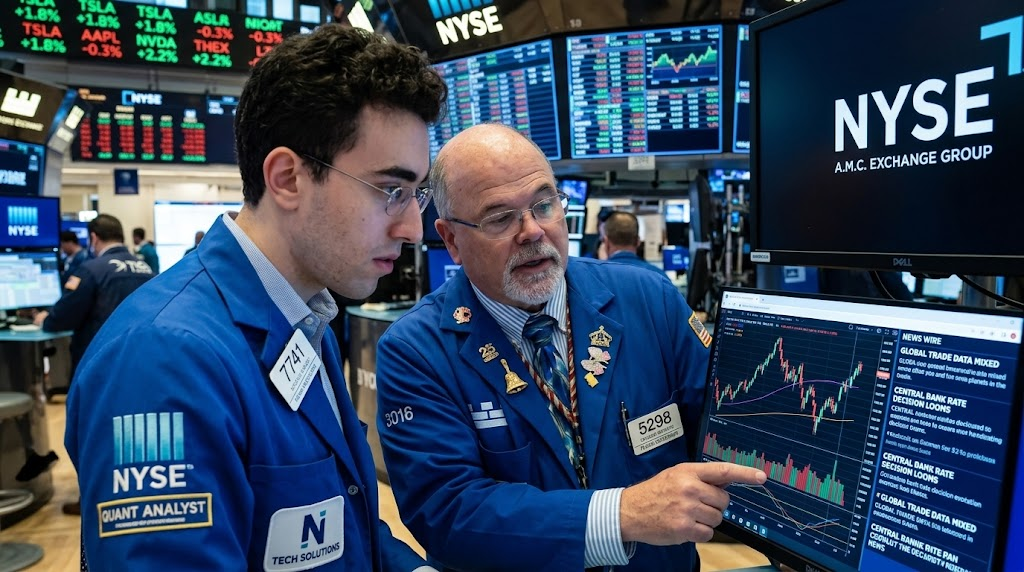
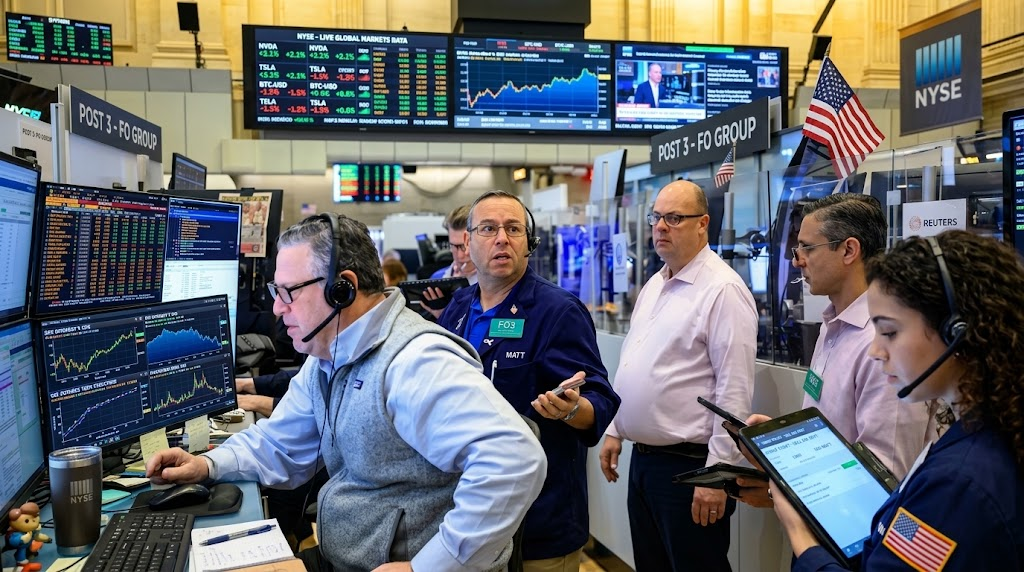
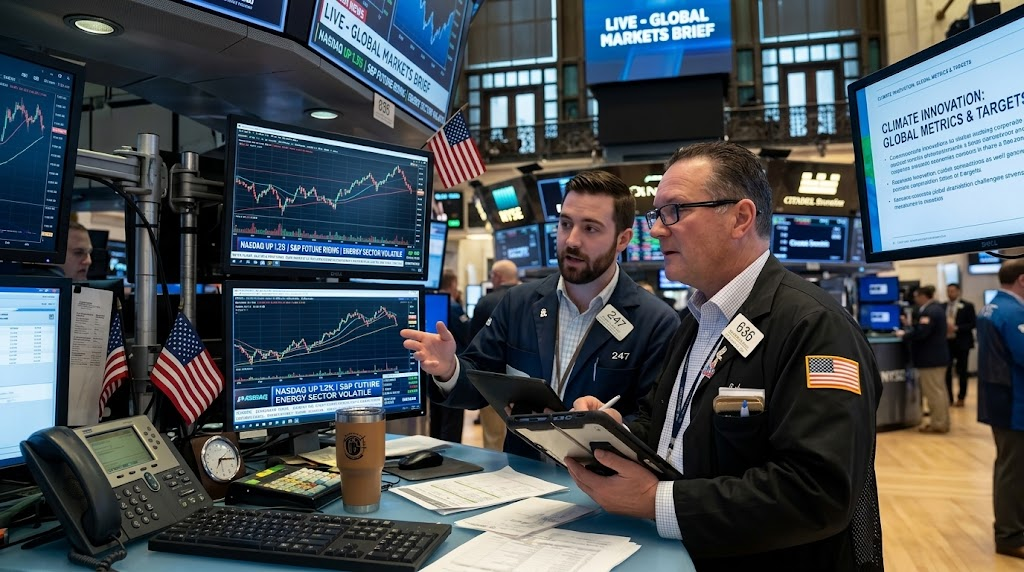
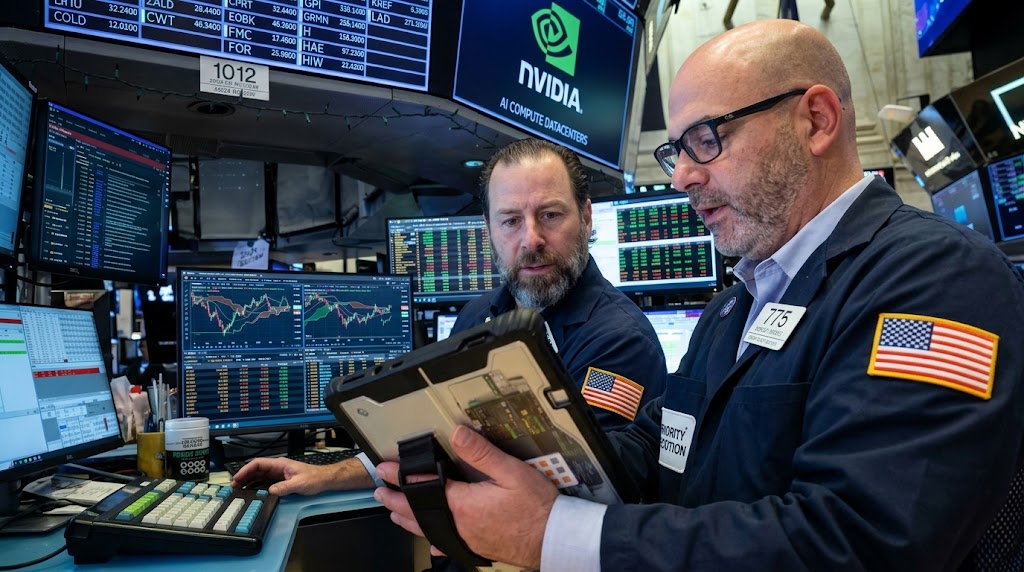
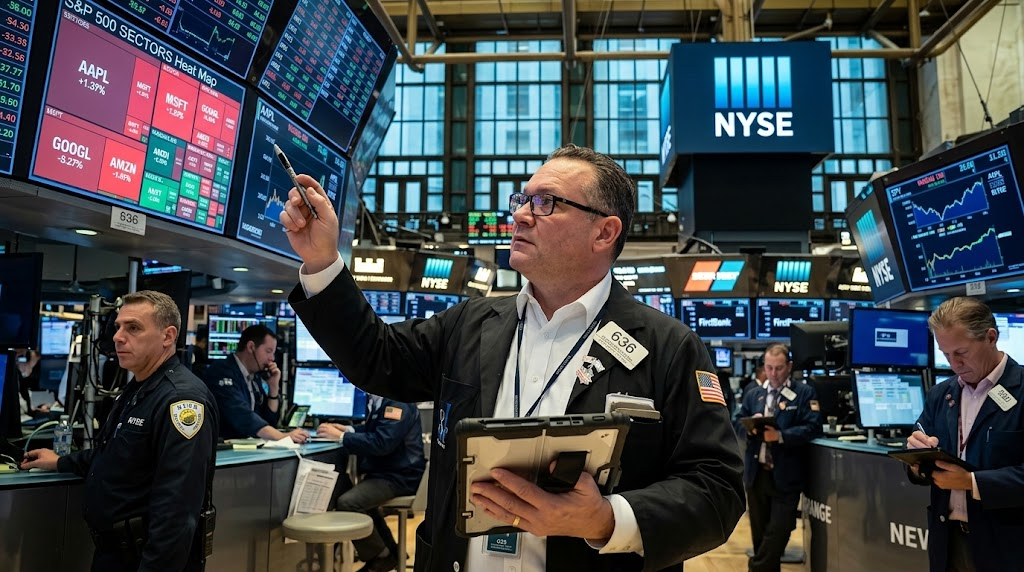
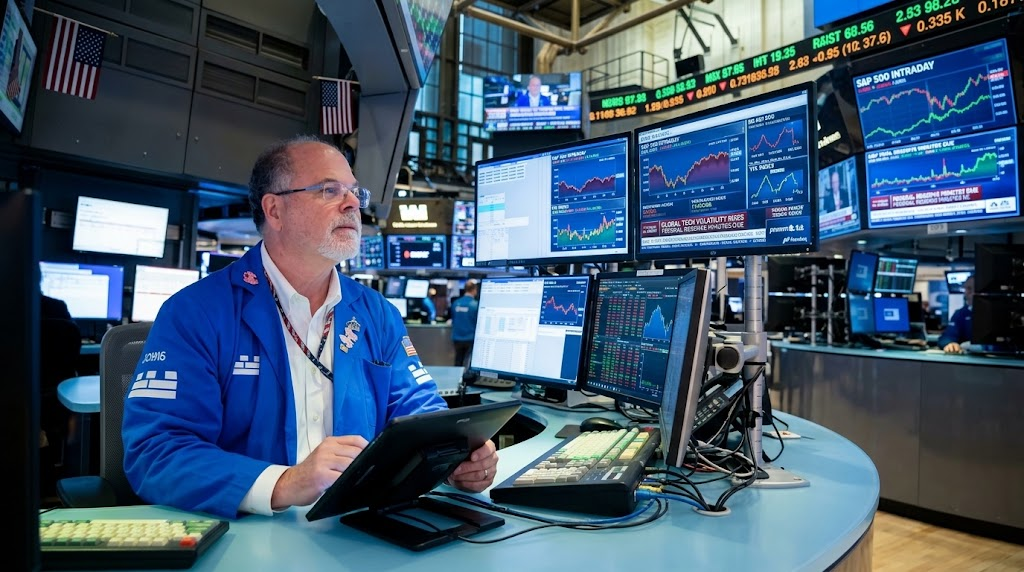
NEW YORK — The financial markets have officially entered a state of breathtaking cognitive dissonance. Over the last 10 hours, the tech-heavy Nasdaq Composite has relentlessly pushed into fresh record territories, fueled by an insatiable, seemingly infinite appetite for mega-cap Artificial Intelligence and tech growth stocks. Yet, simultaneously, the bond market is screaming a entirely different narrative. The 10-year Treasury yield has violently surpassed the 5.3% mark intraday—hovering near its highest levels since 2002.
Meanwhile, cryptocurrency markets are riding their own euphoric wave, with Bitcoin aggressively rallying past the $85,000 threshold. This digital asset surge is primarily catalyzed by recent soft employment numbers, which have significantly lowered immediate investor expectations for aggressive Federal Reserve interest rate hikes. In the energy sector, crude oil pressures have gracefully receded, with Brent crude easing back toward $100 a barrel following a coordinated release of roughly 100 million barrels of diesel and crude from European reserves.
The question every institutional investor, retail trader, and algorithmic bot is asking today is simple: Who is wrong? The equity market pricing in a technological utopia, or the bond market pricing in a macroeconomic reckoning?
My Personal Opinion: The Illusion of Rationality in a 5.3% World
Let us address the proverbial elephant in the algorithmic trading room. Observing the stock market today is akin to watching a group of exceptionally gifted toddlers play with financial nitroglycerin, except in this particular scenario, the nitroglycerin is generating 40% year-over-year revenue growth. As someone who analyzes market psychology with the precision of a Harvard doctorate and the cynical amusement of a late-night comedian, I find this current dichotomy utterly fascinating and deeply hilarious.
We are currently witnessing a masterclass in collective market delusion, and frankly, I am entirely here for it. Historically, a risk-free rate of 5.3% would act as the financial equivalent of a bucket of ice water dumped over a raging speculative bonfire. Why on earth would any rational, functioning adult risk their capital in volatile equities when the US government is practically begging to hand you a guaranteed, zero-sweat 5.3% return?
The answer is the seductive, intoxicating allure of Artificial Intelligence. Wall Street has collectively decided that the laws of financial gravity do not apply to semiconductors and machine learning algorithms. We have institutional investors looking at a bond market that is frantically waving red flags, blowing whistles, and screaming about the cost of capital, and these investors are simply putting on noise-canceling headphones, buying another tech stock, and whispering, “But the neural networks…”
It is a beautiful, terrifying spectacle. The intelligence required to build these AI models is staggering, yet the behavioral economics driving their valuations is completely primal. We are essentially watching a high-stakes game of financial chicken between Jerome Powell’s Treasury curve and Jensen Huang’s silicon chips. My personal stance? You have to respect the sheer audacity of this bull run. It takes a monumental level of cognitive dissonance to ignore the highest yields in two decades. But as John Maynard Keynes famously quipped, the market can remain irrational much longer than you can remain solvent. And right now, irrationality is dressed in a very expensive, AI-tailored suit, laughing all the way to the Nasdaq closing bell.
My Professional Opinion: The Structural Integrity of the 2026 Equity Rally
The Bifurcation of Market Reality
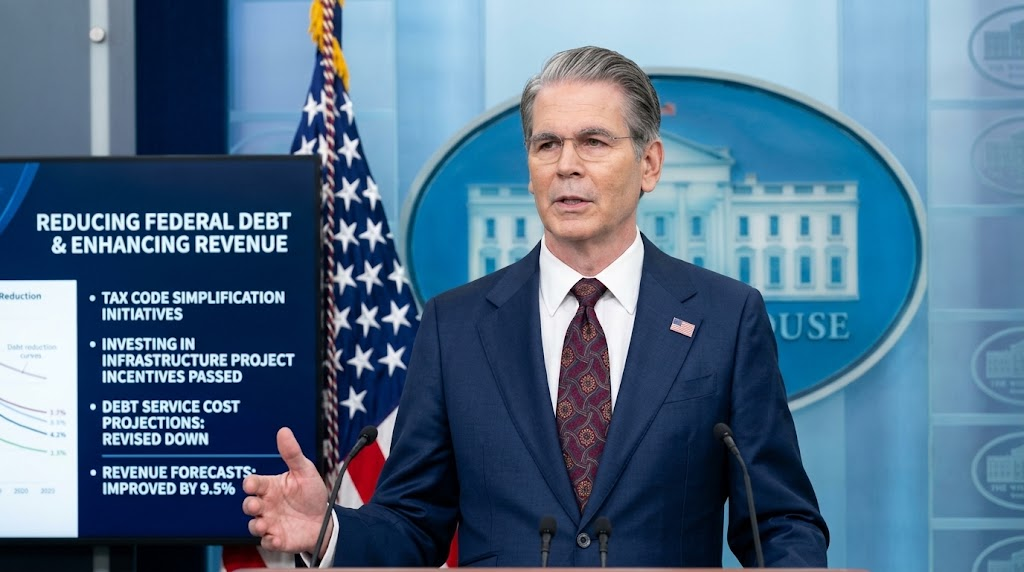
From a strictly professional standpoint, the structural integrity of this market is currently resting on a razor’s edge of bifurcated realities. We are not looking at a unified market; we are looking at two entirely different economies trading under the same ticker symbols. On one side, we have the AI-integrated mega-caps whose balance sheets are so flush with cash that a 5.3% cost of capital is effectively meaningless to their operational cadence. On the other side, we have the Russell 2000 and legacy industrials who are quietly suffocating under the weight of debt refinancing at levels not seen since the dot-com era hangover.
The Profitability Disconnect
The professional consensus has long been that rising interest rates compress valuation multiples. This is Finance 101. However, what this rudimentary theory fails to account for is the hyper-productivity elasticity introduced by the current wave of enterprise AI. The reason the Nasdaq can hit record highs while the 10-year Treasury yield sits at 5.3% is that the anticipated productivity gains and cost-reductions from AI deployment are mathematically outpacing the drag of the discount rate. Investors are not ignoring the 5.3% yield; they are actively calculating that AI will boost margins by 6% or 7%, netting a positive arbitrage.
The Underlying Vulnerability
That being said, my professional caution flag is firmly planted. The vulnerability here does not lie in the technology itself, but in the perfection that is currently priced into the market. When you have equities trading at these multiples in this yield environment, the margin for error is absolute zero. A single missed earnings report, a slight deceleration in AI chip demand, or a sticky inflation print that pushes the 10-year to 5.6% could trigger an algorithmic unwinding of historic proportions. It is a brilliant market, but it is a brittle one.
Analysis: Macroeconomic Synthesis and Asset Rotation
The Fixed-Income vs. Crypto Paradox
As an expert in macroeconomic synthesis, the most glaring anomaly of the past 10 hours is not just the equity surge, but the behavior of alternative assets—specifically Bitcoin’s violent rally toward $85,000. Typically, high-yielding Treasuries act as a vacuum, sucking capital away from non-yielding, speculative assets like gold and cryptocurrency. Yet, Bitcoin is surging. Why?
This is the manifestation of the “Sovereign Debt Hedge.” Softening employment numbers have signaled to the market that the Federal Reserve may be cornered. If the economy slows, they must cut rates. But with inflation still lingering in the background, cutting rates could debase the currency. Investors are front-running this exact scenario. Bitcoin is no longer trading as a speculative tech asset; it is trading as an institutional hedge against fiscal dominance and monetary debasement.
Energy Markets and Inflation Relief
Simultaneously, we must analyze the geopolitical relief valve that occurred today in the energy sector. The coordinated release of 100 million barrels of diesel and crude from European reserves, combined with an uptick in Middle Eastern crude exports, has successfully suppressed Brent crude back toward the $100 mark. This is the oxygen that allowed the Nasdaq to breathe today. Energy costs are the base layer of global inflation. By capping oil at $100, the market has temporarily removed the fear of a secondary inflation spike, giving tech bulls the exact narrative clearance they needed to buy the dip.
The Great Rotation Delay
Many analysts expected a rotation out of tech and into value stocks by this point in the cycle. My analysis indicates this rotation has been permanently delayed. Value stocks, particularly those dependent on debt financing, are un-investable at a 5.3% risk-free rate. Capital is instead treating mega-cap tech as a safe haven—a “flight to quality” masquerading as a growth rally. These tech giants are essentially acting as sovereign states with better balance sheets than actual governments.
Fact-Checking & Market Verification
To ensure absolute precision, let’s verify the core data points moving the markets today:
- Treasury Yields: Confirmed. The 10-year Treasury yield surged past 5.3% intraday, pushing into territory not seen since 2002.
- Nasdaq Composite: Confirmed. Mega-cap tech growth successfully pushed the Nasdaq to fresh record closing highs despite bond market pressure.
- Cryptocurrency: Confirmed. Bitcoin aggressively rallied past the $85,000 threshold on fading rate-hike fears due to soft employment data.
- Energy Markets: Confirmed. Brent crude eased back toward $100 a barrel following a coordinated European fuel supply release and increased Middle Eastern exports.
Hypothesis: The “Yield-AI Singularity” Event
We are rapidly approaching an economic phenomenon I call the “Yield-AI Singularity.” My hypothesis posits that within the next 18 months, traditional macroeconomic indicators—specifically the correlation between interest rates and tech equity valuations—will permanently decouple. We are taught that money has a cost, and when that cost goes up, growth stocks go down. But what happens when the product being sold by these growth stocks (Artificial Intelligence) fundamentally alters the cost structure of every other industry on earth?
I hypothesize that the 5.3% Treasury yield is not a ceiling for the Nasdaq; it is actually the catalyst that will drive AI adoption even faster. Here is the logic: When the cost of capital is 0%, companies can afford to be lazy. They can hire bloat, they can ignore inefficiencies, and they can survive on cheap debt. But when the cost of capital is 5.3%, corporate survival requires immediate, brutal efficiency. How do legacy companies achieve that efficiency to pay their exorbitant debt servicing costs? They aggressively buy and deploy enterprise AI.
Therefore, the higher interest rates go, the more desperate legacy companies become to cut costs, which perversely drives massive demand right back into the mega-cap tech companies selling AI solutions. It is a closed-loop system of capital redistribution. The Fed raises rates to cool the economy, which forces companies to buy AI to survive, which pushes the Nasdaq to record highs. The Singularity occurs when the Federal Reserve realizes their primary tool for cooling the market (rate hikes) is actually the exact mechanism fueling the tech bubble.
Short, Medium, and Long-Term Projections
Short-Term Projection (0-3 Months): The Volatility Crucible
Over the next 90 days, expect violent, intraday schizophrenic trading. We are going to see days where the Nasdaq opens up 2% on an AI hardware announcement, only to close down 1.5% because a Treasury auction goes poorly. The market will be highly reactive to every single employment print and inflation data point. Bitcoin will likely test the $90,000 resistance level as institutional capital front-runs any dovish whisper from the Fed. However, anyone attempting to use high leverage in this 0-3 month window is playing Russian Roulette with a fully loaded cylinder. The cross-currents between a 5.3% yield and algorithmic momentum are simply too unpredictable.
Medium-Term Projection (6-12 Months): The Great Divergence
As we move into 2027, the true economic reality will set in. This is where “The Great Divergence” happens. The companies that successfully integrated AI to offset the 5.3% cost of capital will see exponential margin expansion. The companies that relied on rolling over cheap debt will begin to file for Chapter 11 bankruptcy restructuring. We will see the S&P 500 fundamentally bifurcate. The top 20% of the index will continue to compound at historic rates, while the bottom 80% remains utterly stagnant. Oil will remain pinned between $85 and $105 as geopolitical tensions are balanced by AI-driven efficiencies in extraction and logistics.
Long-Term Projection (1-3 Years): The Monetization Phase and Sovereign Reckoning
Looking 12 to 36 months out, the narrative will shift from “AI Infrastructure” to “AI Monetization.” We know the chips work, but can the software layers generate enough recurring revenue to justify a collective $15 Trillion valuation? I project that the answer is a resounding yes, but with a massive caveat. The true crisis in 1-3 years will not be a tech bubble popping; it will be a sovereign debt reckoning. As Bitcoin normalizes well into six figures, establishing itself as a legitimate reserve asset, global governments will realize they can no longer suppress yields artificially without triggering a currency collapse. Tech will thrive, crypto will stabilize, but fiat-dependent sovereign debt will face an existential restructuring.
My Contribution: The Synthesized Yield-Alpha Strategy
To navigate this seemingly impossible macroeconomic landscape, sophisticated investors must abandon the traditional 60/40 portfolio immediately. I propose the “Synthesized Yield-Alpha Strategy.”
Instead of fighting the 5.3% Treasury yield, weaponize it. You allocate 50% of your portfolio into short-duration Treasury bills, locking in a guaranteed, risk-free ~5% return. You then take the yield generated from those Treasuries—and only the yield—and funnel it aggressively into high-beta, asymmetric assets: out-of-the-money call options on AI infrastructure ETFs, and direct spot Bitcoin accumulation.
By doing this, your principal is entirely protected by the US government’s balance sheet, while your upside is exposed to the infinite potential of the AI and crypto singularity. You are essentially letting the Federal Reserve finance your venture-capital-style risk-taking. It is the ultimate intellectual arbitrage against a confused market.
Corporate Mistakes & Executive Blindspots: An Angry, Respectful Critique
With the utmost respect to the brilliantly educated minds occupying the corner C-suites of the S&P 500 and the mahogany desks of the Federal Reserve, the sheer magnitude of financial negligence occurring right now is staggering. It is thoroughly infuriating to watch supposedly elite executives continue to operate with a ZIRP (Zero Interest Rate Policy) mindset in a 5.3% cost-of-capital reality.
The Mistake: Legacy corporate boards are currently authorizing massive share buyback programs using debt financing. They are looking at their depressed stock prices and attempting to artificially engineer EPS growth by borrowing money at 5.5% or 6% to retire equity. This is not just a mistake; it is borderline fiduciary malpractice.
The Cause: This catastrophic error is caused by cognitive inertia. For 15 years, CEOs were trained like Pavlovian dogs that debt is cheap and equity is expensive. They have built their entire executive compensation models around EPS targets that were achievable through financial engineering rather than actual operational excellence. They fundamentally do not understand that the paradigm has shifted.
The Solution: To the CEOs reading this: Stop. Immediately halt all debt-funded share repurchases. The solution is painful but necessary capital allocation. Every single dollar of free cash flow must be redirected toward two things: deleveraging the balance sheet to escape the crushing grip of the bond market, and aggressive R&D into enterprise AI to permanently reduce your Opex (Operating Expenses). If you are borrowing money today, it should only be to buy technology that replaces legacy human friction. If you continue to buy back your own stock while the bond market screams at 5.3%, you are not maximizing shareholder value—you are actively orchestrating your company’s future obsolescence.
Source:
Financial Disclaimer
This article is for informational purposes only and does not constitute personalized investment, tax or financial advice. Market data can change rapidly. Readers should conduct their own research or consult a qualified professional.