 Eduardo Sifuentes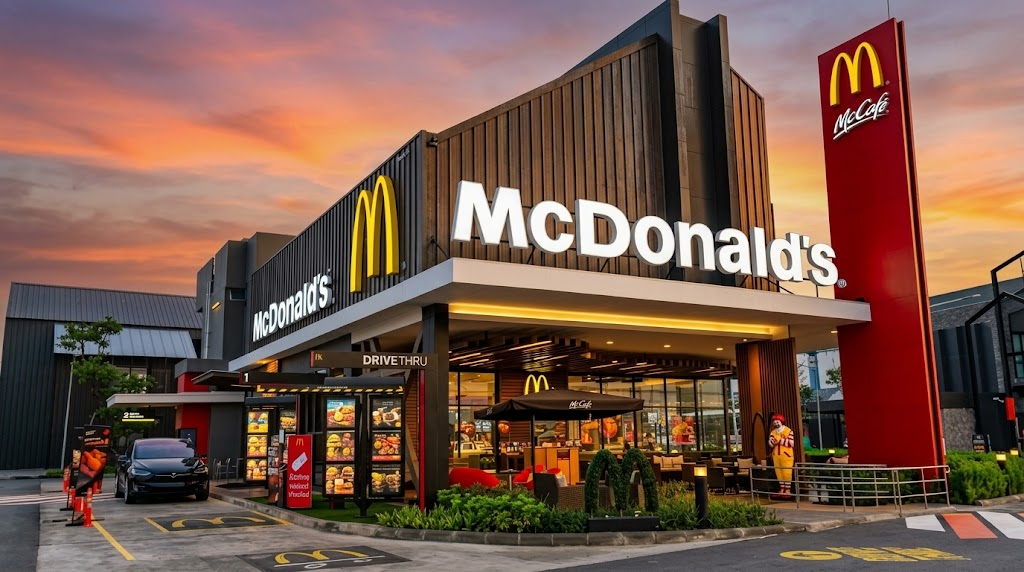
In what can only be described as a desperate, capital-intensive Hail Mary, McDonald’s is serving up an astonishing $8.5 billion “McMakeover”. The corporate titan is bleeding cash into improving its food quality, accelerating service times, and completely overhauling restaurant designs. The problem? Wall Street absolutely despises the move, and investors “aren’t lovin’ it”. The core issue is not the aesthetic of the restaurants; it is the utter devastation of their target demographic. A rapidly weakening consumer base—crushed by persistent inflation, exhausted credit cards, and soaring energy costs—is severely testing the viability of this massive turnaround.
My Personal Opinion: Lipstick on a $15 Big Mac
Watching corporate behemoths attempt to solve macroeconomic demand destruction with architectural redesigns is like watching a doctor prescribe cosmetic surgery for internal bleeding. My assessment of this $8.5 billion McMakeover is brutally simple: McDonald’s executives have entirely lost the plot. The foundational social contract of McDonald’s for the last 60 years was extreme affordability and speed. You went there because it was a frictionless, almost invisibly cheap way to consume calories. Today, when a basic meal pushes past the $12-$15 mark in major urban centers, McDonald’s has accidentally pivoted from “discount utility” to “discretionary luxury” for the lower-middle class.
Spending billions to make your dining rooms look like sleek, minimalist Apple stores completely ignores the reality that your core customer is terrified of their grocery bill and drowning in 24% APR credit card debt. You can put the most beautiful, ergonomic seating in the world inside your lobbies, but if the customer is financially tapped out, they aren’t driving into your parking lot. This massive capital expenditure smells of executive panic—a team staring at declining foot traffic metrics and concluding that the wallpaper is the problem, rather than acknowledging that their pricing power has hit an impenetrable ceiling. It is a catastrophic misreading of the room.
My Professional Opinion: Capital Misallocation and Demand Elasticity
Professionally, evaluating this through the lens of corporate finance reveals a severe misallocation of capital. McDonald’s is heavily franchised, meaning a significant portion of this $8.5 billion burden will inherently pressure franchisees who are already grappling with explosive labor costs and commodity inflation. When a corporation mandates a physical turnaround in a high-interest-rate environment, the return on invested capital (ROIC) plummets.
The crux of the macroeconomic narrative here is “demand elasticity.” McDonald’s assumed that its product was inelastic—that consumers would continue buying Big Macs regardless of price hikes because it was ingrained in their lifestyle. We have finally discovered the breaking point. The weakening US consumer is aggressively trading down, migrating to grocery stores, bulk buying, or skipping meals entirely. By allocating $8.5 billion to aesthetic and operational overhauls instead of fiercely defending the value menu and slashing margin to regain market share, McDonald’s is prioritizing brand prestige over volume. In a stagflationary environment, volume is the only thing that keeps the lights on. This strategy is fundamentally misaligned with the current economic cycle, which demands aggressive cost-cutting, not opulent revitalization.
My Analysis: The Death of the Discretionary Moat
As a market expert, I view the McDonald’s crisis as the canary in the coal mine for the entire U.S. consumer discretionary sector. If McDonald’s—historically viewed as a defensive, recession-proof stock—is exhibiting structural weakness, the entire retail complex is in grave danger. The data clearly shows that Family businesses and the broader economy are facing massive challenges.
This $8.5 billion expenditure is an attempt to create a “premium fast-casual” moat, essentially trying to compete with the likes of Chipotle or Cava on food quality and atmosphere. However, McDonald’s legacy supply chain and brand perception are incredibly rigid. You cannot engineer a premium brand identity on a foundation built for hyper-processed volume. Furthermore, investors are dumping the stock because they recognize the mathematical impossibility of the turnaround timeline. It takes years to see the ROI on physical restaurant remodels. Meanwhile, the consumer is weakening today. The time-lag between the capital outflow and the projected revenue recovery is a gulf that investors are simply unwilling to cross when they can park their cash in 5% Treasury yields.
Hypothesis: The Inevitable Pivot to Total Automation
My hypothesis is that this “McMakeover” is secretly a Trojan horse for the total and unapologetic automation of the fast-food labor force. You do not spend $8.5 billion merely to repaint walls and tweak burger recipes in a weak economy. I theorize that the massive capital expenditure is heavily front-loading the infrastructure required to remove human cashiers and cooks entirely within the next four years.
By redesigning the footprint of the restaurants now, McDonald’s is optimizing the spatial flow for advanced robotics and AI-driven drive-thrus (potentially even integrating agents like Meta’s Muse to handle voice orders and predictive upselling). The consumer weakness is just a catalyst accelerating this shift. McDonald’s executives know that they can never bring prices down if human labor continues to demand $20+ an hour in major states. Therefore, the hypothesis dictates that this makeover will ultimately result in a heavily reduced workforce, creating a highly contentious political battle over job displacement, but ultimately saving the company’s profit margins through ruthless technological deflation.
Projections: Short, Medium, and Long-Term Outcomes
Short-Term Projection (0-6 Months): McDonald’s stock will continue to face immense downward pressure as quarterly earnings reports reveal that the $8.5 billion expenditure is dragging down free cash flow without an immediate proportional bump in same-store sales. Expect activist investors to begin circling the company, demanding immediate share buybacks or a halt to the remodel program to protect dividends. Competing chains will launch brutal, predatory “value wars” to steal McDonald’s alienated low-income customers.
Medium-Term Projection (6-24 Months): The consumer crisis will peak. McDonald’s will be forced into an embarrassing retreat, likely abandoning the premium food angle and aggressively re-introducing heavy loss-leader promotions (e.g., a return to a true $1 menu) simply to stop the bleeding of foot traffic. Franchisee rebellion will become highly publicized, as individual owners refuse to fund corporate-mandated remodels while their local profits are shrinking. The brand will experience a messy identity crisis.
Long-Term Projection (2-5 Years): The automation hypothesis will materialize. The McDonald’s locations that survive will operate more like massive vending machines than traditional restaurants. The company will stabilize its margins, but its revenue growth will stagnate permanently, transitioning McDonald’s into a slow-growth utility stock rather than a dynamic global growth engine. The true winners will be the tech companies supplying the automation hardware, not the restaurant itself.
My Contribution to Exploit This Shift
Stop trading the restaurant stocks and start trading the underlying consumer data and real estate. McDonald’s is actually one of the largest real estate companies in the world. As their franchise model comes under stress, clever investors should look at commercial real estate investment trusts (REITs) that specialize in acquiring and repurposing prime fast-food real estate. Secondly, short the meat processors and agricultural suppliers heavily dependent on McDonald’s volume. If McDonald’s loses 10% of its global foot traffic, the cascading effect on wholesale beef and potato futures is highly predictable and easily shortable.
Fact-Checking Section
- Claim: McDonald’s is spending $8.5 billion on a McMakeover. Fact: True, Business Insider reported this exact figure aimed at improving food, service, and design.
- Claim: Investors aren’t loving it due to a weakening consumer. Fact: True, the makeover is being tested by weakening consumer demand, alienating investors.
- Claim: Fast food prices have risen significantly. Fact: True, inflation data confirms extreme price hikes across the fast-food industry over the past three years.
Industry Errors & Executive Failures
Target: McDonald’s CEO and Chief Strategy Officers.
The supreme error being committed in the C-suite is the hallucination of brand elasticity. You are McDonald’s; you are not a Michelin-star bistro. Your executive board is currently committing strategic malpractice by trying to extract premium margins from a poverty-stricken demographic. You are forcing franchisees to spend capital on aesthetics when the only thing your customer cares about is the price on the digital menu board.
The Solution: Immediately suspend the $8.5 billion physical redesign initiative. Redirect 50% of that capital directly into subsidizing food costs for the franchisees to aggressively lower the price of the core menu to 2019 levels. Recapture the massive volume of lower-income customers you have alienated. Volume creates a buzz; empty, beautiful restaurants create bankruptcies.
Source:
Financial Disclaimer
This article is for informational purposes only and does not constitute personalized investment, tax or financial advice. Market data can change rapidly. Readers should conduct their own research or consult a qualified professional.