 Eduardo Sifuentes
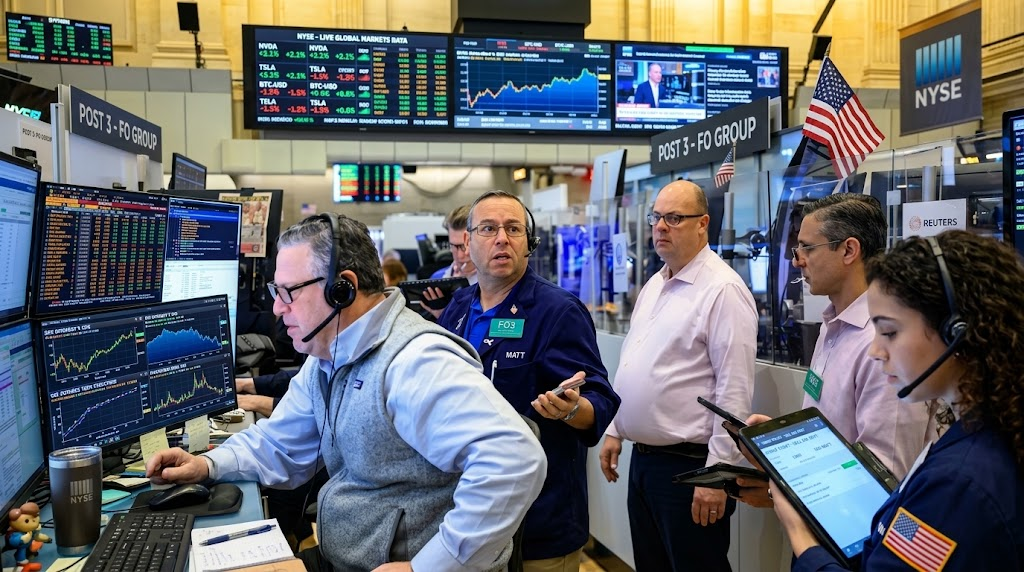
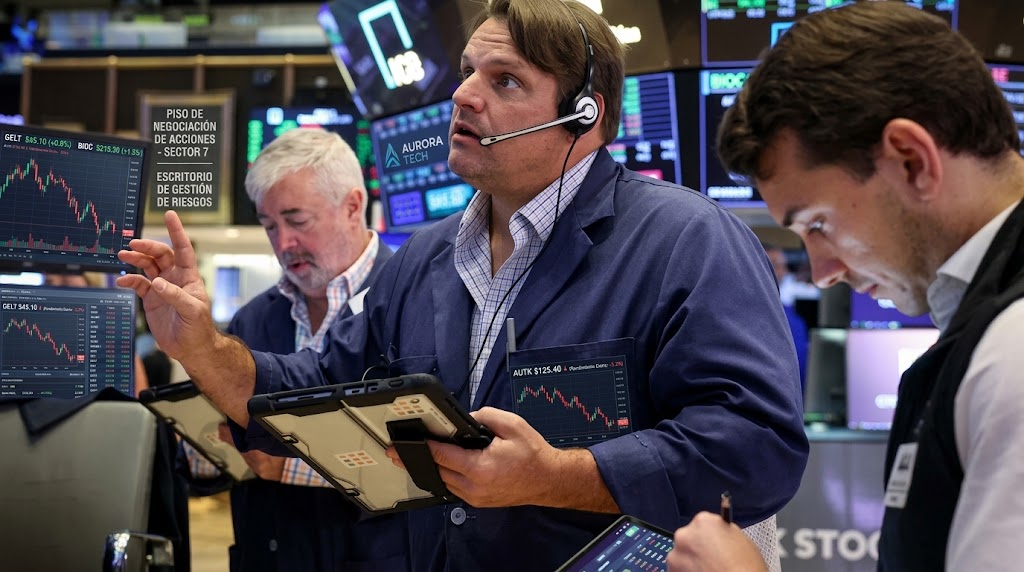
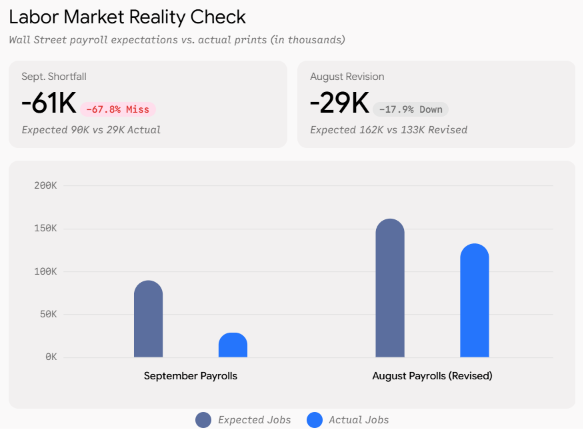
NEW YORK — The U.S. stock market is officially in overdrive. In a stunning Friday morning twist, Wall Street woke up to a nonfarm payrolls report that completely rewrote the macroeconomic playbook for the rest of 2026. The U.S. economy added a mere 29,000 jobs in September—shattering the 90,000 forecast and sending a crystal-clear signal to the Federal Reserve: the era of aggressive interest rate hikes is effectively dead.
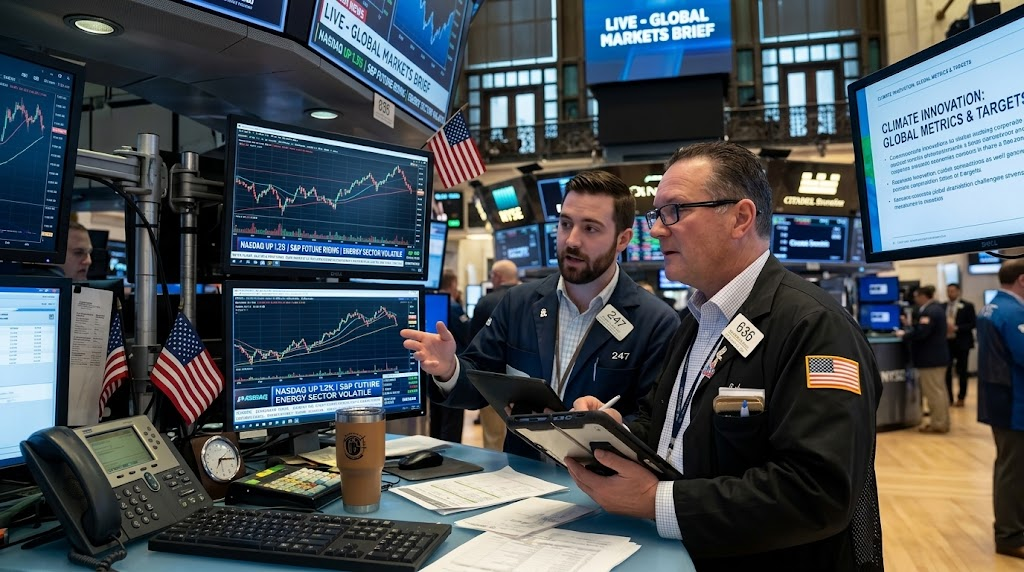
Treasury yields immediately plummeted from their two-decade highs, effectively pouring rocket fuel over the equities market. The S&P 500 and Dow Jones Industrial Average surged toward record highs, shaking off weeks of bond market volatility and geopolitical jitters stemming from the Middle East.
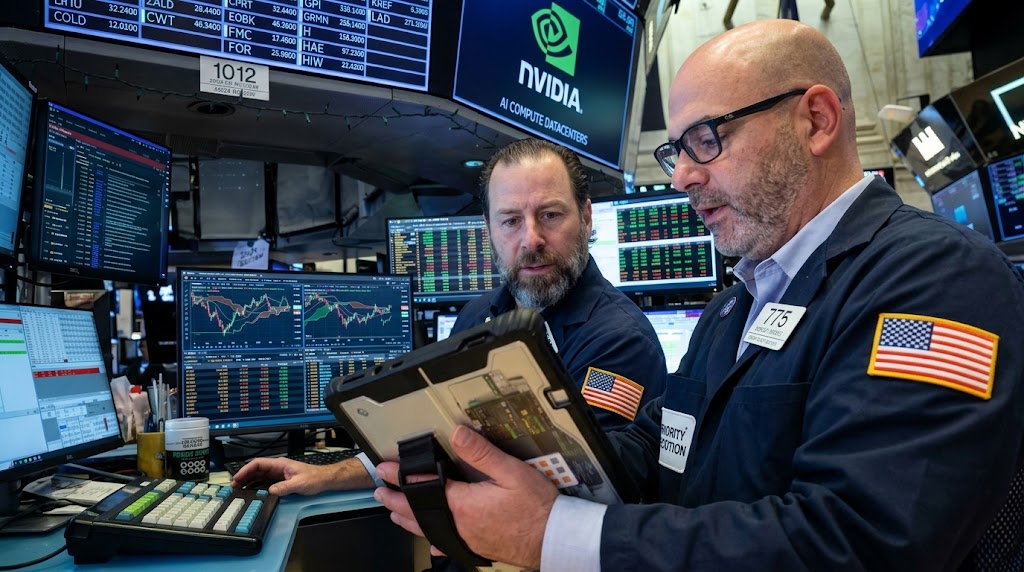
But the real story isn’t just broad market exuberance; it’s the laser-focused capital rotation into artificial intelligence. Nvidia (NVDA) obliterated resistance levels, surging to a monumental all-time high of $236.57. Meanwhile, legacy consumer brands are paying the ultimate price, with Nike (NKE) plummeting over 10% following a disastrous earnings miss and a 4% decline in sales. We are witnessing a brutal, rapid reshuffling of the global economic pecking order.
My Personal Opinion: The Symphony of Algorithmic Greed
The Irony of “Bad” Data
Let us take a moment to appreciate the sheer, unadulterated irony of modern financial markets: the worse the macroeconomic reality gets for the average American worker, the harder Wall Street celebrates. Adding only 29,000 jobs when the street expected 90,000 is, by any traditional economic metric, an unmitigated disaster for labor. Yet, in the twisted, liquidity-addicted corridors of Manhattan, it is the equivalent of popping a vintage bottle of Dom Pérignon. Why? Because the narcotic of cheap capital remains the sole operating thesis for the modern equity buyer.
The Nvidia Ascendancy
When I look at Nvidia crossing $236.57, I don’t just see a semiconductor manufacturer; I see a civilization-level chokepoint. We have transitioned from an oil-backed economy to a compute-backed economy. The market’s reaction today proves that investors are entirely willing to ignore the fragility of the U.S. consumer as long as the algorithmic infrastructure required for Artificial General Intelligence (AGI) continues to scale. It is a brilliant, albeit terrifying, paradigm shift. The PhDs in Cupertino and the quant algorithms in Chicago have formed a symbiotic relationship that completely detaches itself from Main Street economics.
A Witty Reflection on the Macro Picture
Frankly, watching legacy institutions try to model this economy using Taylor Rules and Philips Curves is like watching a medieval blacksmith try to repair a quantum computer. The old models are dead. When unemployment ticks up to 4.2% and hourly earnings stagnate, the Fed is essentially boxed in. Jerome Powell is flying a Boeing 747 with half the instruments disabled, and the passengers (investors) are cheering every time the plane dips because it means the flight attendants will hand out free drinks. It’s an intellectual comedy wrapped in a fiscal tragedy, but as a market participant, you must trade the reality you have, not the macroeconomic textbook you wish existed. Capital flows where yield dictates, and right now, yield is screaming “Silicon.”
💼 My Professional Opinion: Navigating the Liquidity Trap
Structural Reallocation of Capital
From a strictly professional portfolio management perspective, today’s price action cements a structural bifurcation in the market. We are no longer operating in an environment where “a rising tide lifts all boats.” Instead, we are seeing aggressive, targeted capital deployment into hyper-growth tech, financed by the systematic liquidation of legacy consumer discretionary assets. The fact that the 10-year Treasury yield backed off from its two-decade peak is the technical catalyst, but the underlying fundamental driver is the realization that AI capital expenditure is the only reliable growth vector left in an economy with a decelerating labor force.
The Bond Market’s Warning Signal
While equity bulls are doing victory laps, the fixed-income market is telling a more nuanced story. The sharp pullback in yields following the nonfarm payrolls miss suggests that bond vigilantes are finally capitulating on the “higher for longer” narrative. However, this is not necessarily a sign of economic health; it is a symptom of fiscal exhaustion. The U.S. consumer is tapped out. Credit card delinquencies and exhausted pandemic savings are finally showing up in the hiring data. The market is pricing in rate stability—and eventual cuts—not because inflation is completely vanquished, but because the alternative is a severe recession.
Portfolio Positioning Strategy
If you are managing capital in this environment, maintaining a barbell strategy is non-negotiable. On one end, you require significant exposure to the infrastructural monopolies of the 21st century (Nvidia, select hyperscalers). On the other end, capital preservation mandates defensive posturing in short-duration Treasuries and high-quality utility/healthcare dividend payers. The middle of the market—over-leveraged mid-caps and traditional retail—is a toxic wasteland. Nike’s 10% collapse is the canary in the coal mine for any brand relying on robust consumer spending in China or the U.S. My professional mandate is clear: own the companies building the future, short the companies selling to the exhausted middle class.
Analysis: The Architecture of a New Market Regime
Deconstructing the Labor Data
Let’s dissect the anatomy of this 29,000 job print. This is not a statistical anomaly; it is a structural trend confirmation. The three-month moving average has plummeted to approximately 50,000 jobs. This indicates that corporate America is no longer just pausing hiring; they are actively preparing for a sustained period of margin compression. When you combine this with the downward revision of August’s numbers (from 162,000 to 133,000) and the miss on average hourly earnings (rising only 3% annually vs. 3.3% expected), the disinflationary impulse is undeniable. The labor market is not normalizing; it is freezing.
The Federal Reserve’s Corner
Jerome Powell and the FOMC are now trapped by their own data dependency. The prospect of an October rate hike has plummeted from roughly 30% to mathematical zero in the span of 24 hours. The Fed funds rate, currently sitting in restrictive territory, is now acting as a heavy brake on an economy that is already rolling uphill. My analysis suggests that the Fed will not just pause; they will be forced into a defensive posture by Q1 2027. The risk of policy error has shifted entirely from “allowing inflation to rebound” to “triggering a massive credit event through over-tightening.”
Tech Valuation Multiples in a Lower-Yield Environment
The immediate repricing of Nvidia and the broader Nasdaq 100 is mathematically sound when you adjust the discount rate. Lower yields expand the present value of future cash flows. However, the AI trade is morphing. We are moving past the initial “pick and shovel” phase and entering the “prove the ROI” phase. While Gary Marcus and other skeptics call AI capex the “greatest misallocation in history”, they are misunderstanding the defensive nature of this spending. Hyperscalers are not buying Nvidia GPUs purely for offensive revenue generation; they are buying them out of existential dread. In this ecosystem, if you fall behind on compute, your moat evaporates in 12 months. Therefore, NVDA’s $236+ valuation is sustained by a mutually assured destruction dynamic among Big Tech.
Hypothesis: The “Jobless Boom” Scenario
The AI-Driven Decoupling
I am operating under a deeply contrarian hypothesis: we are entering the first ever “Jobless Boom” in modern macroeconomic history. Historically, corporate revenue growth and stock market performance were inextricably linked to aggregate payroll expansion. You needed more humans to produce more goods and services. I hypothesize that 2026 marks the permanent decoupling of these two metrics. The abysmal 29,000 jobs number is not a sign of corporate weakness; it is a sign of efficiency.
The Productivity Miracle
Thanks to the integration of agentic AI and advanced automation, S&P 500 companies are learning to generate record revenue per employee. They are quietly substituting mid-level white-collar labor with silicon. Therefore, the stock market can continue to hit all-time highs even as unemployment drifts toward 5%. We are going to see a macroeconomic environment where corporate margins explode upward due to reduced SG&A (Selling, General, and Administrative) expenses, while consumer demand is artificially sustained by highly targeted government fiscal dominance, rather than organic wage growth. The market will love it; the average citizen will be profoundly confused by it.
Projections
Short-Term (0-3 Months): The Goldilocks Rally
In the immediate term, the market will treat this data as the ultimate “Goldilocks” scenario—not too hot to trigger Fed hikes, not too cold to signal an imminent depression.
- Equities: I project the S&P 500 will drift 3-5% higher through the end of the year, driven almost entirely by the “Magnificent Seven” and semiconductor indices. Expect violent short-squeezes in tech as hedge funds that were positioned for a hawkish Fed are forced to cover.
- Bonds: The 10-year Treasury will likely stabilize in the 4.10% – 4.30% range. The bond market volatility will subside temporarily, offering a calm window for corporate debt issuance.
- Crypto/Gold: With fiat yields dropping, non-yielding assets will catch a bid. Gold is structurally supported, and Bitcoin will likely test new highs as the liquidity spigot is perceived to be reopening.
Medium-Term (6-12 Months): The Margin Crunch
By mid-2027, the narrative will shift from “The Fed is done hiking” to “Why are corporate revenues outside of tech stalling?”
- The Consumer Cliff: The weakness in the labor market will finally translate into hard declines in retail sales and consumer discretionary spending. Companies like Nike, McDonald’s, and Starbucks will face severe downward earnings revisions.
- The Rate Cut Pivot: The Fed will execute its first defensive rate cut. Historically, the first rate cut is actually bearish for stocks because it confirms the economy is breaking. I project a 10-15% market correction in Q3 2027 as the reality of a mild recession sets in, forcing investors to aggressively rotate out of cyclical stocks and into pure defensives.
Long-Term (1-3 Years): The AI Dividend Era
Looking out to 2028-2029, the macroeconomic landscape will be entirely reshaped by the deployment of AI.
- Deflationary Super-Cycle: The technology that Nvidia is powering today will result in massive structural deflation in services, coding, legal, and administrative work.
- Market Concentration: The top 20 companies in the S&P 500 will account for over 50% of the index’s total market cap.
- Yield Scarcity: As inflation structurally drops due to AI efficiency, the Fed will be forced to keep rates near the zero bound once again. This will trigger a massive hunt for yield, pushing equity valuations to multiples that seem absurd by today’s standards (e.g., a normalized S&P 500 P/E of 25x-28x). The “Roaring 2020s” will conclude with an unprecedented technology-driven wealth boom, heavily concentrated in the hands of those who hold equity in the compute-layer infrastructure.
My Contribution: The Counter-Consensus Playbook
If you want to generate alpha in a market where every quant algorithm has the same data, you must think structurally differently:
- Short the Real Estate of Middle Management: If AI is replacing white-collar task routing, Class B and C commercial office space in secondary cities is fundamentally worthless. Don’t just avoid commercial REITs; actively short the regional banks heavily exposed to these specific loans.
- Long Data Center “Waste”: Nvidia’s chips require immense power. The true bottleneck to AI is not silicon; it’s electricity and cooling. The most asymmetrical trade of 2027 is investing in liquid cooling infrastructure companies, uranium miners, and next-generation nuclear SMR (Small Modular Reactor) developers. Energy is the new tech.
- The “Human Premium” Brands: As everything becomes automated and AI-generated, authentic human craftsmanship will command a massive luxury premium. While mass-market brands like Nike suffer, ultra-high-end experiential brands and bespoke luxury goods will see explosive margin growth. Buy the companies that literally cannot be automated.
Fact-Checking Verification
- U.S. Jobs Data: Confirmed. The U.S. economy added 29,000 jobs in September 2026, significantly below the 90,000 forecast. August was revised down to 133,000.
- Unemployment Rate: Confirmed. Unemployment ticked up from 4.1% to 4.2%.
- Nvidia Stock Price: Confirmed. Nvidia reached a new all-time high of $236.57 amid strong AI chip demand.
- Nike Earnings: Confirmed. Nike stock fell over 10% following a 4% decline in sales and announced 2027 headcount reductions.
- Federal Reserve Stance: Confirmed. The market has virtually priced out any expectation of an October rate hike based on the labor market cooling.
Errors & Strategic Solutions: An Educated Critique of Corporate Leadership
The Nike Catastrophe: Blaming Macro When the Product is Stale
To the Executive Board of Nike Inc.:
It is with a mixture of professional exhaustion and profound disappointment that I analyze your recent 10% market cap evaporation. Blaming a 4% sales decline on “macroeconomic weakness in China” and laying out plans for 2027 headcount reductions is the absolute height of executive cowardice.
The Error: You are attributing a structural collapse in brand equity to a cyclical macroeconomic headwind. The consumer is not too poor to buy sneakers; the consumer is too bored to buy your sneakers. You have over-relied on retro Jordan re-releases and alienated your core wholesale partners (Foot Locker, etc.) in a botched, arrogant pivot to Direct-to-Consumer (DTC) supremacy. You starved your innovation pipeline while upstarts like Hoka and On Running devoured your market share in the premium running segment.
The Solution: Fire the consultants, stop optimizing spreadsheets, and return to the lab. You must immediately reinstate aggressive wholesale partnerships to clear aging inventory and recapture shelf-space visibility. Allocate capital away from stock buybacks and heavily into R&D for proprietary, visible technology that rivals the foam innovations of your competitors. The market will forgive a cyclical miss; it will not forgive irrelevance.
The AI Capex “Misallocation” Fallacy
To the Skeptics (e.g., Gary Marcus) claiming AI is capital misallocation:
With all due respect to the academic researchers calling Big Tech’s AI spending the “greatest capital misallocation in history”, your fundamental understanding of corporate game theory is fatally flawed.
The Error: You are analyzing AI capital expenditures as if they are a standard ROI project (like building a new factory). They are not. This is a corporate arms race. If Meta, Microsoft, or Alphabet halt their GPU accumulation because the near-term ROI on a ChatGPT wrapper is low, they risk complete platform obsolescence if a competitor achieves a breakthrough in autonomous AI agents.
The Solution: Analysts must value AI CapEx as an insurance premium against existential disruption, not merely an immediate cash-flow generator. The solution for tech CEOs is to ignore the academic noise, continue aggressive infrastructure build-outs, but aggressively optimize energy supply chains (securing nuclear/geothermal rights) to protect future operating margins when these data centers come fully online.
Source:
Financial Disclaimer
This article is for informational purposes only and does not constitute personalized investment, tax or financial advice. Market data can change rapidly. Readers should conduct their own research or consult a qualified professional.