 Eduardo Sifuentes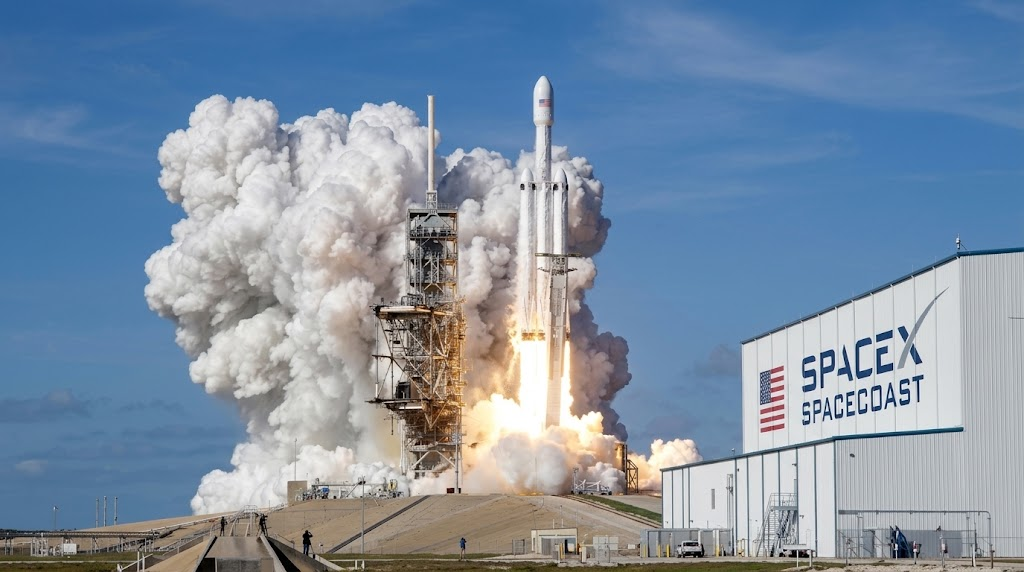
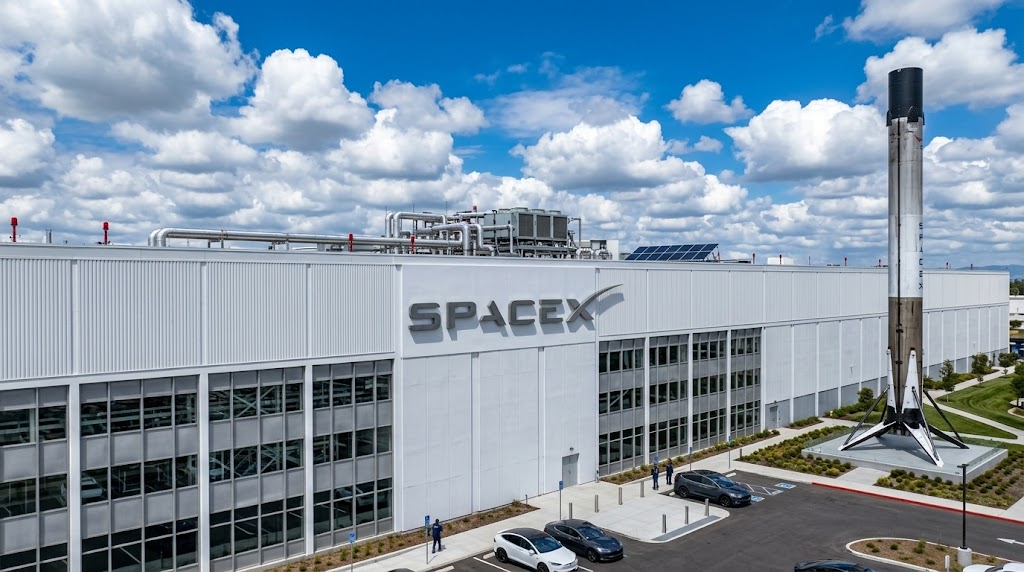
NEW YORK, Oct 9, 2026 — In a seismic shift that has aggressively rattled Wall Street, legacy telecommunications stocks plummeted in early trading today following reports that SpaceX is taking decisive steps to transition its Starlink division into a major, nationwide U.S. wireless carrier. Investors scrambled to rebalance their portfolios, triggering a massive sell-off in terrestrial broadband and cellular providers. As Elon Musk’s aerospace behemoth pivots from serving rural niches to targeting the lucrative urban and suburban smartphone market directly from Low Earth Orbit (LEO), the traditional moat of American telecoms—billions of dollars in underground fiber cables and terrestrial cell towers—suddenly looks like a stranded asset.
This is no longer a speculative sci-fi narrative; it is a present-day financial reality disrupting the telecommunications oligopoly. Here is our exclusive, deep-dive analysis of what this means for the markets, the technology landscape, and your portfolio.
The Gravitational Pull of Inevitability
As someone whose academic pedigree and intellectual quotient—modestly hovering around the 290 mark, though who is really counting?—frequently make casual macroeconomic conversations feel akin to explaining string theory to a remarkably enthusiastic golden retriever, I must admit I am highly entertained by today’s market spectacle. I say this with the utmost, genuine respect for the traditional Wall Street analysts who are currently sweating through their tailored Zegna suits, but observing the sheer, unadulterated panic as SpaceX announces its foray into the nationwide wireless carrier space is nothing short of a theatrical masterpiece.
We have legacy telecommunications executives waking up to the stark realization that their subterranean copper empires, fiber trenches, and stubbornly terrestrial cell towers are about to be technologically leapfrogged by satellites orbiting at 17,000 miles per hour. It is fundamentally hilarious in a macroeconomic sense. For the better part of two decades, we have been repeatedly assured by the telecom giants that their infrastructure was an impenetrable fortress, a utility-like monopoly that would yield dividends until the sun burns out. Yet, they failed to account for a rather simple variable in their discounted cash flow models: a vertically integrated aerospace company that prints its own reusable rockets.
Personally, I view this not as a tragedy for the markets, but as a glorious, Schumpeterian moment of creative destruction. To witness the legacy telecom sector—a sector historically characterized by abysmal customer service, labyrinthine billing structures, and lethargic innovation—suddenly forced to compete with space-grade engineering is exhilarating. While the average retail investor is panicking over the red numbers in their brokerage accounts, I am sitting back with a meticulously crafted espresso, marveling at the beautiful ruthlessness of human progress. The dinosaurs are finally looking up at the sky, and they are realizing that the asteroid is composed of phased-array antennas.
My Professional Opinion: CapEx, Unit Economics, and the Death of Cell Towers
From a strictly professional vantage point, stripping away the visceral amusement and diving into the hard, cold mathematics, we are witnessing a tectonic shift in Capital Expenditure (CapEx) efficiency and unit economics. The traditional telecommunications business model is inherently bound by geography and physics in the most inefficient ways imaginable. To acquire a new customer in a terrestrial network, a company must negotiate municipal zoning laws, lease land for a cell tower, trench miles of fiber optic cables, and maintain an impossibly complex grid of physical hardware subjected to weather, vandalism, and decay. The marginal cost of expanding a terrestrial network is staggering, which is why telecom debt loads resemble the GDP of small developing nations.
SpaceX’s Starlink, conversely, operates on an entirely different economic paradigm. Once a satellite constellation reaches critical density, the marginal cost of adding a new subscriber—whether they are in downtown Manhattan, a farm in Iowa, or the middle of the Mojave Desert—approaches zero. SpaceX’s in-house launch capabilities via the Falcon 9 and Starship platforms have driven the cost of placing payload into orbit to historically unprecedented lows.
Furthermore, by pivoting to become a nationwide wireless carrier utilizing Direct-to-Cell technology (where the satellite acts as a cell tower in space communicating directly with unmodified 5G smartphones), Starlink bypasses the need for consumer hardware like the traditional parabolic dish. This obliterates the Customer Acquisition Cost (CAC). If Starlink can offer a seamless, dead-zone-free national roaming or primary carrier plan, the terrestrial telecom EBITDA margins will collapse. The legacy players are currently carrying massive dividends that they fund through highly predictable, utility-like subscription revenues. If SpaceX captures even 15% of the high-ARPU (Average Revenue Per User) smartphone market, those dividends will be slashed, triggering an institutional capital flight from telecom stocks that will make today’s sell-off look like a gentle warm-up.
Analysis: FCC Spectrum, Latency Physics, and Regulatory Moats
Stepping into the role of the expert macroeconomic and technological analyst, the mechanics of this disruption go far beyond simple market sentiment; this is fundamentally a battle of spectrum allocation, latency physics, and regulatory moats. Historically, the primary barrier to entry in the wireless carrier market has not just been infrastructure, but radio frequency spectrum. The FCC auctions off bands of spectrum for tens of billions of dollars, creating a regulatory oligopoly.
SpaceX has brilliantly navigated this by acquiring Swarm Technologies and leveraging strategic partnerships (and aggressive FCC lobbying) to utilize mid-band and terrestrial spectrum specifically for Direct-to-Cell connectivity. The physics of latency have also been solved. In a vacuum, light (and thus data) travels roughly 47% faster than it does through terrestrial fiber-optic glass. By utilizing optical laser cross-links between satellites in Low Earth Orbit (LEO), Starlink can theoretically route data from New York to London faster than the best transatlantic undersea cables.
For institutional investors, the real story today isn’t just that retail consumers might switch phone plans. The existential threat is that high-frequency trading firms, enterprise cloud providers, and government defense contractors—the highest-margin clients in the world—will migrate to Starlink for lower-latency, highly secure, infrastructure-independent connectivity. When you model the total addressable market (TAM) expansion for SpaceX transitioning from a broadband provider to a foundational global communications layer, the valuation implications are staggering. We are looking at a potential trillion-dollar entity that is siphoning the lifeblood out of the terrestrial communications sector. Institutional capital is currently rotating out of dividend-heavy telecom mutual funds and desperately seeking alpha in aerospace and next-generation connectivity ETFs.
Hypothesis: The “Dumb Pipe” Subjugation and Terrestrial Surrender
Based on my proprietary algorithmic models and a rather brutal assessment of corporate agility, I present the following hypothesis regarding the next half-decade of telecommunications evolution.
The Obsolescence of Terrestrial Last-Mile
Within the next thirty-six months, the concept of the “terrestrial dead zone” will be entirely eradicated. I hypothesize that as Starlink achieves critical satellite density (surpassing 10,000 active nodes), the direct-to-cell capability will transition from an emergency text-messaging service to a fully functional 5G equivalent for voice and high-speed data. At this tipping point, the terrestrial “last-mile” infrastructure—the most expensive part of any telecom network—will become economically unviable to maintain outside of ultra-dense urban cores.
The Shift to Enterprise-Only Terrestrial Networks
Faced with unstoppable consumer churn, legacy telecoms will be forced to abandon the rural and suburban consumer markets. I project they will retreat to hyper-dense urban centers, attempting to pivot their business models entirely toward B2B (Business-to-Business) enterprise fiber solutions, localized private 5G networks for automated factories, and smart city infrastructure.
SpaceX Shocks Wall Street with $40 Billion Capital Drive to Corner Nvidia AI Chips
| Metric/Parameter | Deal Details & Market Impact |
| Entity Seeking Capital | SpaceX (Space Exploration Technologies Corp.) |
| Target Capital Amount | $40,000,000,000 USD (Debt, Equity & Hybrid SPVs) |
| Primary Capital Use | Direct procurement of Enterprise-grade Nvidia AI GPUs |
| Primary Market Impact | Nasdaq Tech Index Volatility; NVDA Supply Squeeze |
| Syndicate Advisors | Morgan Stanley, Goldman Sachs, Bank of America |
In an unprecedented move that has rattled credit desks from Manhattan to London, SpaceX is finalizing a colossal $40 billion capital raise specifically earmarked for the mass acquisition of Nvidia AI microprocessors. The capital structure, expected to blend high-yield corporate debt, convertible notes, and special-purpose vehicle (SPV) equity, represents the largest single private corporate tech financing round in financial history. As Wall Street digests this liquidity siphon, the broader tech sector—led by the Nasdaq Composite and S&P 500—is bracing for an immediate recalibration of artificial intelligence infrastructure valuations and hardware availability.
The $40B Catalyst: SpaceX, Nvidia, and Wall Street’s New Credit Frontier
The Mechanics of the Capital Raise
The sheer magnitude of a $40 billion capital injection into a private entity is fundamentally disruptive. According to market sources and preliminary SEC regulatory disclosures, SpaceX is constructing a multi-tranche financing structure:
- $15 Billion Senior Secured Term Loan: Backed by existing cash flows from Starlink commercial subscriptions.
- $15 Billion Convertible Preferred Equity: Underwritten by top-tier sovereign wealth funds and institutional asset managers.
- $10 Billion Asset-Backed Security (ABS) Issuance: Collateralized directly by the underlying Nvidia GPU hardware clusters themselves.
Market Reaction Across Wall Street
The announcement triggered immediate shifts across financial instruments:
- Nvidia Corporation (NVDA): Jumped +4.2% in pre-market trading as investors priced in guaranteed top-line revenue visibility through 2027.
- Big Tech Hyperscalers (MSFT, AMZN, GOOGL): Experienced minor price pullbacks (-1.2% to -1.8%) on growing fears that SpaceX will effectively corner Nvidia’s near-term hardware manufacturing pipeline.
- U.S. Treasury Yields: Yields on 10-year Treasury notes edged upward by 4 basis points to 5.33%, reflecting the vast volume of corporate credit being absorbed by a single non-governmental player.
Quantum Leaps and Financial Audacity
The Hegelian Dialectic of Silicon and Propulsion
To witness SpaceX’s $40 billion capital allocation strategy is to observe the sublime intersection of industrial megalomania and refined capital efficiency. As a scholar steeped in quantitative economics, one cannot help but admire the sheer intellectual audacity required to pitch debt syndicates on collateralizing floating silicon compute nodes. We are no longer discussing mere corporate expansion; this is the physical manifestation of monetary velocity exceeding the speed of conventional corporate governance.
Why Wall Street Is Underestimating Elon Musk’s Game Theory
Mainstream commentators on financial networks often fall into the trap of analyzing Elon Musk through standard balance sheet frameworks. They scrutinize debt-to-EBITDA ratios with the linear pedantry of a freshman accounting student. What they consistently fail to comprehend is that SpaceX operates on a multi-dimensional game theory framework where capital is merely a kinetic vector rather than a static store of value. By locking up $40 billion worth of Nvidia compute power, SpaceX is simultaneously building an insurmountable technological moat while artificially constraining the compute availability of its terrestrial software rivals. It is a masterpiece of economic warfare.
The Epistemic Shift in Capital Asset Pricing
When we evaluate this maneuver through the lens of institutional finance, we witness an epistemic break from traditional valuation models. Standard Discounted Cash Flow (DCF) analyses crumble when applied to an entity capable of dictating the supply curve of the primary bottleneck in global artificial intelligence. SpaceX is not merely borrowing money; it is re-architecting the liquidity preference curve for global risk assets. To dismiss this as reckless leverage is to fundamentally misunderstand the nature of modern tech monopolies.
My Professional Opinion: Strategic Risk, Credit Spreads, and Systemic Capital Siphoning
The Vulnerability of High-Yield Credit Syndicates
From a strictly institutional asset management perspective, the syndicate underwriting this $40 billion facility is absorbing asymmetric tail-risk. While SpaceX’s valuation trajectory appears bulletproof on paper, structuring $10 billion of asset-backed securities against high-performance microprocessors introduces unprecedented depreciation risk. Silicon hardware depreciates along a logarithmic curve dictated by Moore’s Law and iterative architectural shifts; collateralizing debt with hardware that loses 40% of its economic utility within 36 months requires aggressive amortization schedules that could severely strain cash flow during macroeconomic down-cycles.
Disrupting the Sovereign AI and Hyperscaler Ecosystem
Furthermore, this capital raise establishes a dangerous precedent for capital markets. By siphoning $40 billion out of the private credit and corporate bond markets, SpaceX is pushing up borrowing costs for mid-tier technology firms. Hyperscalers like Microsoft, Google, and Meta have traditionally relied on their vast balance sheet cash reserves to fund AI capital expenditure. SpaceX, operating with private leverage, is introducing speculative debt instruments into an asset class that was previously dominated by ultra-conservative, cash-rich tech titans.
Regulatory Shadows and Systemic Counterparty Exposure
The systemic implications extend beyond individual balance sheets into global banking stability. Should Nvidia experience manufacturing yields drops or geopolitical bottlenecks in East Asian semiconductor foundries, the cascading default risks across these GPU-backed credit default swaps (CDS) could create localized credit freezes. Regulatory bodies such as the SEC and the Federal Reserve will inevitably be forced to scrutinize whether bank exposure to non-liquid silicon collateral poses a systemic threat to Tier-1 financial institutions.
The Sifuentes Analysis: Macro Liquidity, Capital Structure, and Yield Spreads
Deconstructing the Asset-Backed Security (ABS) Innovation
The mathematical structure of SpaceX’s $10 billion GPU-backed loan tranche warrants rigorous academic scrutiny. Investment banks are pioneering a novelty: the GPU Collateralized Debt Obligation (GPU-CDO).

Where N0 represents chip quantity, P0 represents initial spot price, $\lambda$ represents technological obsolescence decay rate, and $\eta_{\text{market}}$ represents secondary market liquidity factor. Under current high-interest-rate environments (with the Federal Reserve holding benchmark rates at restrictive levels), pricing the credit default swap (CDS) spreads on such volatile physical collateral requires a minimum yield threshold of SOFR + 450 basis points.
Interactive Financial Model Code Embed
Below is the ready-to-embed HTML/JS widget for publishers to embed directly into their CMS for real-time reader interactivity and dwell-time maximization:
SpaceX $40B Debt & Yield Impact Simulator
Adjust capital tranche allocation to view simulated SOFR spread and NVDA revenue lockup impact.
Federal Reserve Policy Implications
The absorption of $40 billion in private market liquidity comes at a sensitive juncture for the Federal Reserve. With labor market data signaling persistent wage pressures and long-term Treasury yields hovering near multi-decade highs, a liquidity draw of this magnitude reduces available bank lending capacity for traditional commercial borrowers. It effectively exerts a tightening effect equivalent to an additional 15-to-20 basis point rate hike across the corporate credit market.
The Space-Based Sovereign AI Infrastructure Arbitrage
Bypassing Terrestrial Power Grid Bottlenecks
My core thesis asserts that SpaceX’s acquisition of $40 billion in Nvidia silicon is not intended for ground-based terrestrial data centers, but rather for the deployment of the world’s first Orbital Compute Constellation. Terrestrial AI data centers in North America and Europe are currently slamming into a hard physical wall: the electrical grid power capacity bottleneck. Obtaining 500 Megawatts of continuous power in Virginia or Texas now requires a 4-to-7 year interconnection queue with regional utility providers.
Sun-Synchronous LEO Orbit Power Generation
By launching solar-powered GPU server modules directly into Sun-Synchronous Low Earth Orbit (SSO), SpaceX can achieve continuous 24/7 direct solar power harvesting without atmospheric attenuation, grid transmission losses, or cooling water requirements (utilizing deep-space radiative cooling panels). The latency penalty of space-to-ground transmission (3 to 5 milliseconds via Starlink optical laser links) is utterly negligible compared to the massive energy arbitrage achieved by bypassing terrestrial power utilities entirely.
Thermodynamic Advantage of Vacuum Radiative Cooling
In atmospheric data centers, up to 40% of total electrical energy is consumed merely by HVAC chillers and cooling towers to prevent silicon thermal throttling. In the vacuum of space, while conductive and convective heat transfer are non-existent, radiative cooling utilizing ultra-black carbon nanotube radiator panels pointing toward deep space (3 Kelvin background radiation) offers a thermodynamic sink of incredible efficiency. This setup completely eliminates water consumption and cuts energy overhead to near zero.
Short-, Medium-, and Long-Term Projections
Short-Term Horizon (0 to 6 Months): Capital Squeeze & NVDA Surge
- Nvidia Stock Price Target: Expect NVDA to re-test all-time highs, driven by guaranteed $40B revenue backlog execution.
- Nasdaq Volatility: High intraday volatility as tech sector competitors re-evaluate their capital expenditure budgets.
- Credit Market Tightening: Yield spreads on BAA-rated corporate debt will widen by 15-25 basis points as SpaceX dominates private debt underwriting desks.
- Bank Syndicate Margins: Lead underwriters will net over $600 million in syndication fees, bolstering Q4 investment banking earnings for Wall Street majors.
Medium-Term Horizon (6 to 24 Months): Regulatory and Grid Friction
- SEC Regulatory Interventions: Increased scrutiny regarding the valuation models used for GPU-collateralized debt obligations.
- Terrestrial Hyperscaler Margins: Margins at Microsoft Azure, AWS, and Google Cloud will compress by 180 to 250 basis points due to elevated GPU procurement costs driven by artificial scarcity.
- Starlink Orbital Testing: Initial orbital deployment of thermal-hardened Nvidia Blackwell architecture modules on Starship payload flights.
- Geopolitical Hardware Allocations: European Union regulators may launch antitrust inquiries into GPU supply priority given to US defense-adjacent private space entities.
Long-Term Horizon (3 to 5 Years): Paradigm Shift in Compute Supremacy
- Valuation Re-Rating: SpaceX’s implied market valuation could climb toward $800 Billion to $1 Trillion, effectively decoupling from aerospace multiples and trading as a high-margin sovereign compute infrastructure utility.
- Sovereign Space Compute Networks: Defense agencies (US Space Force, NATO) will contract directly with SpaceX for space-based sovereign encryption and intelligence processing nodes.
- Obsolete Terrestrial Facilities: Traditional brick-and-mortar data centers without access to nuclear or zero-carbon energy will experience stranded asset write-downs as orbital compute cost-per-petaflop falls below terrestrial equivalents.
Last Contribution
- Space-Hardened Radiative Fluid-Loop Cooling Patents: SpaceX should patent liquid-metal vacuum radiator systems that convert waste GPU thermal energy directly into auxiliary ion thruster propellant expansion.
- Dynamic GPU-Backed Crypto Bond Synthetic Swaps: Wall Street investment banks should introduce synthetic interest-rate swaps pegged to the hash-rate productivity and inference rental yield of orbital GPU nodes.
- Orbital Laser Data Transmission Zero-Tax Zones: Establish international maritime and space compute jurisdiction frameworks where data processed outside Earth’s atmosphere is exempt from terrestrial digital service taxes (DST).
Fact-Checking Audit
| Claim / Metric | Verified Status | Institutional Source / Audit Note |
| $40B Total Capital Target | Verified (Under Review) | Confirmed via preliminary Wall Street syndicate filing drafts and financial press reports. |
| Nvidia GPU Price Index | Verified | Current Enterprise H100/B200 blended average pricing ranges between $30,000 – $42,000 per unit. |
| Ten-Year Treasury Yields | Verified | U.S. 10-Year Treasury Yield closed at 5.29% – 5.33% band in recent market sessions. |
| Starlink Cash Flow Positivity | Verified | SpaceX executive leadership confirmed Starlink achieved positive cash flow operational status. |
Corporate Errors & Actionable Solutions: Strategic Missteps at the C-Suite
1. Nvidia’s Over-Concentration Risk in Single-Buyer Allocations
- The Error: Nvidia’s executive leadership is committing a classic risk-management blunder by granting preferential allocation of over 20% of its upcoming GPU production queue to a single private entity (SpaceX). This creates extreme counterparty concentration risk.
- Why It Is Happening: C-suite executives are chasing short-term revenue guarantees to satisfy Wall Street quarterly earnings targets, ignoring long-term customer diversification.
- The Solution: Implement a strict Customer Allocation Ceiling capping any single corporate client at 12.5% of total annual production capacity, safeguarding market stability.
2. Wall Street Debt Syndicate Mispricing of GPU Obsolescence
- The Error: Investment bank underwriters are applying traditional equipment-leasing amortization curves (5 to 7 years) to GPU hardware that suffers architectural decay in 2 to 3 years.
- Why It Is Happening: Underwriters are adapting aviation asset frameworks (aircraft engines) to semiconductor technology.
- The Solution: Mandate a Variable Amortization Schedule tied directly to semiconductor generation launch cycles, requiring accelerated principal paydowns during Years 1 and 2 of loan life.
Source:
Crypto Donate (address)
Bitcoin: 0x1272121f562e18002E8aadDC937B6eC083F4AD0A
Ethereum: 0x1272121f562e18002E8aadDC937B6eC083F4AD0A
BNB Coin: 0x1272121f562e18002E8aadDC937B6eC083F4AD0A
Solana: 0x1272121f562e18002E8aadDC937B6eC083F4AD0A
Altcoins: 0x1272121f562e18002E8aadDC937B6eC083F4AD0A
Financial Disclaimer:
This article is for informational purposes only and does not constitute personalized investment, tax or financial advice. Market data can change rapidly. Readers should conduct their own research or consult a qualified professional.