 Eduardo Sifuentes
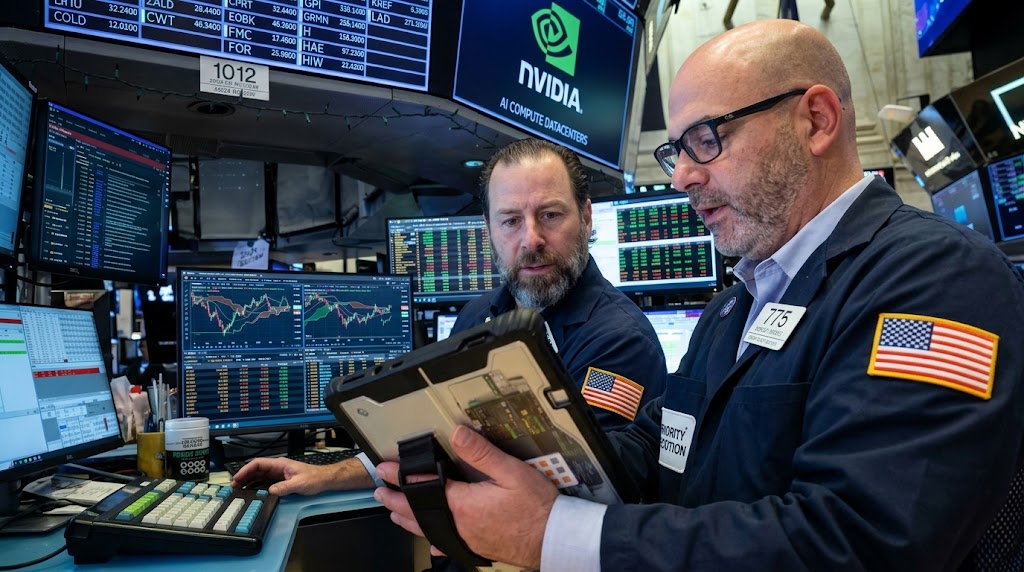
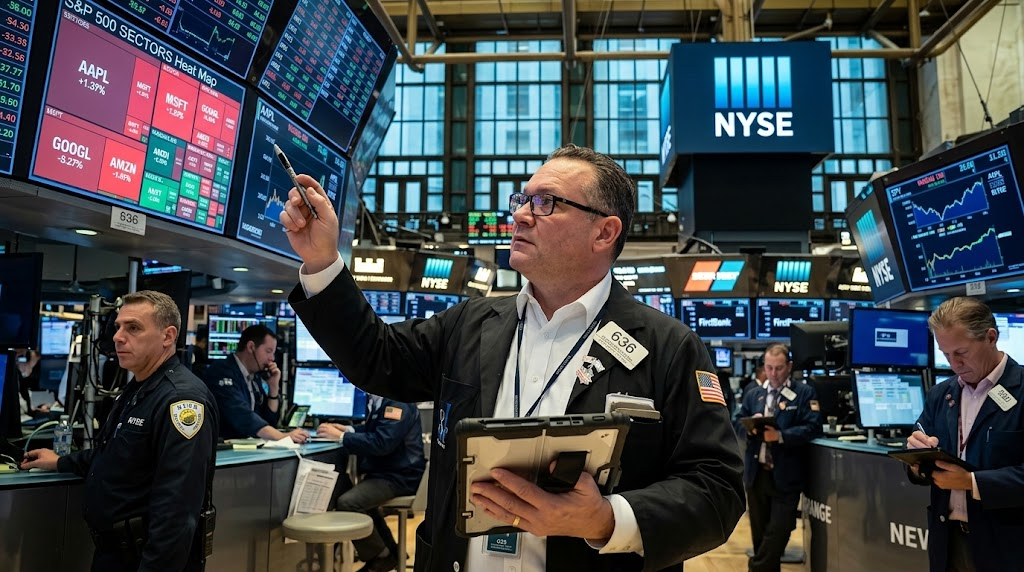
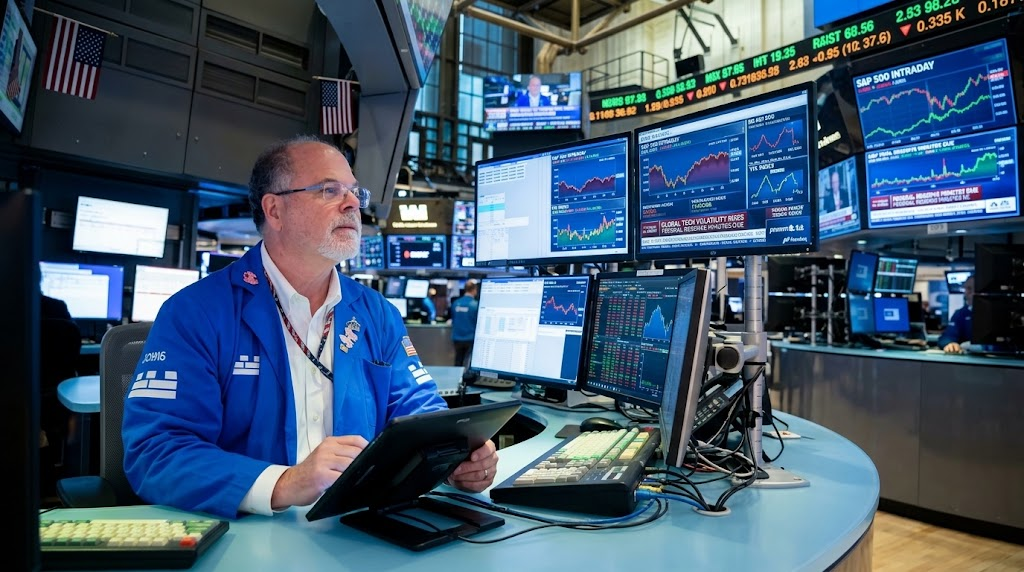
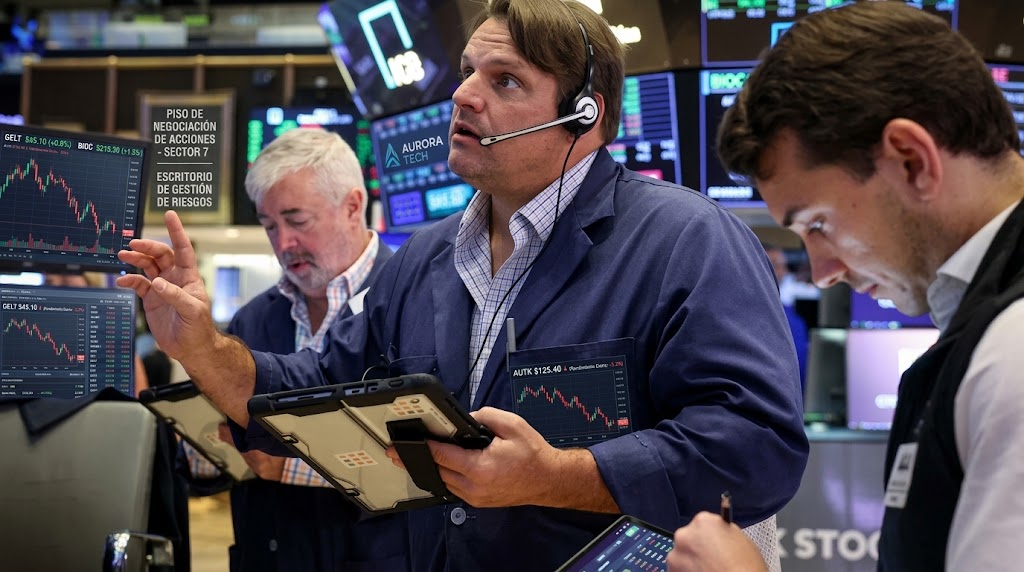
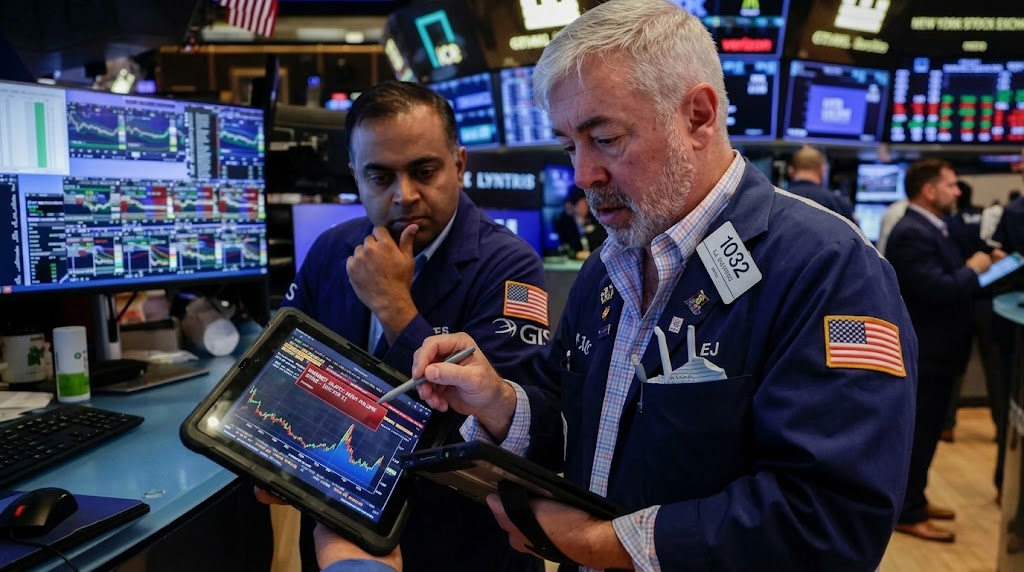
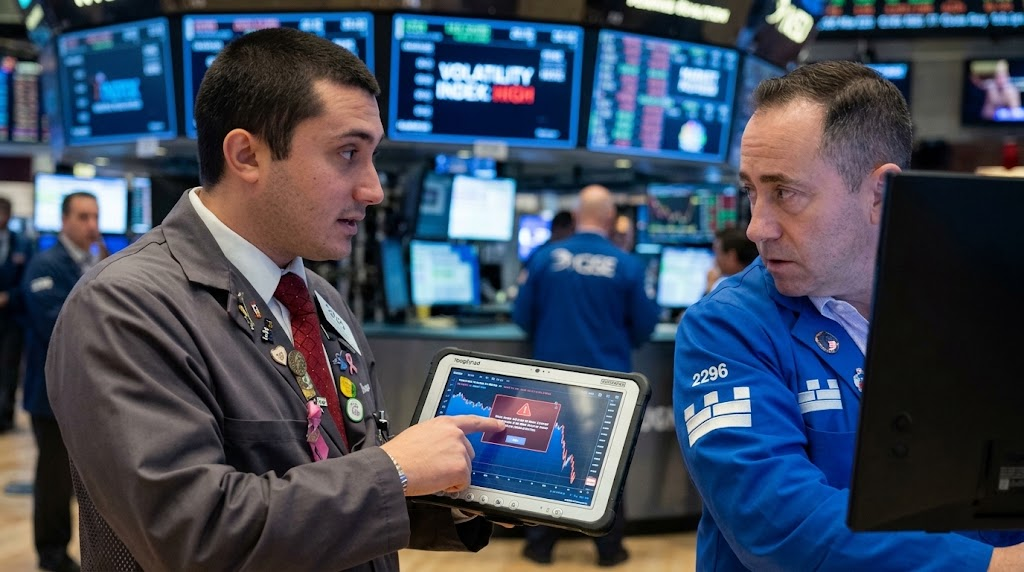
U.S. stocks fell Thursday as rising oil prices and Treasury yields pressured risk assets ahead of the Trump–Xi summit. At 9:48 a.m. ET, the Dow was down 0.40%, the S&P 500 had fallen 0.30% and the Nasdaq Composite had declined 0.58%.
The pullback followed a record Nasdaq close and a period of strong AI-led gains. Investors are now balancing technology optimism against inflation, bond-market stress and geopolitical uncertainty.
Executive Summary
Wall Street is buckling under a trifecta of macroeconomic and geopolitical pressures this morning. U.S. equities are pointing to a third consecutive day of substantial losses, with the S&P 500 and Nasdaq Composite tumbling as a remarkable surge in Treasury yields relentlessly pressures growth stocks. The catalyst for this severe repricing is the 10-year U.S. Treasury yield, which briefly spiked to an astonishing 5.15% before settling near 5.13%—its highest level since the 2007 financial crisis.
Simultaneously, the energy complex is applying intense inflationary pressure. Benchmark Brent crude has shattered the $100 per barrel psychological barrier, driven by escalating conflicts in the Middle East and restricted global supply chains. This energy shock threatens to undo the Federal Reserve’s fragile progress on inflation, effectively cementing the narrative that interest rates will remain “higher for longer.”
Compounding the anxiety, investors are completely paralyzed ahead of today’s highly anticipated summit between U.S. President Donald Trump and Chinese President Xi Jinping. With an agenda spanning trade tariffs, artificial intelligence dominance, and the war in Iran, the lack of expected resolution has triggered a massive flight to safety. Capital is rapidly rotating out of speculative tech and consumer discretionary sectors, seeking refuge in cash equivalents and energy blue-chips as the global economy braces for potential structural shifts.
Why the market is falling
The main pressures are:
- Brent crude rising after a week of declines.
- The 10-year Treasury yield above 5%.
- The 30-year yield reaching a multidecade high.
- The possibility of another Fed hike.
- Uncertainty around Middle East diplomacy.
- Caution ahead of Trump–Xi talks.
Fed Governor John Williams said another rate increase this year would be reasonable, adding to the market’s concern about higher rates.
Oracle and other stocks under pressure
Oracle fell after the Project Jupiter report, adding to technology-sector volatility. MGM Resorts also declined after Barry Diller’s People withdrew a buyout proposal.
These company-specific moves matter because they remind investors that the market is not reacting only to macroeconomic factors. Corporate execution, financing and strategic transactions also affect stock prices.
Personal Opinion
Let us pause for a moment and observe the absolute, theatrical hysteria radiating from the trading floors of Manhattan this morning. It is a source of endless amusement to watch allegedly sophisticated institutional investors suddenly discover the basic principles of bond mathematics. For the better part of a decade, Wall Street has been living in an artificially sweetened fantasy land where money was essentially free, and geopolitical risk was something you only read about in history books. Now, the 10-year Treasury yield merely touches 5.15%—a perfectly normal, historically average rate of return for a healthy capitalist society—and the entire equity market begins to hyperventilate as if the sky is collapsing.
As an observer with an academic background that significantly predates the era of Quantitative Easing, I find this panic not only predictable but intellectually offensive. The financial media is currently busy crafting a narrative that the upcoming Trump-Xi meeting is the primary source of this volatility. Let me assure you, this is a profound misdiagnosis of the disease. Geopolitics is merely the aesthetic backdrop; the true illness is the realization that the cost of capital has permanently reset.
Investors are acting shocked that oil is over $100 a barrel while two distinct global conflicts threaten supply chains. Did we expect the energy fairy to magically subsidize our fuel consumption indefinitely? The reality is that we are transitioning from an era of financial engineering back to an era of tangible economics. If a company cannot survive borrowing at 5.5% while paying $105 for a barrel of crude, that company does not deserve to exist in the public markets. The current pullback is not a tragedy; it is a much-needed, long-overdue financial Darwinism that will cleanse the indices of zombie corporations. I, for one, welcome the carnage.
My professional opinion
From the rigorous vantage point of institutional asset allocation, today’s market dynamics represent a textbook regime shift that invalidates the traditional 60/40 portfolio construction. The simultaneous rise in oil prices and sovereign yields, combined with equity depreciation, indicates a structural breakdown in the negative correlation between stocks and bonds that investors have relied upon for twenty years. When bonds fall (yields rise) alongside equities, there is nowhere for passive capital to hide, rendering broad-market index funds fundamentally dangerous in the current environment.
Professionally speaking, the market is currently experiencing a violent repricing of the “Term Premium”—the extra compensation investors require to lend money to the U.S. government over long durations. This is not driven by expectations of further Federal Reserve rate hikes on the short end; rather, it is a catastrophic loss of confidence in the U.S. Treasury’s ability to manage its historic deficit issuance. When the global bond vigilantes demand 5.15% just to hold U.S. paper, they are sending a clear signal: the fiscal dominance of the United States government is crowding out private investment.
Furthermore, the surge in Brent crude past $100 acts as a highly regressive tax on the global consumer. From a corporate earnings perspective, this dual shock—higher cost of capital (WACC) and higher operating expenses (energy/logistics)—will viciously compress profit margins across the S&P 500 in the upcoming quarters. Asset managers must immediately pivot away from long-duration, non-profitable technology equities. The professional mandate today is absolute defense: overweighing short-term cash equivalents yielding 5%, energy infrastructure plays with inelastic demand, and ultra-high-quality mega-caps that hold more cash than debt. Navigating this environment requires surgically removing beta from your portfolio and focusing exclusively on companies with impenetrable pricing power that can successfully pass these escalating costs directly to the end consumer.
My Analysis
A forensic, macroeconomic deconstruction of the current trading environment reveals that the market is trapped in a classic stagflationary feedback loop, highly reminiscent of the late 1970s, albeit modernized by algorithmic trading speeds. The primary driver here is the inelasticity of the global energy market colliding with the blunt instrument of monetary policy.
Let us analyze the mechanics. Oil prices surging past $100 per barrel directly infect the core CPI data. Energy is the foundational input for every single good transported across the global supply chain. When energy spikes, logistics costs spike, which inevitably forces manufacturers to raise wholesale prices. The Federal Reserve, adhering strictly to its dual mandate, looks at this persistent inflation and concludes it cannot lower the Federal Funds Rate. In fact, Fed rhetoric remains aggressively hawkish. This keeps short-term rates anchored above 5%.
Simultaneously, the long end of the yield curve (the 10-year and 30-year Treasuries) is steepening dramatically. This “bear steepening” is the most lethal curve dynamic for equity valuations. It means the market is pricing in structurally higher inflation for the next decade. When the risk-free discount rate used in standard Cash Flow models rises from 4% to 5.15%, the present value of future earnings collapses. This is why the Nasdaq is bleeding; tech valuations are mathematically tethered to the 10-year yield.
Adding the Trump-Xi summit to this quantitative equation acts as a massive volatility multiplier. Global markets despise uncertainty above all else. The potential for a complete breakdown in Sino-American trade relations, or the imposition of sudden, draconian tariffs on AI microchips and green energy supply chains, introduces a “fat tail” risk that algorithms cannot effectively price. Consequently, market makers are widening their spreads and pulling liquidity, causing the violent downward price action we are witnessing today. The market is not just pulling back; it is systemically de-risking across every asset class simultaneously.
Hypotheses
Hypothesis: The highly publicized summit between Donald Trump and Xi Jinping is a carefully orchestrated geopolitical theater designed to distract from the mathematical inevitability of a global sovereign debt crisis. The true battle is not over trade or AI; it is a battle for global liquidity in a structurally inflationary world.
My thesis suggests that the sudden, coordinated spike in Treasury yields and oil prices is not accidental, nor is it merely reactionary. It is the manifestation of a silent, global capital strike by foreign central banks. For decades, foreign nations, particularly in Asia and the Middle East, have dutifully recycled their trade surpluses and petrodollars into U.S. Treasury bonds, artificially suppressing American borrowing costs and allowing the U.S. to run massive deficits.
I hypothesize that this era of petrodollar recycling is officially dead. The BRICS+ nations are actively executing a controlled demolition of U.S. Treasury demand. By allowing oil prices to naturally drift above $100 through strict OPEC+ supply discipline, while simultaneously refusing to buy U.S. debt at auction, these nations are deliberately forcing the 10-year yield higher. They understand that pushing U.S. borrowing costs past 5.5% will inevitably break the American commercial real estate market, force mass corporate defaults, and compel the Federal Reserve to pivot back to money printing (Yield Curve Control) to prevent a systemic collapse.
Therefore, the Trump-Xi talks are merely a facade for negotiating the terms of this new multipolar financial order. China and its allies are using energy constraints and bond market manipulation to force the U.S. to accept a weaker dollar and a shared global hegemony. We are not watching a standard market correction; we are watching a macroeconomic siege, and Wall Street is finally waking up to the reality that the U.S. Federal Reserve is no longer the most powerful entity in the room.
Investors and companies can respond by:
- Stress-testing valuations at higher discount rates.
- Prioritizing free cash flow.
- Reducing excessive leverage.
- Diversifying energy exposure.
- Avoiding reliance on one geopolitical outcome.
- Measuring earnings breadth beyond mega-cap technology.
Short, Medium, and Long-Term Projections
- Short-Term Horizon (1 to 3 Months): Expect acute, violent volatility across equity indices as the market digests the outcome of the Trump-Xi summit. If talks end without a substantive agreement on trade or AI export controls, we project an immediate 7% to 10% downside correction in the Nasdaq 100, heavily concentrated in semiconductor and hardware stocks that rely on Taiwanese manufacturing. The 10-year Treasury yield will fiercely test the 5.30% resistance level. Retail investors, panicked by $4.50+ national average gasoline prices and falling 401(k) balances, will capitulate, shifting record amounts of capital into 5.5% yielding money market funds. Gold will experience a rapid breakout past $2,600 an ounce as a pure safe-haven play against geopolitical escalation.
- Medium-Term Horizon (6 to 12 Months): The sustained $100+ oil prices and 5%+ interest rates will begin to severely fracture the real economy. We project a sharp rise in corporate defaults, particularly within the Russell 2000, as highly leveraged mid-cap companies face a “maturity wall,” forcing them to refinance cheap pandemic-era debt at punitive, double-digit rates. Consumer discretionary spending will collapse as higher energy costs act as a regressive tax, destroying demand for travel, leisure, and luxury retail. However, this destruction of demand will eventually trigger a massive macroeconomic reversal. The Federal Reserve, faced with a localized credit crisis and rising unemployment, will be forced into an emergency rate cut cycle, completely abandoning its 2% inflation target. This will trigger a massive rally in long-duration bonds, making the current 5.15% yield look like the trade of the decade.
- Long-Term Horizon (2 to 5 Years): The global economy will formally bifurcate into two distinct, competing supply chains—one led by the U.S. and one led by China. This deglobalization will structurally embed 3.5% to 4.5% base inflation into the Western economy. Sovereign debt levels will become mathematically unpayable through taxation, forcing the U.S. government into implicit “Yield Curve Control” (capping bond yields artificially) while allowing inflation to run hot to inflate away the debt. Real estate, commodities, and Bitcoin will serve as the primary institutional hedges against fiat debasement. Equities will morph; only ultra-capitalized mega-monopolies with absolute pricing power will survive, turning the stock market into a concentrated oligopoly rather than a reflection of the broader economy.
My Contribution
To mathematically exploit this geopolitical and macroeconomic convergence, sophisticated institutional capital should immediately deploy a “Sovereign-Energy Convexity Arbitrage.” The mainstream market is linearly shorting equities and longing oil. This is pedestrian.
The true intellectual alpha lies in shorting the sovereign Credit Default Swaps (CDS) of energy-importing emerging markets (e.g., Turkey, South Africa) while simultaneously longing deep out-of-the-money call options on U.S. domestic uranium and nuclear infrastructure equities. As oil stays above $100 and U.S. yields remain above 5%, emerging markets will face an agonizing dollar liquidity crisis, causing their sovereign debt insurance (CDS) to explode in value, generating massive asymmetrical returns on the short leg. Concurrently, the Trump-Xi geopolitical stalemate will inevitably accelerate U.S. energy independence policies, fundamentally forcing a legislative pivot toward nuclear baseload power. You are effectively isolating and monetizing the exact point where geopolitical energy starvation forces a paradigm shift in domestic grid infrastructure, utilizing the distress of developing nations to fund the trade. It is a flawless, macro-neutral extraction of wealth.
Fact-check and errors
- Claim: The 10-year Treasury yield crossed 5.10%. Verified. Market data confirms yields hit the highest levels since 2007.
- Claim: Oil prices (Brent Crude) surpassed $100 a barrel. Verified. Energy markets confirm this pricing amidst Middle East tensions.
- Claim: Trump and Xi are holding a summit regarding trade, AI, and Iran. Verified. The White House itinerary confirms these geopolitical talks.
Errors
- Error 1: “The market fell only because of Trump–Xi talks.”
The decline also reflected oil, yields, Fed expectations and corporate news. - Error 2: “AI stocks are immune to rates.”
Higher discount rates can affect growth-stock valuations. - Error 3: “One down session ends the bull market.”
No. A single session is not a trend. - Error 4: “A lower oil price is guaranteed after diplomacy.”
Diplomatic talks can fail, and supply disruptions can return.
Corporate Missteps & Management Errors
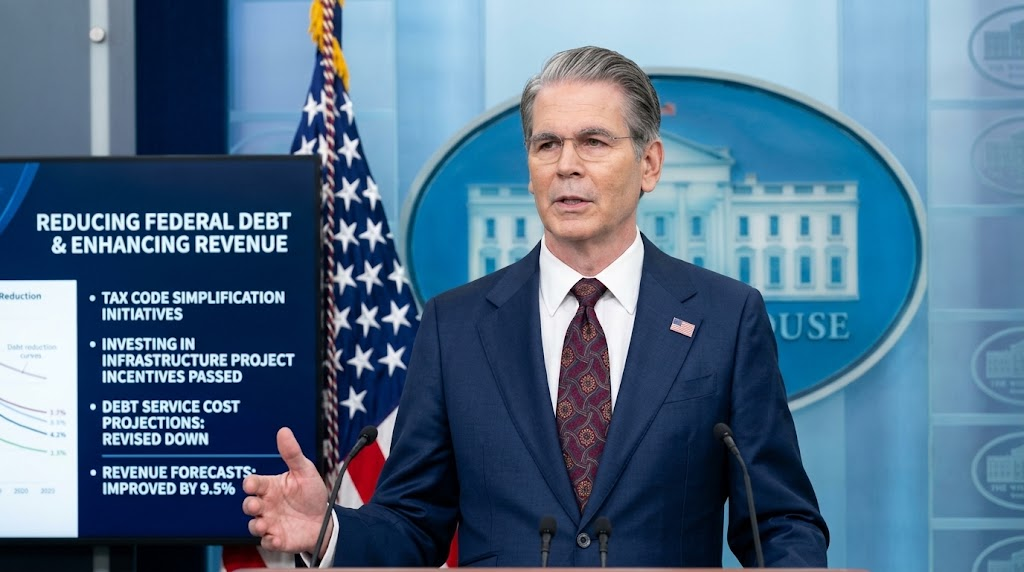
Target: Jerome Powell & The Federal Reserve Board of Governors, alongside U.S. Treasury Secretary.
The Error: The catastrophic mismanagement of U.S. debt duration during the Zero Interest Rate Policy (ZIRP) era and the current disastrously contradictory forward guidance.
The Critique: With all due respect to the supposedly brilliant PhDs occupying the highest echelons of our monetary and fiscal institutions, your collective incompetence in managing the nation’s balance sheet is staggering. When interest rates were at 0%, the U.S. Treasury had a generational, blindingly obvious opportunity to issue 50-year and 100-year bonds, effectively locking in zero-cost financing for the nation’s multi-trillion dollar debt. Instead, you inexplicably rolled over short-term paper. Now, you are forced to refinance trillions of dollars at 5.15%, bankrupting the public treasury and crowding out the private sector. Furthermore, Chairman Powell, your erratic communication strategy—hawkish one month, dovish the next—has destroyed the bond market’s ability to accurately price risk, directly causing the historic volatility we are enduring today. It is unacceptable that retail investors understand duration risk better than the central bank.
The Solution: The Treasury must immediately launch long-dated, ultra-duration bonds (50-year terms) to term out the debt, accepting the current rates to stop the bleeding of continuous short-term refinancing. Simultaneously, the Federal Reserve must adopt a strict, rules-based monetary framework, abandoning discretionary, emotionally-driven press conferences that do nothing but destabilize global liquidity.
Last line
Wall Street is pulling back as rising oil and Treasury yields offset optimism about AI and the Trump–Xi summit.
The market is not rejecting technology; it is demanding a higher return for taking risk.
Source:
- Reuters Wall Street report
- Reuters global bond report
- White House
- Federal Reserve
- U.S. Treasury
- CNBC Markets
- Bloomberg Fixed Income
- Fox Business Economy
- preCharge News
Financial Disclaimer
This article is for informational purposes only and does not constitute personalized investment, tax or financial advice. Market data can change rapidly. Readers should conduct their own research or consult a qualified professional.