 Eduardo Sifuentes
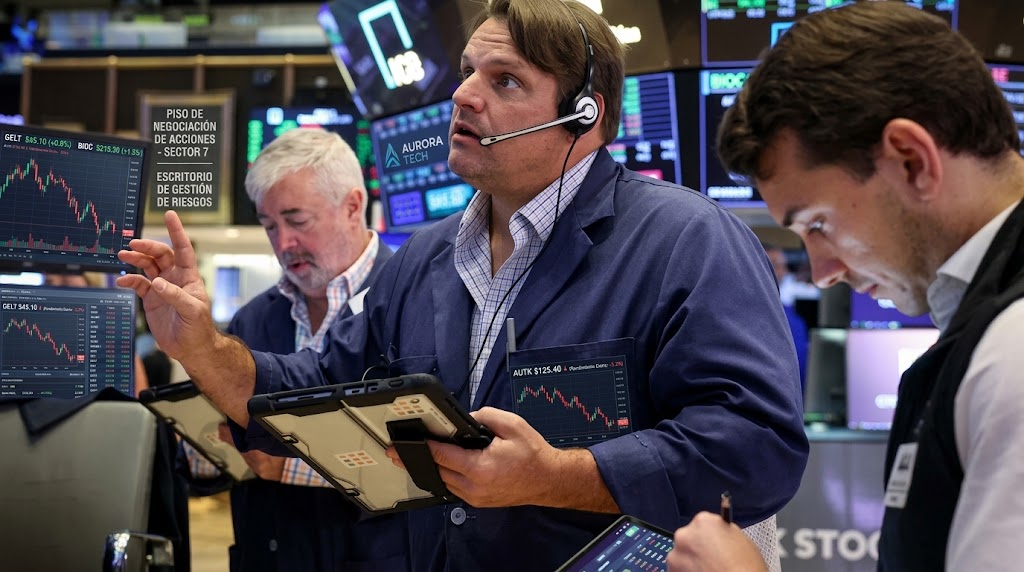
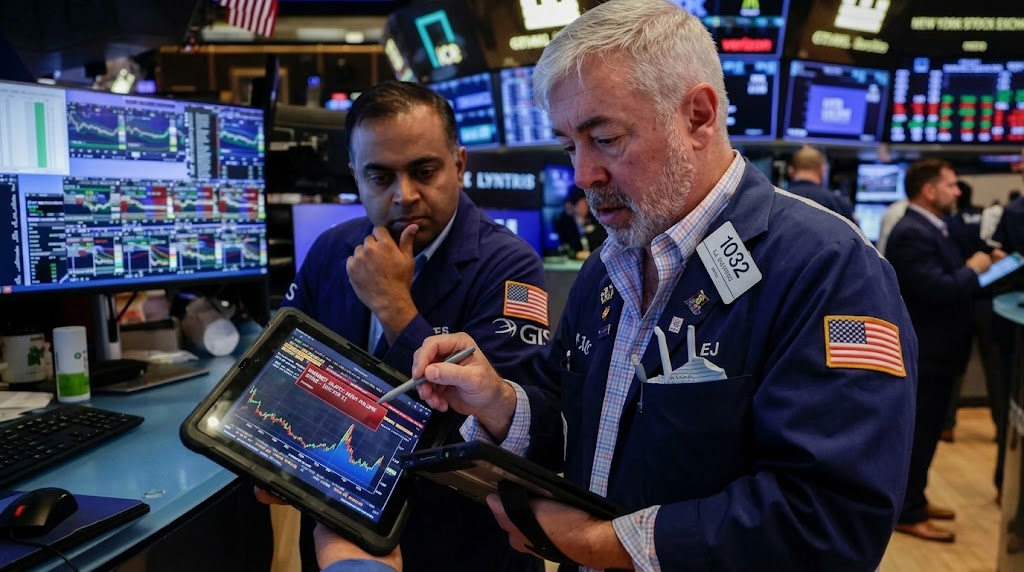
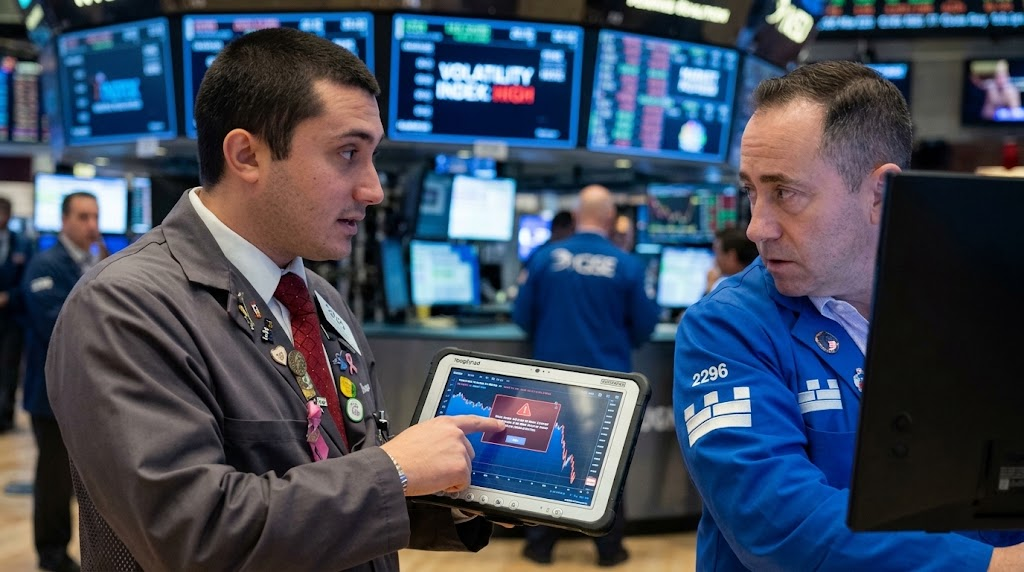
U.S. stocks moved close to record levels Tuesday as Brent crude fell below $100 per barrel and investors assessed the possibility of diplomatic progress involving Iran and the Strait of Hormuz. The S&P 500 rose approximately 0.2% and moved within 0.2% of its recent record, while the Nasdaq added about 0.4%.
The Dow gained roughly 124 points, or 0.2%, at 9:35 a.m. ET in the cited market snapshot.
What is lifting the market
The market is receiving support from:
- Falling oil prices.
- Lower inflation fears.
- AI-stock momentum.
- Hopes for diplomatic progress.
- Easing Treasury yields.
- Anticipation of U.S.–China discussions.
The 10-year Treasury yield was around 4.95% in one market update, while WTI crude traded near $94.36.
Why record highs can be misleading
A major index near a record does not mean every stock or household is benefiting.
Indexes can rise because a small number of very large companies gain sharply. That means investors should examine:
- Market breadth.
- Equal-weight indexes.
- Small-cap performance.
- Consumer discretionary stocks.
- Credit spreads.
- Earnings revisions.
A record headline can coexist with a fragile internal market.
The role of oil
Brent’s move below $100 is psychologically important because it reduces the inflation premium attached to the Middle East conflict. If oil remains lower, the Fed may face less pressure to raise rates again.
But oil markets are forward-looking and highly sensitive to military developments. A single tanker incident or failed negotiation could reverse the move.
My professional opinion
My opinion is that Wall Street’s near-record position is a conditional victory, not a clean bill of health.
The index is being supported by a favorable constellation: AI optimism, lower oil and lower yields. Yet those catalysts are not independent. If diplomacy fails, oil rises. If oil rises, inflation expectations rise. If inflation expectations rise, yields rise. If yields rise, the valuation of AI stocks becomes harder to justify.
This is not a market with one steering wheel. It is a vehicle with three drivers arguing over the radio.
Investors should therefore avoid treating the record level as a signal to become either euphoric or apocalyptic. The correct posture is conditional: remain attentive to breadth, valuation and the durability of earnings.
Personal hypotheses
Short term
The S&P 500 could test its record if oil remains below $100 and AI shares continue attracting capital.
Medium term
Market leadership may broaden if earnings improve beyond mega-cap technology. Otherwise, the index could remain vulnerable to a narrow leadership reversal.
Long term
Sustained gains require productivity improvements, durable earnings growth and manageable inflation. A rally based solely on falling oil and multiple expansion would be less durable.
Fact-check and errors
Error 1: “The S&P 500 reached a new record Tuesday.”
The reported data placed it near, but not necessarily above, the record.post-gazette+1
Error 2: “Oil below $100 guarantees lower inflation.”
Energy is only one inflation component.
Error 3: “All investors are benefiting equally.”
Large-cap index gains can hide weakness in small caps and other sectors.
Error 4: “Diplomatic hopes equal a diplomatic agreement.”
The reports describe hopes and signals, not a completed settlement.
Solutions for investors and policymakers
Investors should track breadth and earnings rather than headline indexes alone.
Policymakers should:
- Improve energy resilience.
- Maintain transparent communication.
- Avoid confusing temporary price relief with structural disinflation.
- Prepare for renewed supply shocks.
- Encourage infrastructure investment that reduces dependence on one chokepoint.
Bottom line
Wall Street is approaching record highs as oil prices retreat and investors hope for diplomatic progress around the Strait of Hormuz.
The rally is promising, but its durability depends on more than one favorable trading session. Earnings, market breadth and energy-market stability will determine whether the record becomes a launchpad or merely a photo opportunity.
Source:
- Associated Press market report
- Reuters market coverage
- U.S. Treasury rates
- EIA oil data
- Federal Reserve
- preCharge News
Financial Disclaimer
This article is for informational purposes only and does not constitute personalized investment, tax or financial advice. Market data can change rapidly. Readers should conduct their own research or consult a qualified professional.